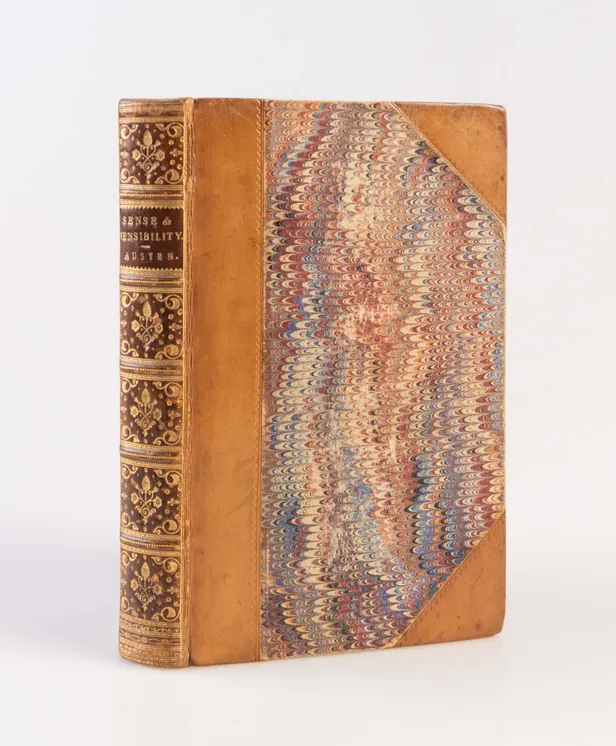
AUSTEN (Jane).
Sense and Sensibility, 1856.
£1,750
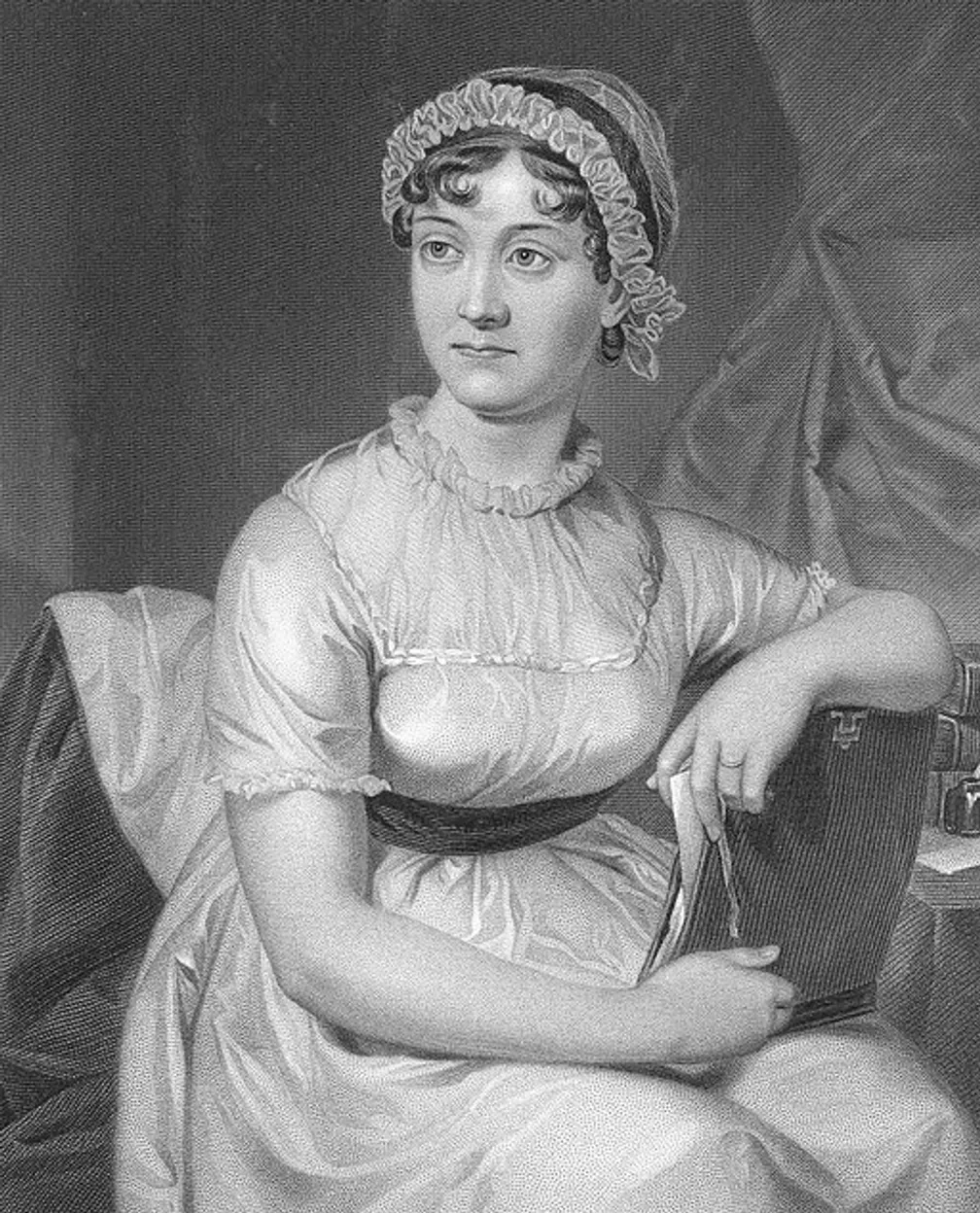
the most perfect artist among women, the writer whose books are immortal
To mark the Two Hundred and Fiftieth Anniversary of Jane Austen’s birth, we wanted to celebrate this enduringly popular author’s life and literary legacy by putting together a short article about some of the most interesting, beautiful and important editions of her works.
It would be difficult to overstate Austen’s importance and the reach of her influence. Interest in her life and writing has only continued to grow, with books and a multitude of television and film adaptations of her novels and life appearing every year. A truly brilliant storyteller, her clever, humorous and touching tales about romance, friendship, society, and real life remain loved and read by so many. It is striking that someone who was born over two hundred and fifty years ago should continue to be so loved, and it is a testament to her wonderful writing that she is.
The subjects are not often elegant, and certainly never grand; but they are finished up to nature, and with a precision which delights the reader.
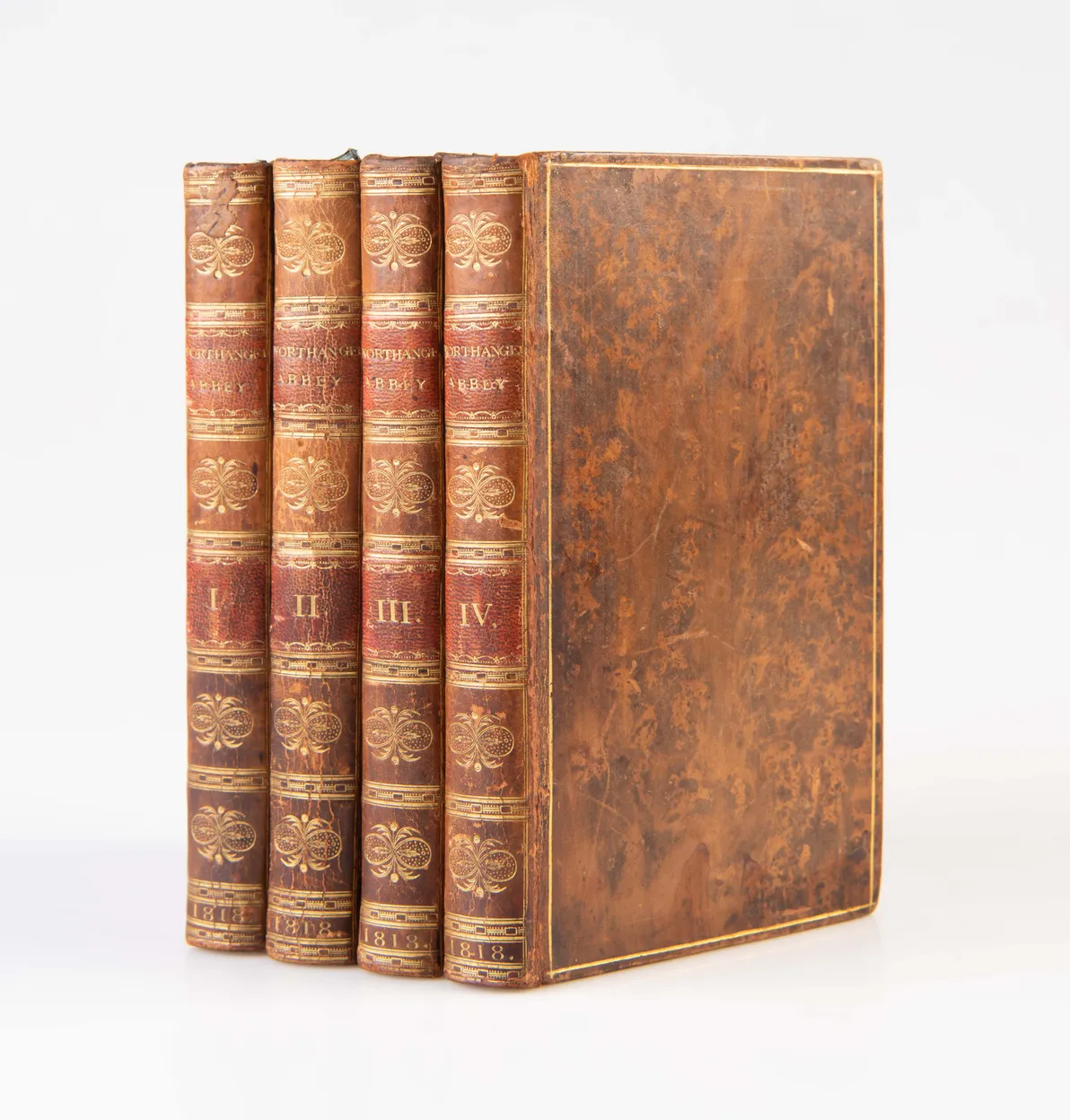
The first editions of Jane Austen’s novels were all published anonymously, the profession of author being considered an inappropriate one for a lady. None of the six novels had very large print runs, the largest being Emma, with its dedication to the Prince Regent, which Murray published in an edition of 2,000. Only Pride and Prejudice reached a third edition before the 1830s, and there was no second edition of Emma or Northanger Abbey and Persuasion, the first editions of which were both remaindered along with the second editions of Sense and Sensibility and Mansfield Park in the early 1820s. Each, excepting Pride and Prejudice, of which she sold the copyright to Egerton for £110, was sold to the publishers on a commission basis, meaning that she wouldn’t see a profit before the publishers' costs and commission had been covered. By the time of her death Jane Austen had made just under £700 in profit from her writing.
All this to say in the few decades after Jane Austen's death there was little to indicate that she would become so important or so popular. Much has been said about the beauty of the first and early editions, and how copies in publishers' boards or contemporary calf hold the spirit of the regency period, but they also serve as reminder of the humble beginnings of the famous author’s literary legacy.
The remarkable fact that all Jane Austen’s novels were translated into French and published in Paris within a few years of their appearance in England has almost escaped the notice of her biographers and critics [...]
The earliest translations of Jane Austen were French, the first of which were serialised extracts from Pride & Prejudice and Mansfield Park in the Swiss periodical Bibliotheque Britanique in 1813 and 1815. All six of her novels were translated into French in full between 1815 and 1824. This is all the more remarkable as most of Austen's novels were not translated into other languages until the 20th century.
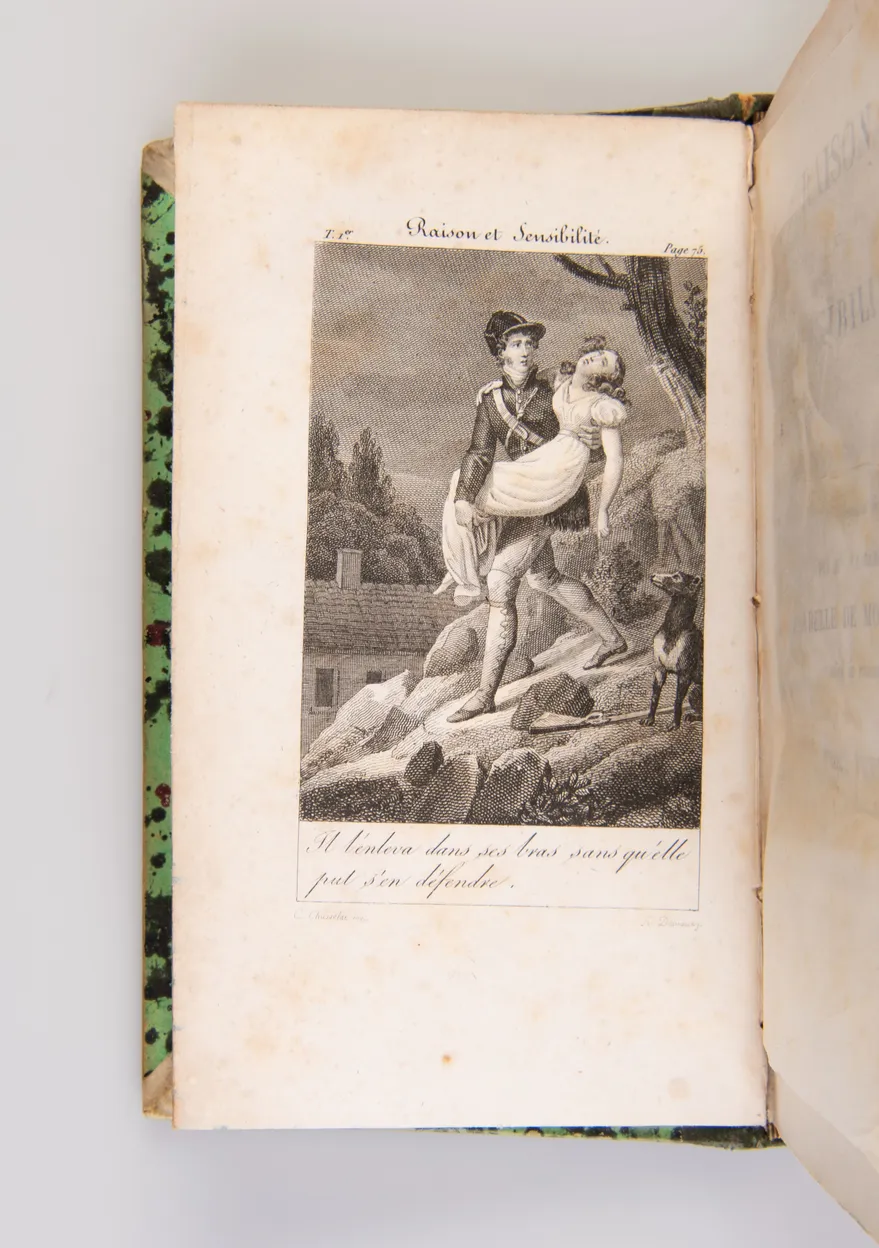
One of the more significant of these editions is the second French edition of Sense and Sensibility, which is also the first edition to be illustrated. The translation itself is quite “free”, the novel was translated by a Swiss female novelist Isabelle de Montolieu who sensationalized Austen’s original novel.
The three very striking engraved frontispieces before each part are far more dramatic than an English reader familiar with Austen’s original novel might expect: in the first volume Marianne is shown being carried down a hill by Willoughby after she has sprained her ankle. In the original text Marianne’s sprained ankle is soon “disregarded” when she notices the, “manly beauty” of Willoughby. In the engraving for this translation Marianne looks not far from death.
[Jane Austen] will outlive the generation that did not appreciate her, and will take rank with the English classics as long as the language lasts
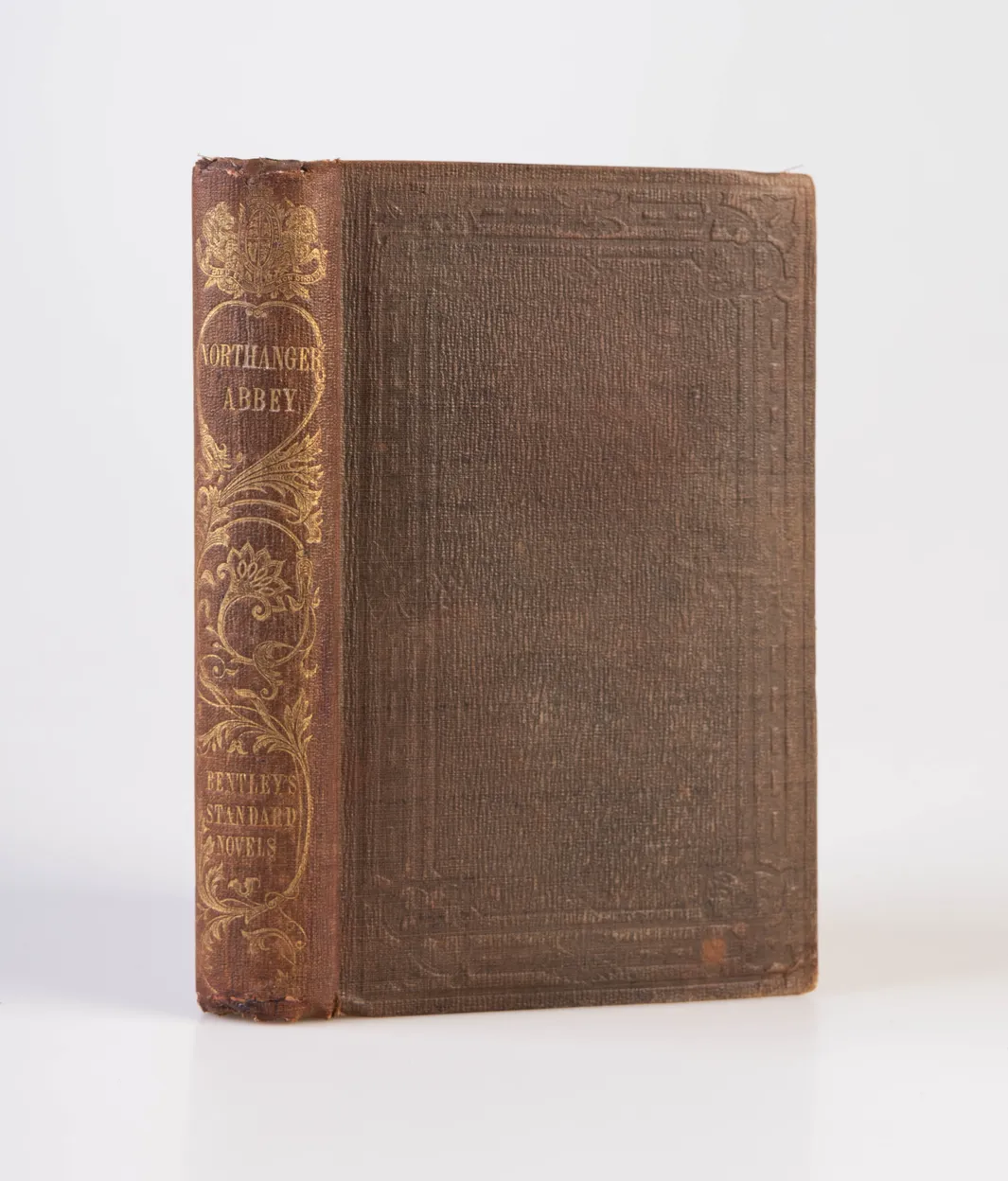
Many biographers and bibliographers have noted that after Jane Austen’s death her writing fell into relative obscurity. Certainly, there were no English editions of Jane Austen’s works after 1818 until the 1832 - 33 Bentley editions. Richard Bentley decided to include Austen in his standard novel's series and bought the copyrights for the author’s works for £250. They are significant for being the second and third editions overall of most of the novels, as well as some being the first to be illustrated. In 1833 Bentley published the novels together as a complete set, and Bentley would go on to reprint the books consistently up until at least 1886. The appearance of the Bentley editions was important, it did much to revive interest in Austen’s novels, and make them accessible to a new generation of readers.
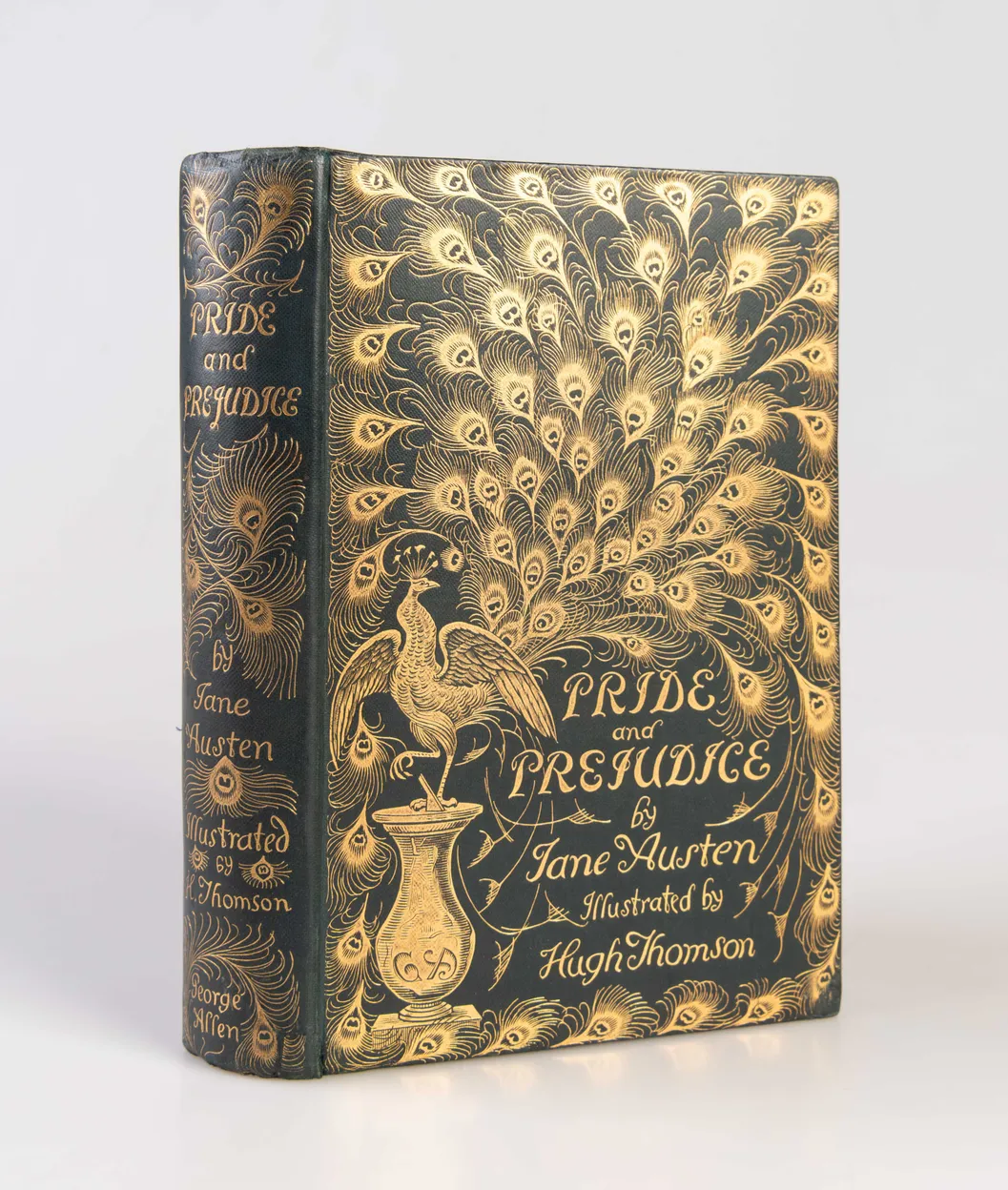
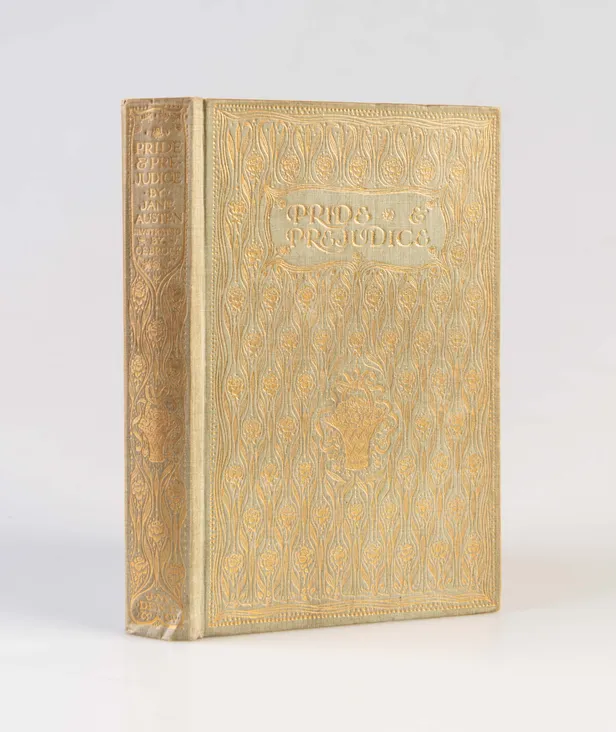
The ‘Peacock’ edition of Pride and Prejudice needs little introduction, a true masterpiece of gilt pictorial cloth and one of the most recognisable books of its era. Hugh Thomson’s wonderfully illustrated editions were part of the 1890s Austen revival which helped to cement Austen’s popularity. A year after publication Allen had sold over 11,000 copies, and by 1907 they had sold 25,000.
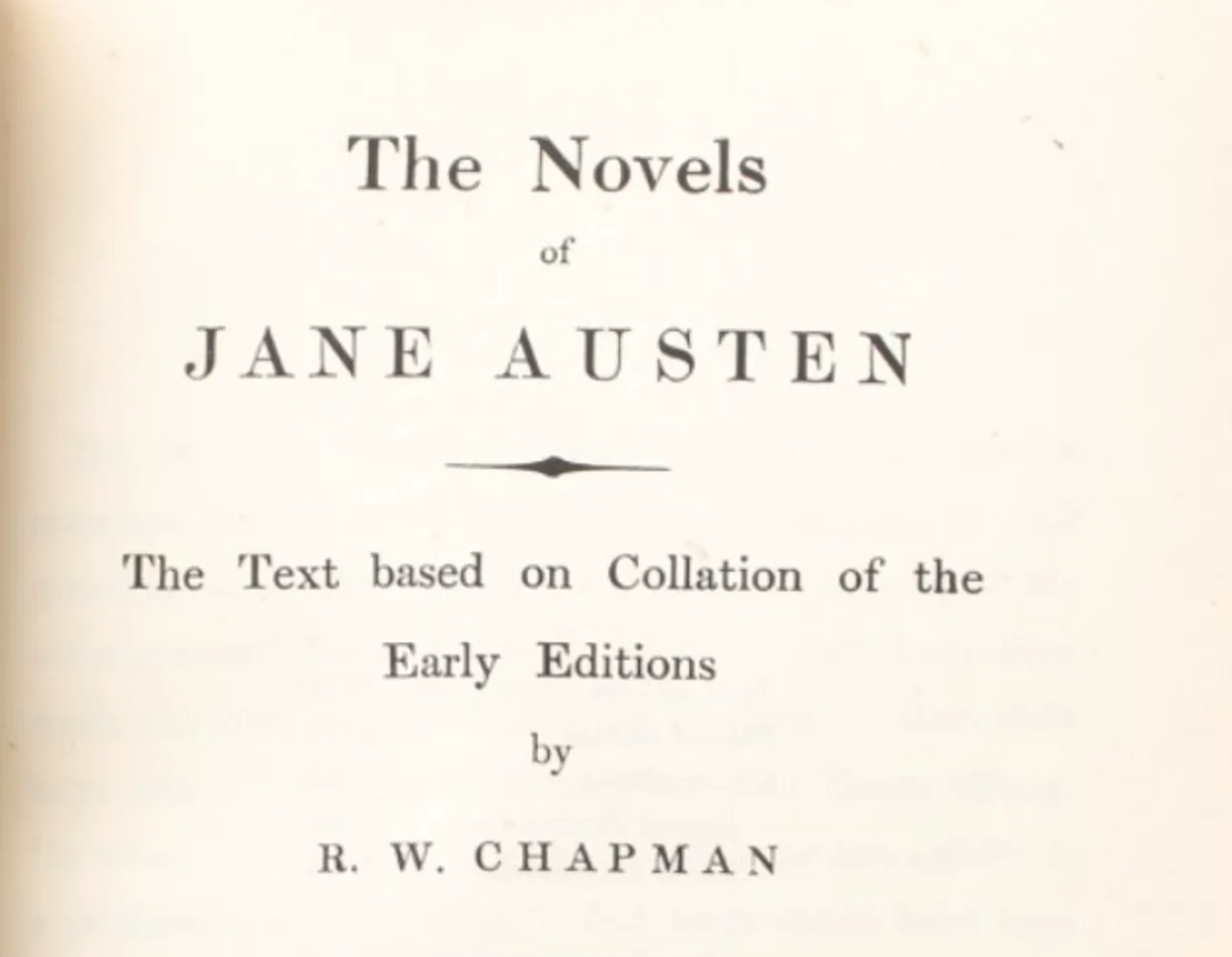
Chapman’s Oxford edition was the first attempt to establish an authorised version of Austen’s works. Many of the nineteenth century publications had edited the novels and had in some cases inserted new errors, Chapman went back to examine editions in which Jane Austen had a hand, in order to correct this. The set also includes illustrations taken from contemporary sources, as well as indexes, notes and appendices. Chapman continued to edit and update the set with the final edition being the third edition, published between 1965-66. It was for a long time held as the final word for textual accuracy and has perhaps only just been superseded recently by the Cambridge University Press edition edited by Janet Todd and Linda Bree.
We have a few Austen and Austen related titles currently in stock, including a few by some of Jane Austen’s favourite authors. Please browse the short list below.