Wicked Selections
Spirited picks from our members of staff
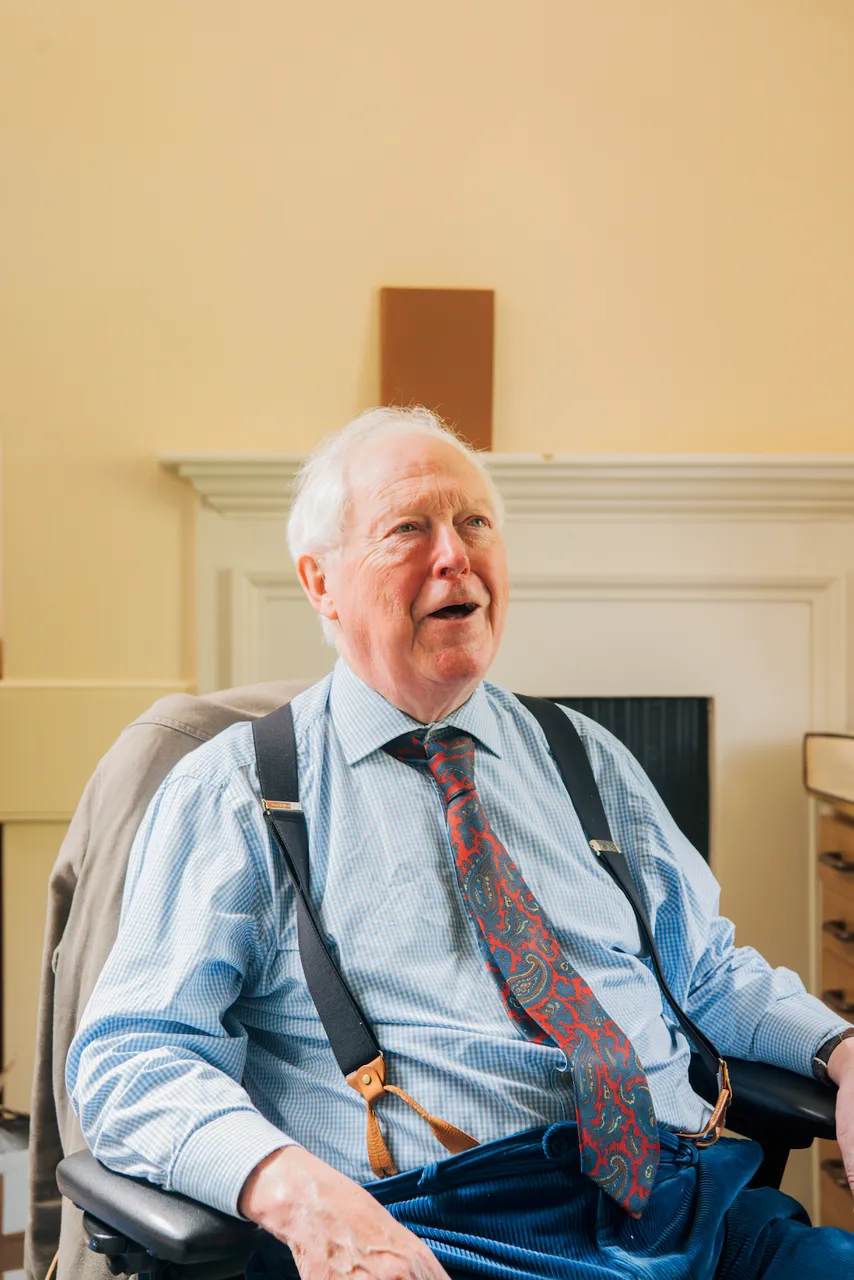
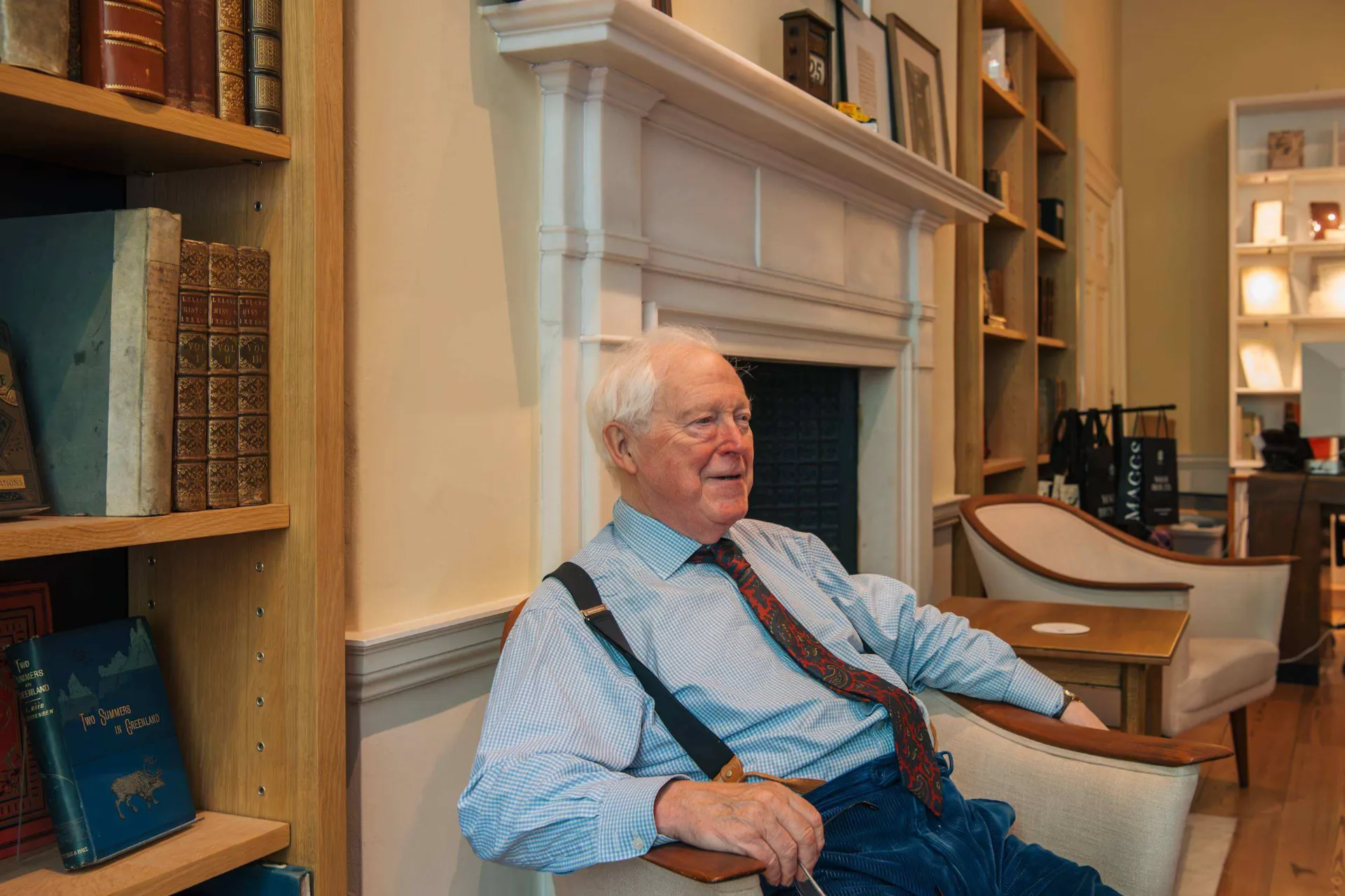
In 2004, when Paul Quarrie first arrived at 50 Berkeley Square, he knew he was amongst friends when Ed Maggs remarked that "you don't have to retire, you can just drop dead on the stairs." Fortunately, the lift at Bedford Square — the one Paul rode to the top floor for our interview — means no one need take that chance.
Preparing to meet PQ (as he is known to colleagues) was intimidating. He is a true rarity: polyglot, librarian, lecturer, author and supremely talented bookseller, with few peers in early Continental books and manuscripts. Soon after he greeted me, however, I learned that he was a fellow Northerner, and all misplaced apprehension lifted.
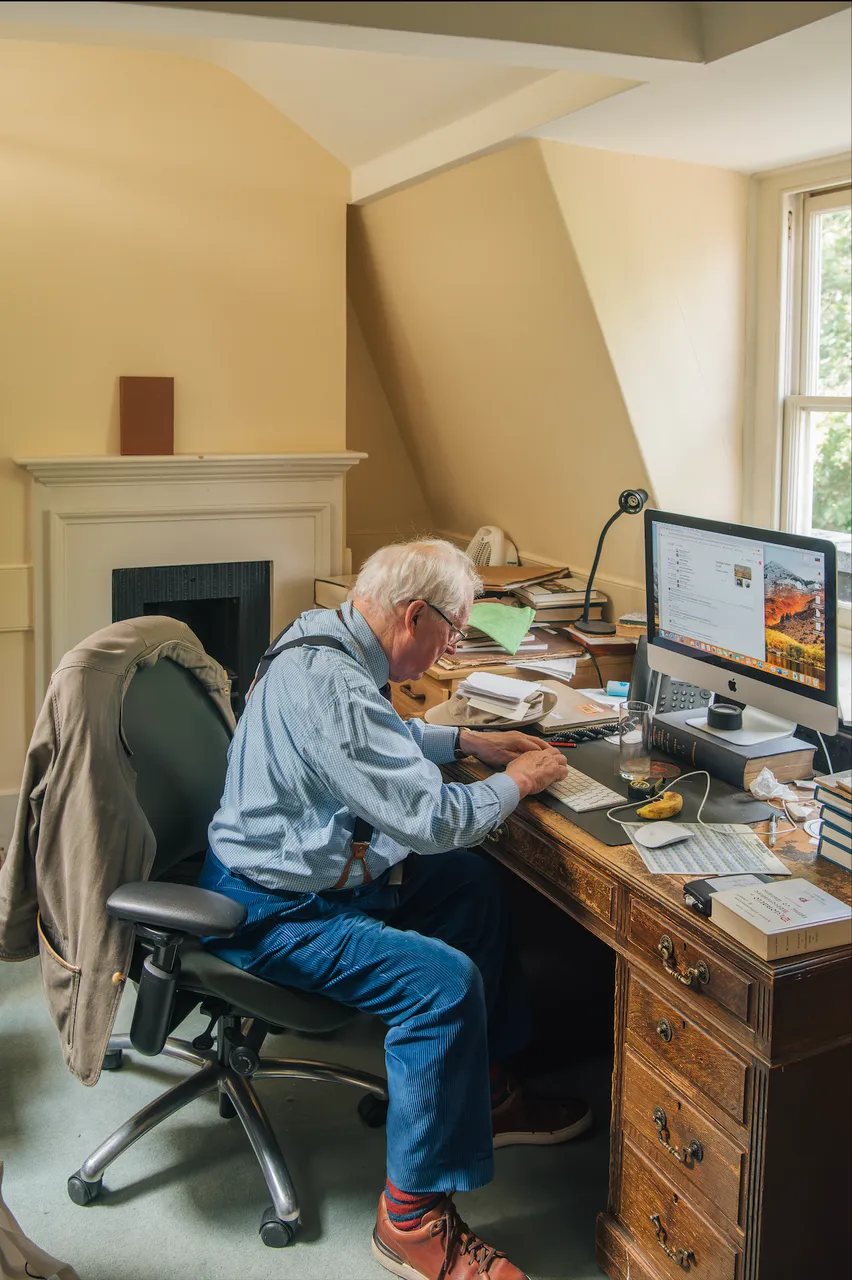
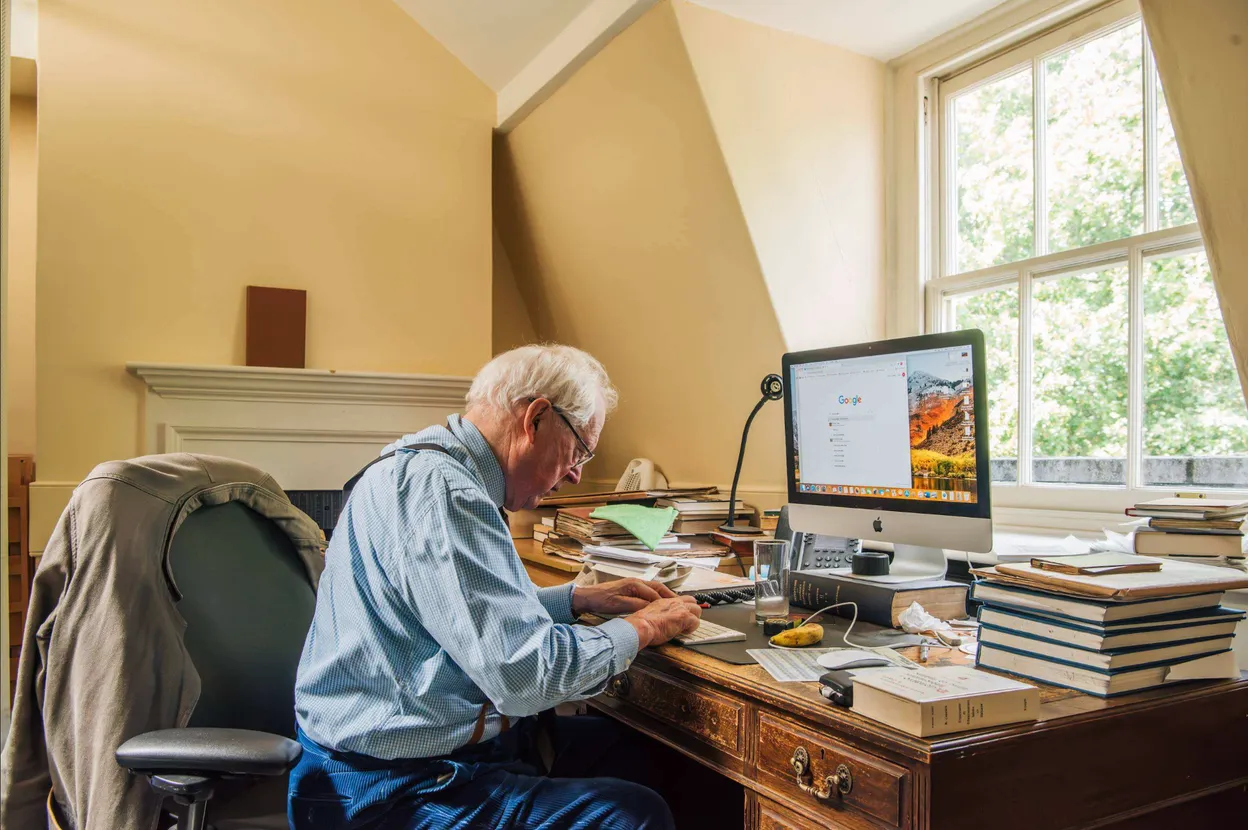
Squeezing between two rows of shelves, we made our way to the back of his office, where the space opens onto a small desk, a set of drawers and a sash window overlooking the Bedford Square gardens. I wedged a foldaway chair between a stack of boxes and a shelving unit. PQ sat opposite, flanked by piles of books and paperwork. When I first proposed we meet in his office, he replied rather characteristically: "If you mean the room on the top floor next to Accounts, where I am seated in the middle of the Reference Library, that's fine by me."
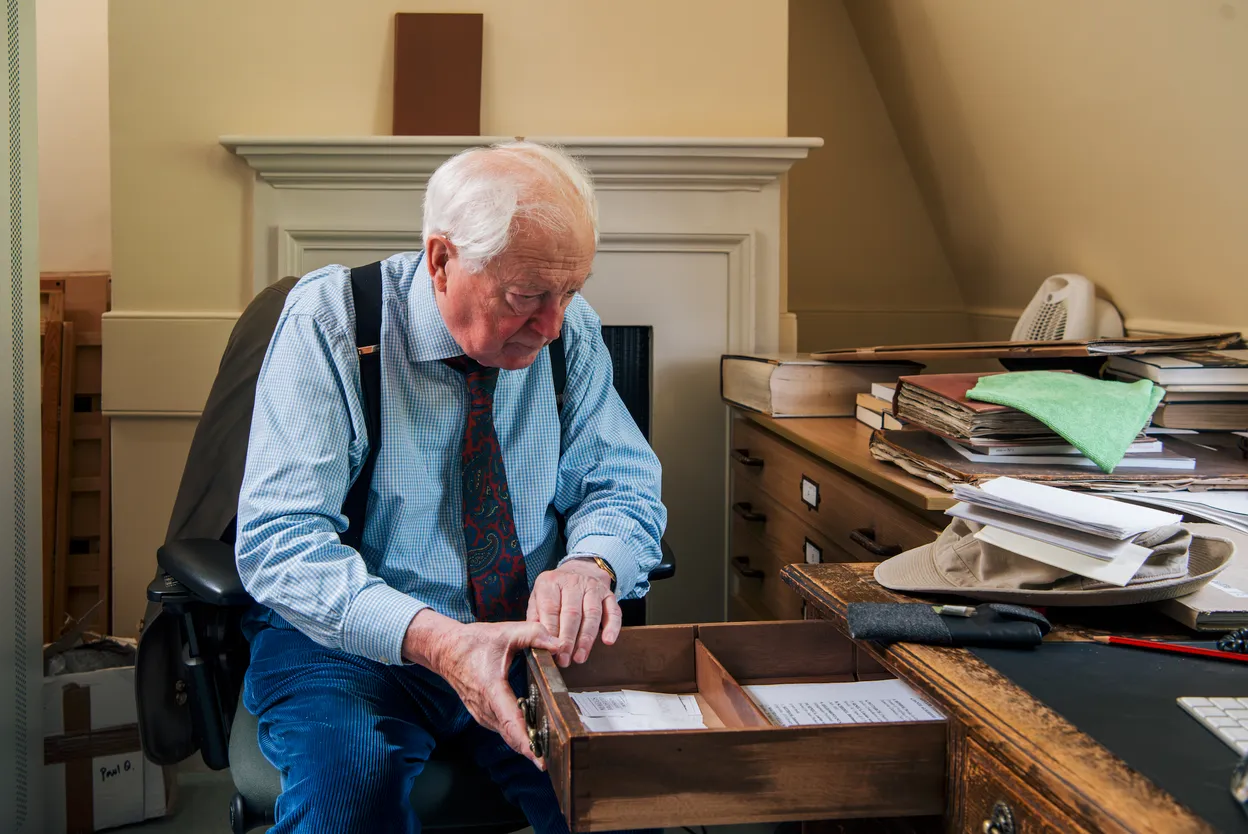
I had not become entirely settled before Paul commenced the story of his life in al-Ta'if, an old Turkish garrison town high in the Hijaz mountains. It was here, in the summer capital of kings, immediately after the Six-Day War of 1967, that Paul took the first of two posts working in Saudi Arabia-as an English teacher.
Of that first year he said little, save one anecdote. Riding out one evening on his motorbike to visit a chicken farmer (who, rather remarkably, was an ex-chorister at Canterbury), a pack of dogs began chasing him. Accelerating away over the uneven gravel road, he was thrown into the air and off the bike. The commotion warded off the dogs, but the gravel stuck; still to this day there is a discreet bump on his forehead.
For his second stint, he worked in al-Jouf where, outside of teaching, he spent time learning Arabic and cooking with French and Italian engineers who were constructing roads in the area.
At the end of 1969, he returned to Britain and began working at a commodity and fruit brokerage in London — not a good fit, and short-lived. This was no concern, as soon after, a meeting with the then-chairman of Routledge yielded a commission to translate the Disciplina Clericalis of Petrus Alfonsi and with it, his first break into publishing. This eventually led, in 1971, to a job as a cataloguer at Sotheby's under Lord John Kerr, Head of the Book Department.
At this time Sotheby’s was on Chancery Lane, in the building previously occupied by the auctioneers Hodgsons, absorbed by the former in 1967. Much of the work took place in the cellar beneath the sale room, a "Dickensian area, with metal pillars supporting the floor above, where natural light was scarce."
Sales came every fortnight, a rhythm dictated less by the calendar than by mortality. "Auctions," PQ says, "were essentially an expeditious way of getting rid of large quantities of stuff which appeared after people's deaths. You have no idea how frequent they were — there seemed to be an unending supply of books." Given the sheer variety of material passing through the auction house, cataloguing for Sotheby’s was "a bit like driving a London taxi. You had to be able to turn on a sixpence".
In 1972, PQ accepted an invitation to catalogue the library at Chequers (the country residence of the Prime Minister since 1921). He recalls his time there rather fondly. His arrangement included ‘proper’ lunches and reflective walks on the Estate. This lasted for around two years, during which time he catalogued most of the collection himself. To this day, his typed notes are still amongst the shelves.
In 1977, PQ moved to Eton as the College Librarian and Keeper of the Collections at the College Library. Eton’s library is one of the most significant in the country. Principally housed in handsome Georgian rooms above the Cloisters, it is largely the result of six-hundred years of bequests by old boys and benefactors. The material ranges from ninth-century manuscripts and incunabula such as a Gutenberg Bible, to modern fine printings and literary archives.
His custodianship of the library was by any measure highly successful. In 1989, PQ purchased on behalf of the library, for “a very modest sum”, an annotated copy of Lucretius' De rerum natura, edited by Denis Lambin and printed in Paris in 1563.
"I had become very interested in annotations, and in the bookseller's catalogue it said 'with annotations'… When the bookseller, who was a friend, brought the book to me in January, he said, 'well, there's a scored-out signature on the final page which you could possibly read with an ultraviolet lamp'. I looked at it and said, 'I know who it is. It is Montaigne!'"
Montaigne quotes the poem extensively in his Essai and as such his working copy was a record of exceptional importance. Thus, before long, Quaritch, then on Golden Square, had a buyer, and the fourth Lord Parmoor, Milo Cripps, received Paul in the boardroom to discuss the sale. "We sat at this big table — not quite as big as Mr Putin's — and he pushed a cheque across. And well, let's just say it was for a great deal of money — and that was just the first instalment."
While at Eton, PQ often travelled to the United States. In 1987, during a visit to New York, he proposed the idea of an exhibition of the College Library collection at the Morgan Library to its then-director Paul Needham. It was agreed, and in 1990, The Treasures of Eton had its grand opening with attendees including the Provost and Lady Charteris as well as the US Ambassador to the UK, Walter Annenberg. In a review written for the New York Times, John Russell wrote that “both catalogue and wall labels witness to the affectionate scholarship with which Paul Quarrie has shaped the show”.
Leaving Eton in 1995, PQ rejoined Sotheby's as Director, later becoming Senior Director. This second stint involved far more international travel, not all of it fruitful. On one trip to an Austrian schloss, he was shown the library of a charming family:
"Most of the buildings were still in the state they had been left in by the Russians. The doors were hanging off, the stairs had holes in them, there was no window glass in the frames, and it was bloody cold. It would have been fine had it been full of wonderful books, but, well, it wasn't — and what there was, was covered in bird shit."
Above all else, however, PQ’s defining achievement must be the discovery and sale of the Macclesfield library. In 1996, the ninth Earl asked him to Shirburn Castle, seat of the family since 1716, to look at some material stored in a cupboard. Within, he found a substantial collection of scientific manuscripts, including letters from Isaac Newton, and, unexpectedly, two vast libraries of printed books — assembled by the first two earls and undisturbed since roughly 1750.
In the Sotheby's catalogue, elegantly introduced by Paul, he describes "one of the finest libraries in England… so breathtakingly rich in books and papers relating to mathematics and the physical sciences, many of the greatest rarity, and some unique." It was, he writes, "an intellectual time-capsule", and a documentary history of printing including works such as Pliny’s Historia naturalis of 1470 and a fourteenth-century Psalter illuminated by the artist of the Douai Psalter.
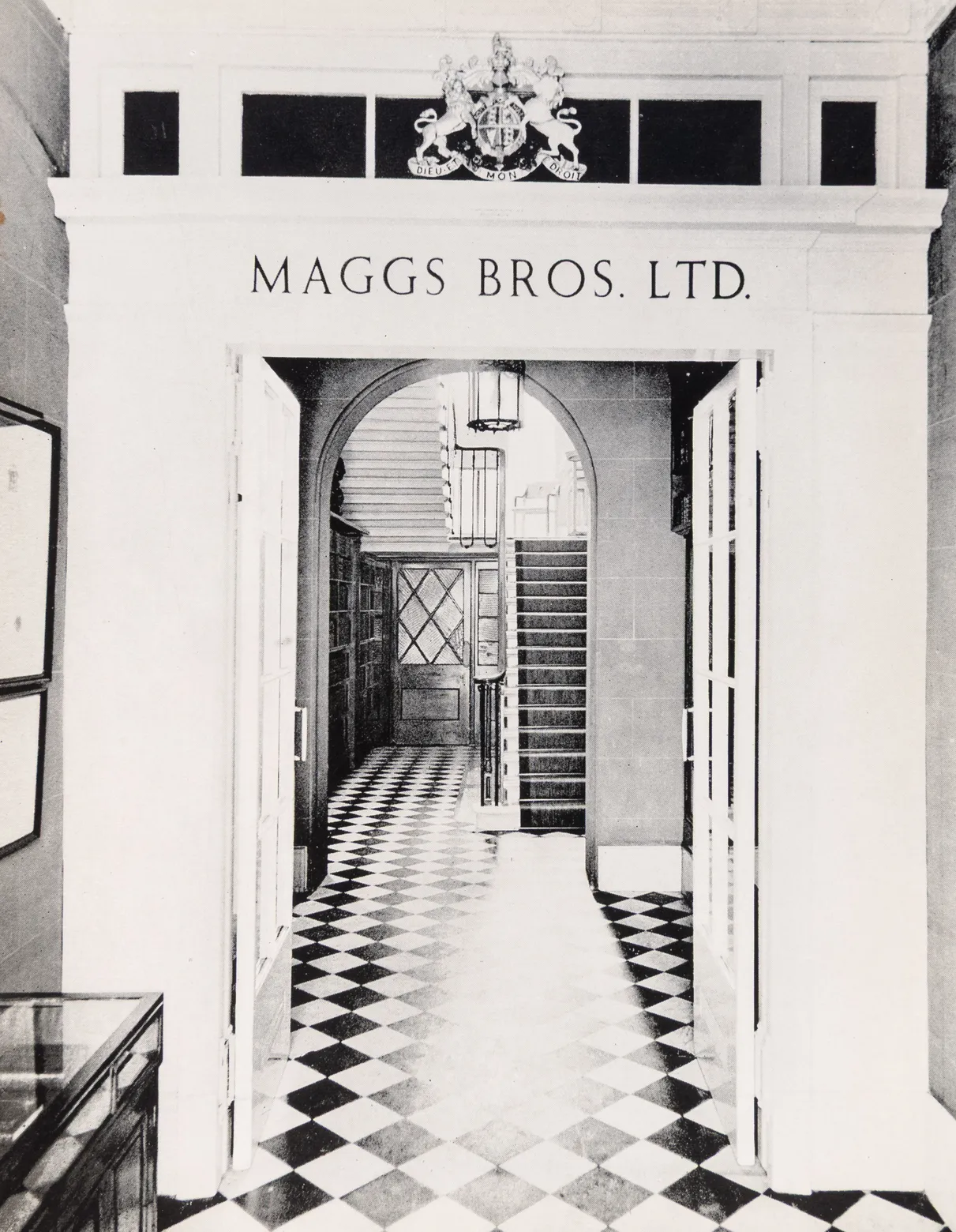
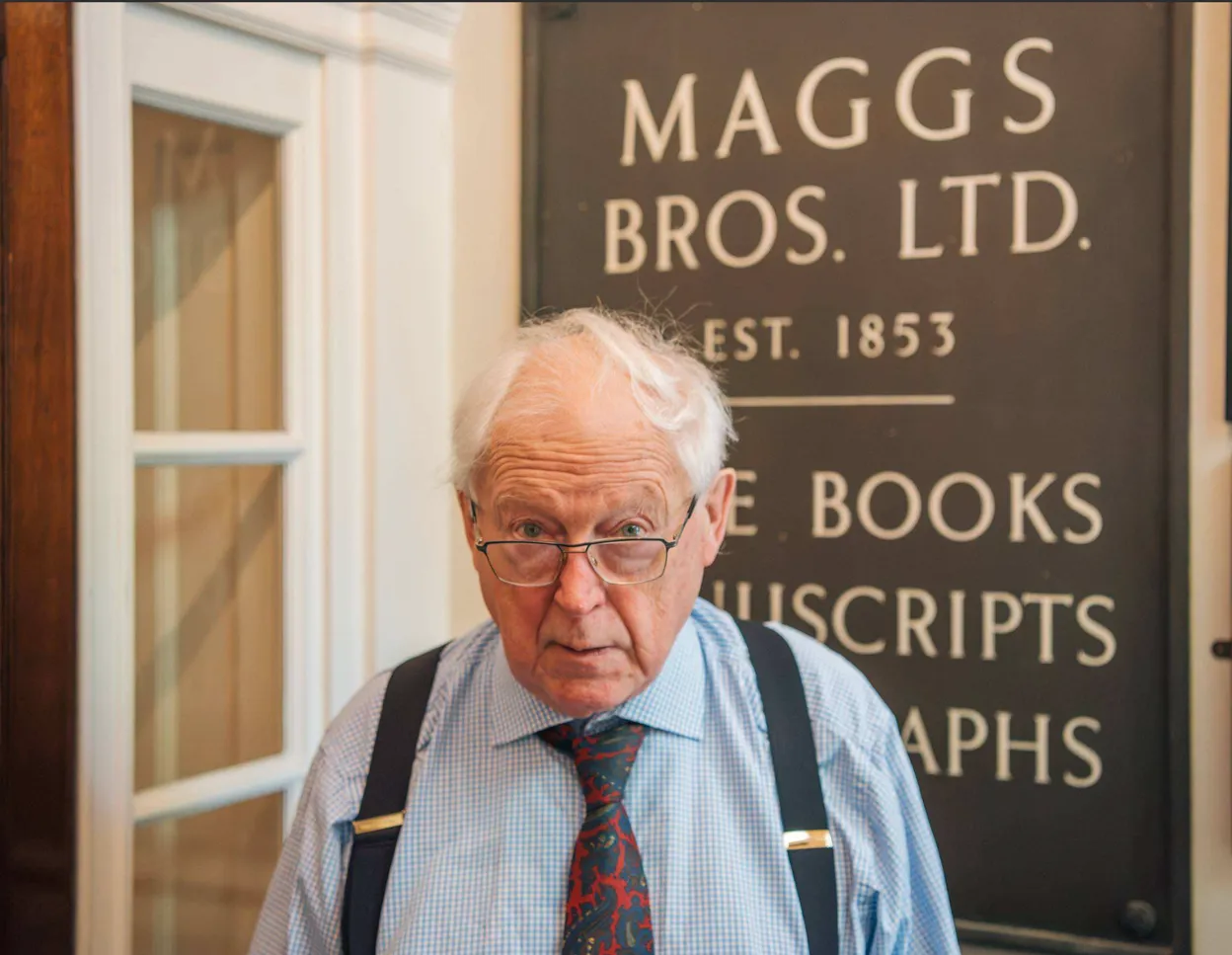
With the Newton material sold to Cambridge in 2000, the bulk of the collection was dispersed across twelve auctions at Sotheby’s from 2004 onwards. The tail of the sale was "like a comet", and when PQ left for Maggs Bros Ltd in 2004, he brought a considerable quantity of it with him.
PQ has now been at Maggs for twenty-two years during which time the Macclesfield sales continued to tick over, with the final shelf going to auction in 2024. He works chiefly as a consultant to the Early Continental Department and is a source of knowledge to everyone around him who is savvy enough to ask. Over his career, PQ’s enduring love for books and their makers has never waned and this is clear to anyone who has had the privilege of knowing him.
Make no mistake, however. He is not done. These days he comes in one day a week, taking the train from East Knoyle in Wiltshire, and can often be heard on arrival at Maggs swearing softly about the state of the nation’s railways.
Long may it continue. Vivat PQ!