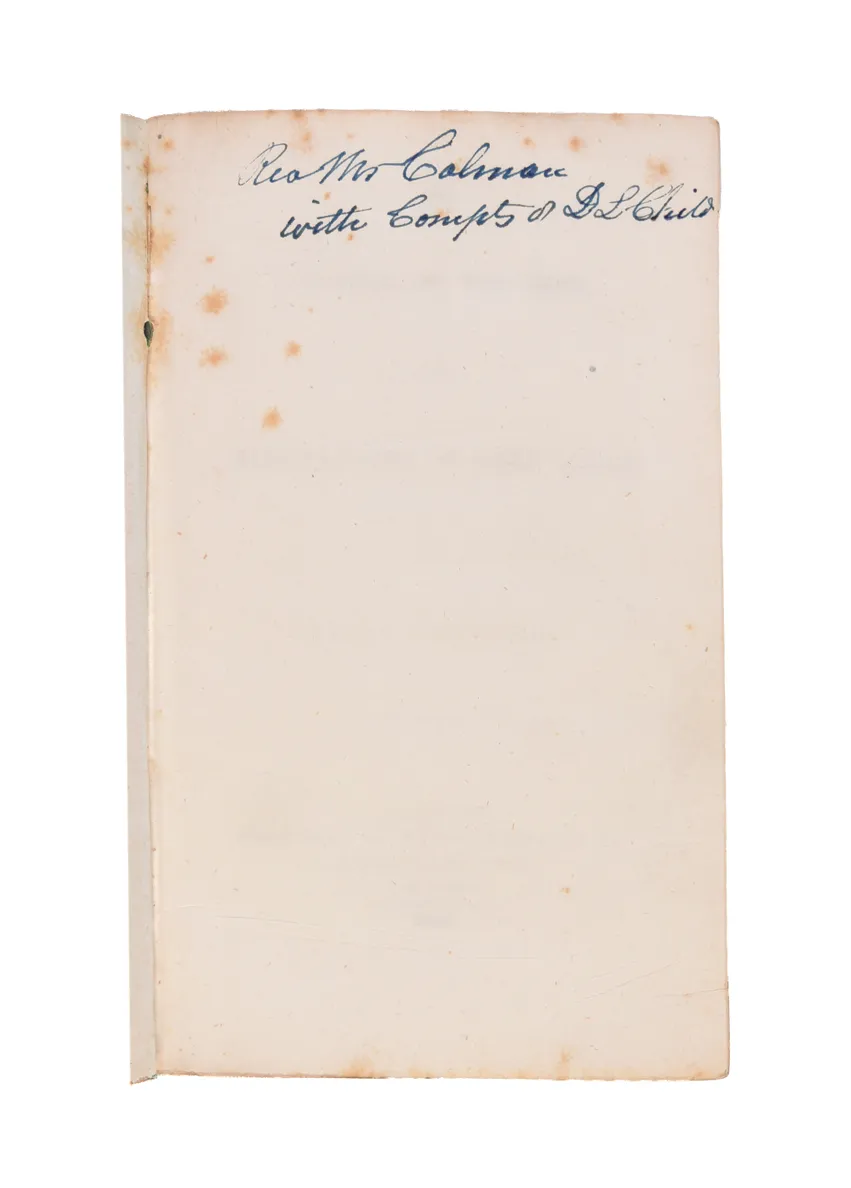
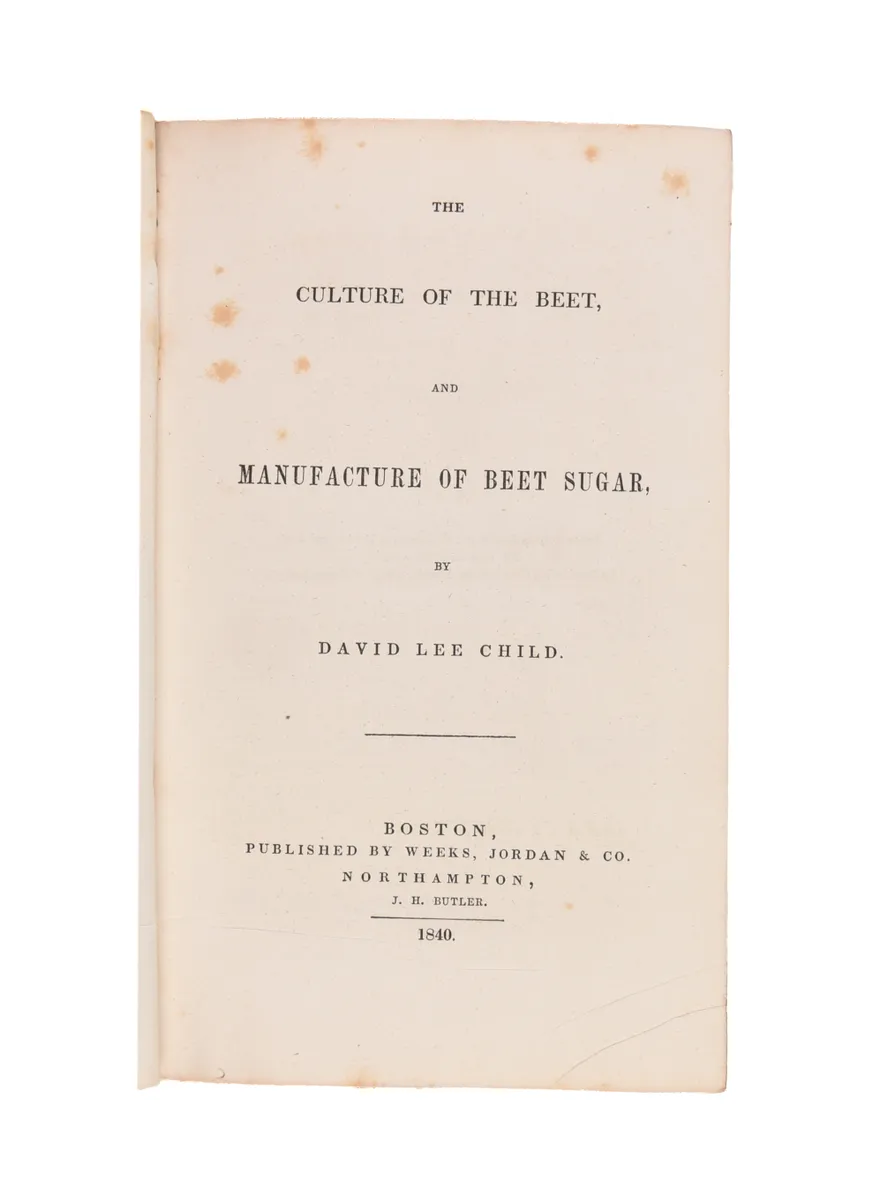
The introduction of sugar beets to America - a scarce treatise outlining the culture, manufacture and business history and prospects of this alternative crop to sugar cane. Inscribed by the author with compliments to a Rev. Mr. Colman.
David Lee Child (1794-1874) graduated Harvard in 1817, after which he served a stint as secretary to the United States Legation in Portugal. In 1828 he married Lydia Maria Child (née Francis) (1802-1880), noted writer, activist and abolitionist. He learned the beet process in Belgium in 1836, and following a trial crop in Northampton Massachusetts, the present publication is his attempt to influence American agriculturalists to invest in this product.
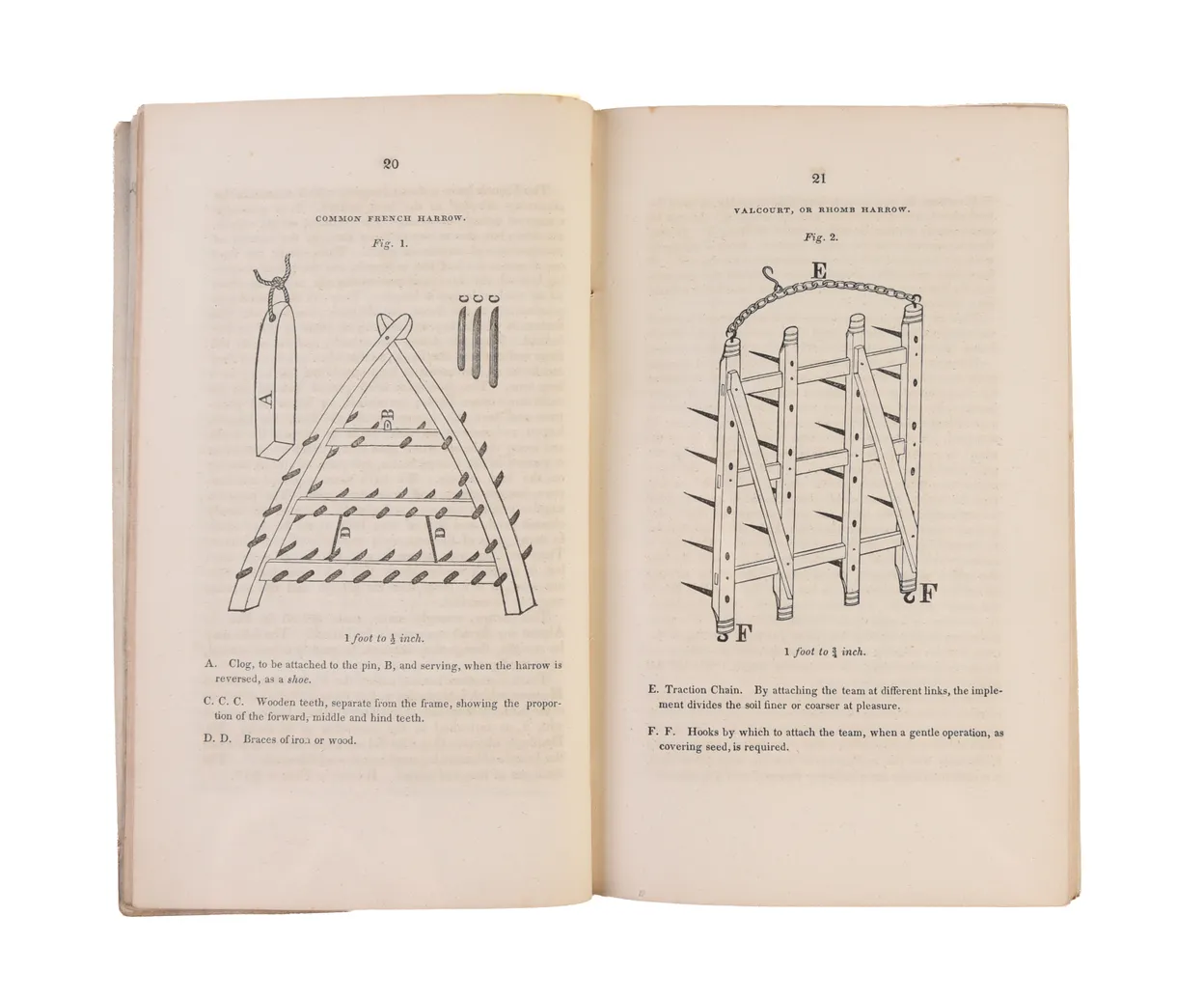
The book offers insight into the varieties and virtues of different beets, as well as the method of cultivation and necessary equipment for growing and processing into loaf sugar. Other advantages include the value of both beets and trimmings as animal feed, as well as a plethora of other uses: "The beet, besides furnishing sugar, is also used for making coffee, beer, brandy, spirits of wine, potash and paper [...] recently it has been reported that the French are making wine of the beet-juice" (p.8).
David and Lydia Maria Childs were joint editors of the National Anti-Slavery Standard newspaper, and were highly active participants in the movement for total abolition in the United States. Though there is no overt diatribe against the practice of farming by enslaved labour in this pamphlet (slavery is not included in the index for example), there is a tacit critique running through the business prospects section in particular. Using the attractive proposition of untaxed domestic rather than imported product as an incentive, he also notes that "[t]he production of sugar is said to be increasing rapidly in British India and Java; and the British government, in opening the English market to Bengal sugar, have shown a wise forecast in respect to the possible reduction of the cane products in the West Indies. It is not probably that the freedmen of the British West Indies, any more than of St. Domingo, will all pursue the species of labor, which is marked by the memories of their severest hardships and deprivations" (p.141). There are also statistical critiques of the viability of enslaved labour practices on sugar cane plantations in the southern United States. Amongst the letters of endorsement at the end of the book, there is one from a confectioner who had been employed to make beet sugar sweets for a Ladies' Anti-Slavery Fair.
Rare in commerce - no copy listed on Rare Book Hub since 1975.