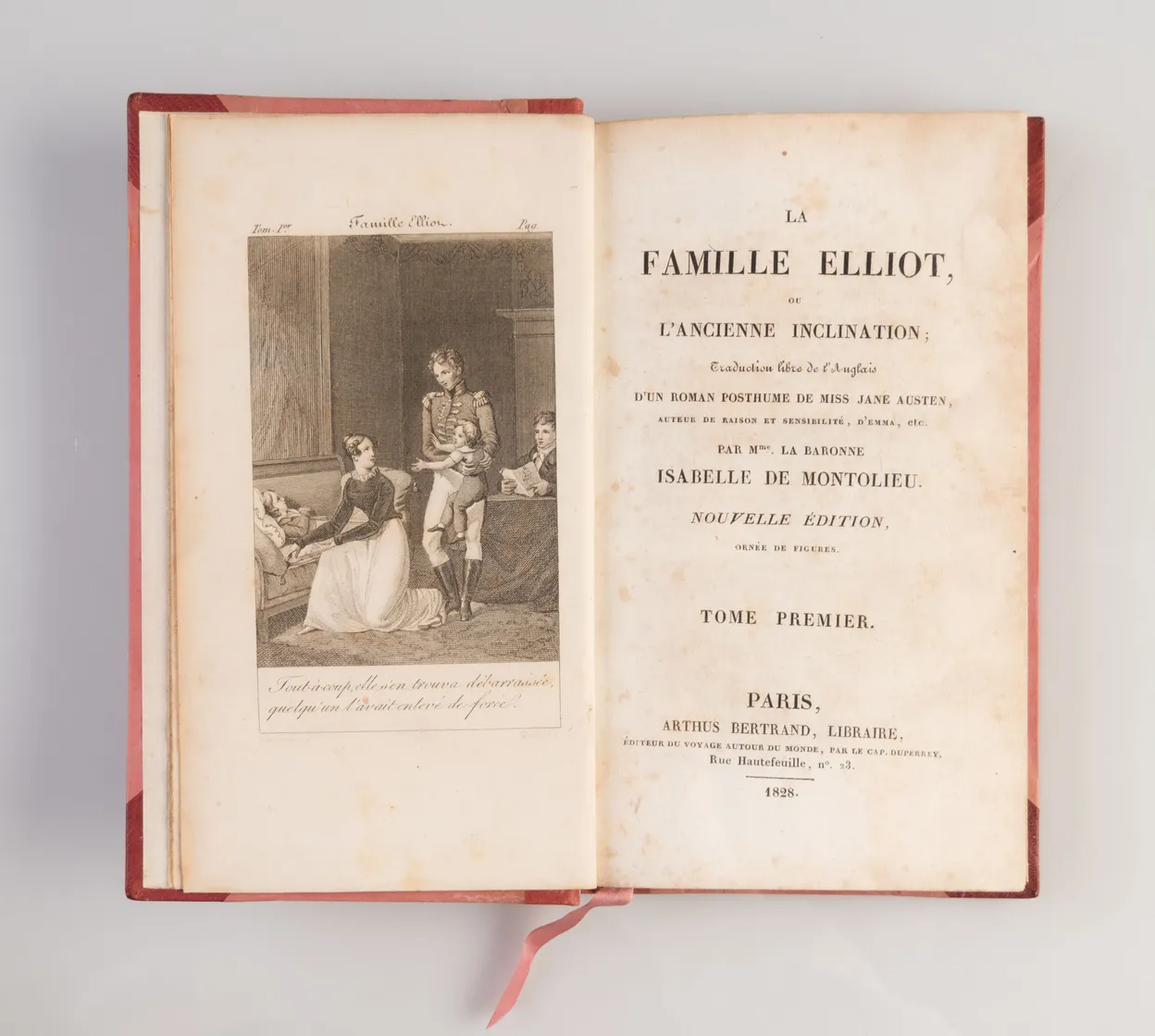
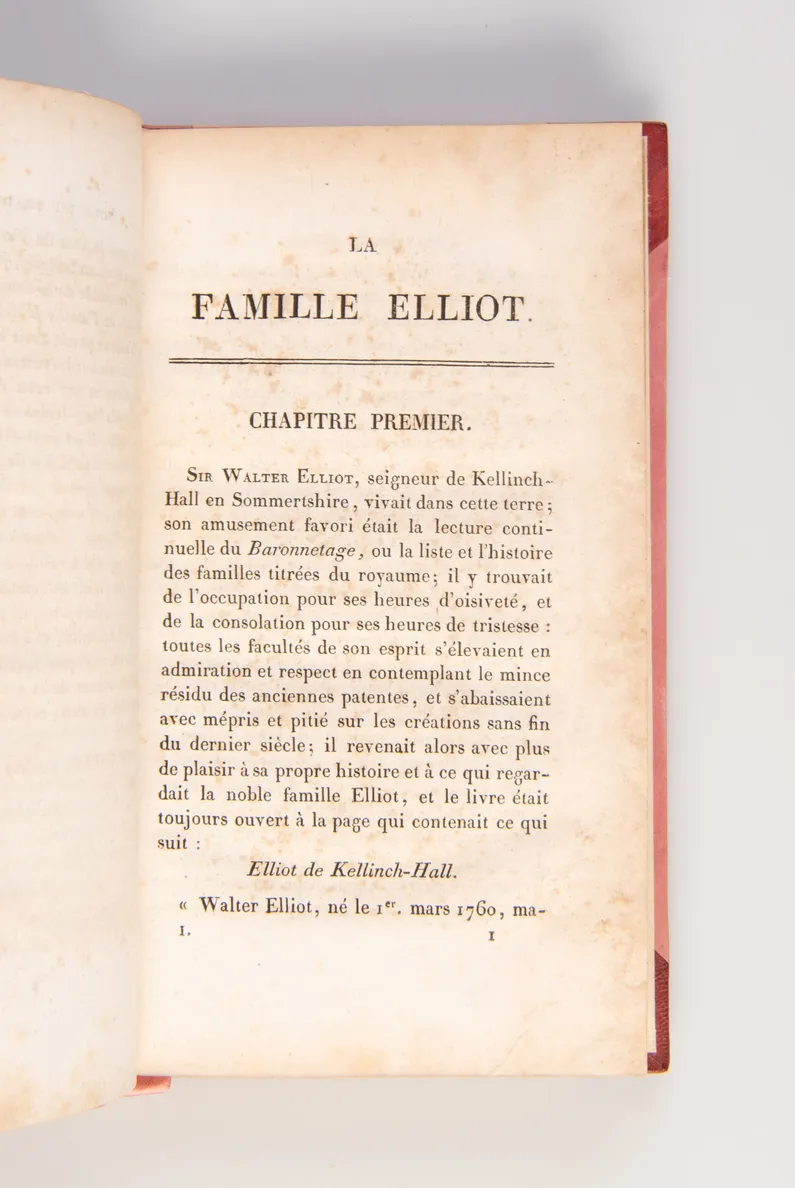
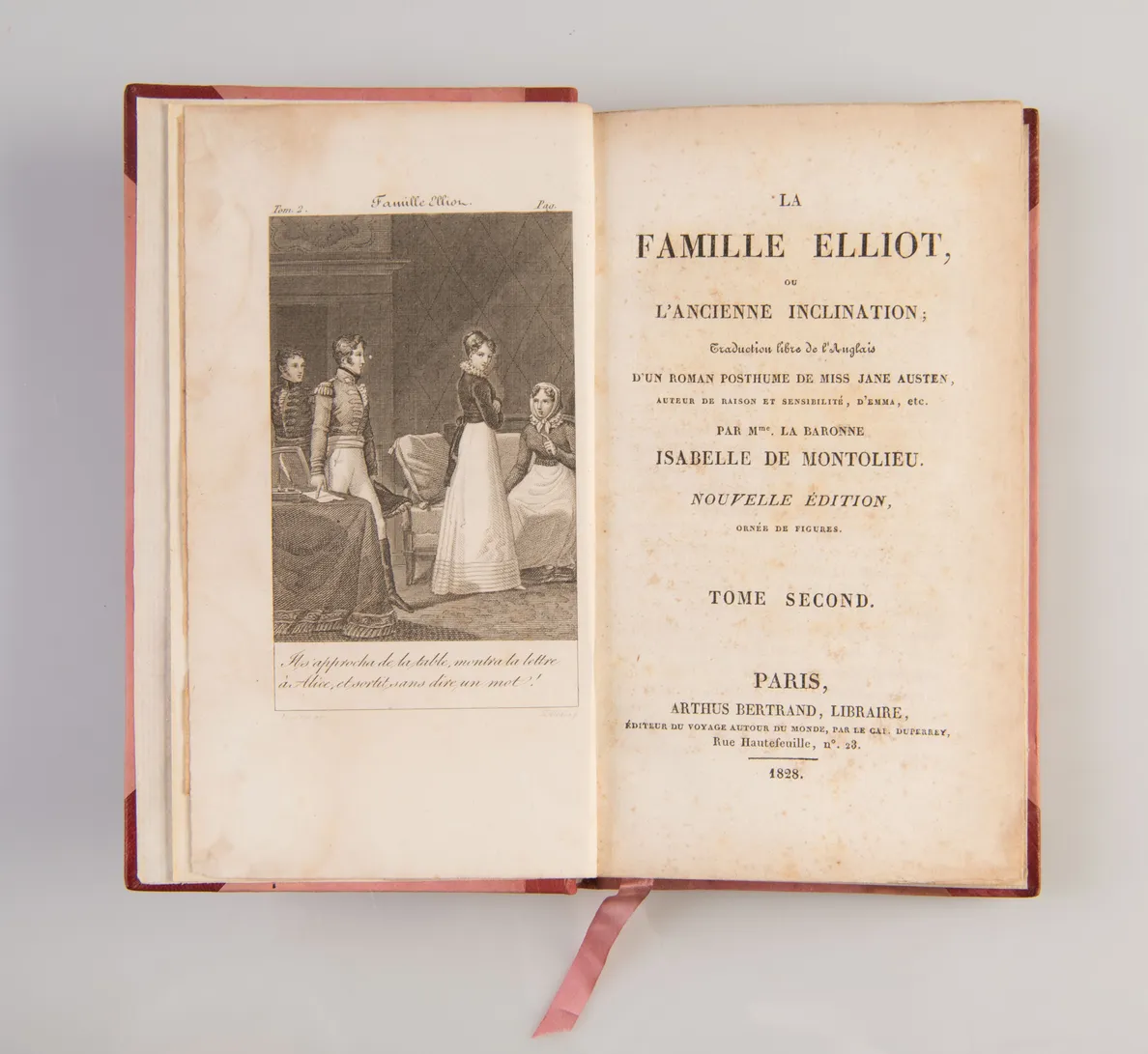
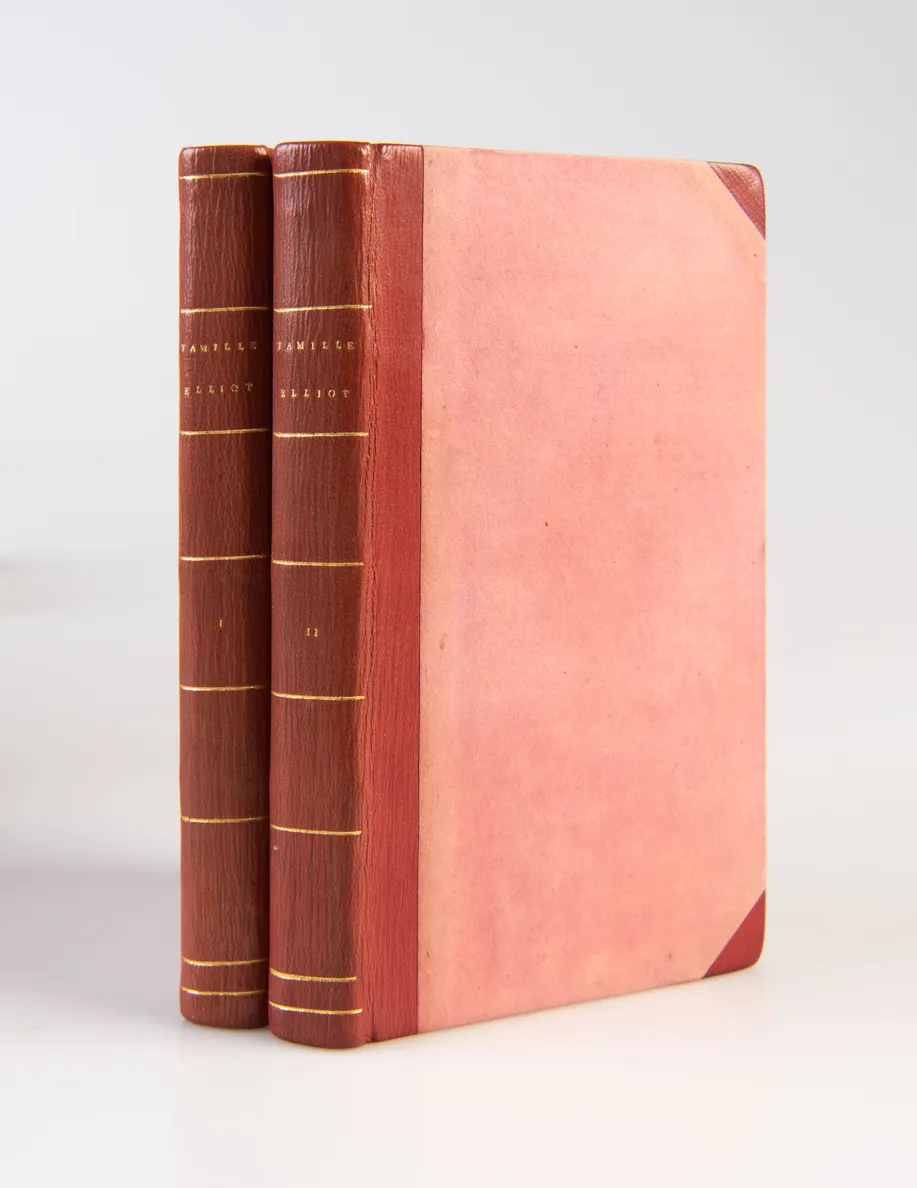
Gilson, Jane Austen, C12. The first edition of Isabelle de Montolieu's French translation of Jane Austen's Persuasion was published in Paris in 1821. Both editions are very rare: 1821 (Cambridge UL (ex Sir Geoffrey Keynes, with the arms of Empress Marie Louise, consort of Napoleon I (1791-1847) and Jane Austen House (Vol I only) in the UK; Yale and Illinois in the USA). 1828 at Cambridge UL only (given by Keynes to David Gilson). No copies recorded in Rare Book Hub.
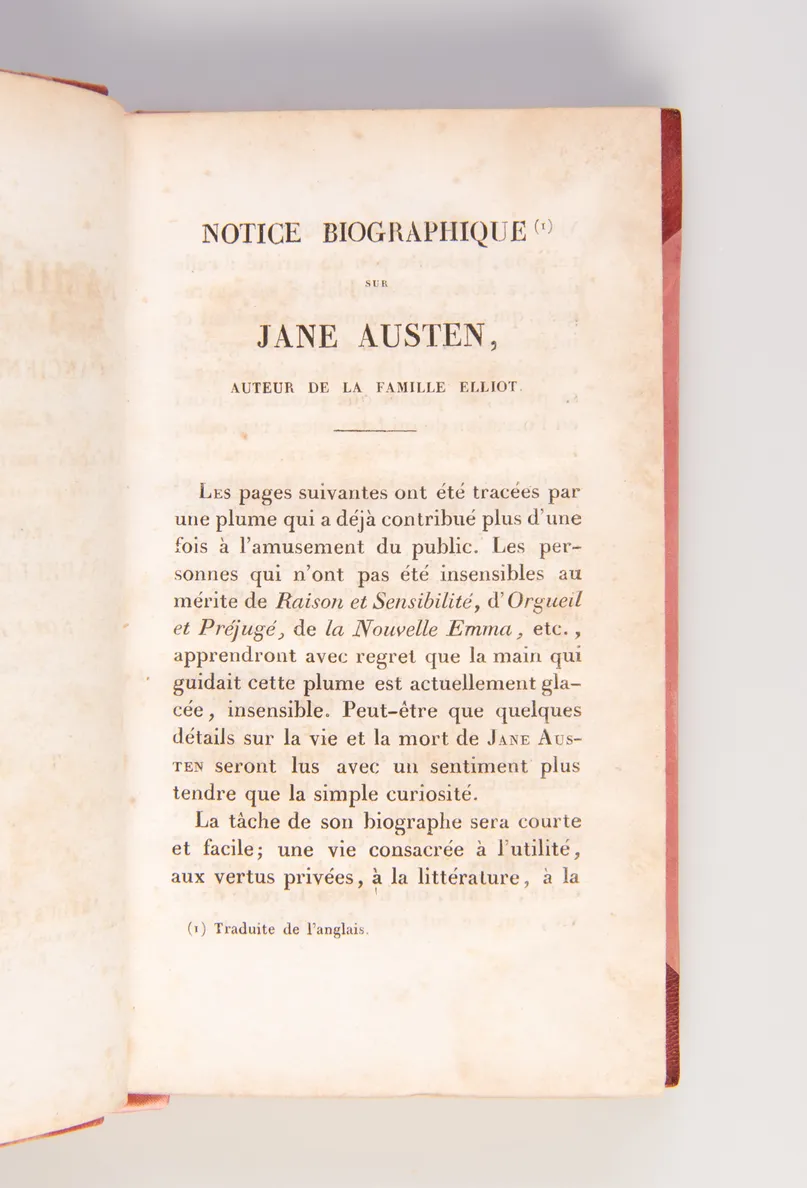
A rare French translation of Jane Austen's Persuasion by Isabelle de Montolieu who did much to establish Austen's reputation in France but also took liberties with her text and made significant changes to the novels she translated. This edition has some of the earliest illustrations of Austen's work and a "moderately faithful rendering" of Henry Austen's important biographical account of his sister.
The translator, Isabelle de Montolieu (1751-1832), had similarly translated Austen's Persuassion (as La Famille Elliot, ou L'Ancienne Inclination) for Bertrand in 1821 which also included two dramatic engraved frontispieces and was the first published edition of any of Austen's novels to have her name on the title-page. Isabelle Bour states that Montolieu's status as a successful novelist in her own right, "certainly contributed to making Austen's fiction better known" (The Reception of Jane Austen in Europe , 2007, p. 17). Montolieu published (also by Bertrand) the first edition of her translation of Sense and Sensibility in Paris in 1815. At that time she was unaware of the identity (and quite possibly the gender) of the original author. The first edition of Montolieu's translation of Persuasion makes it clear on the title-page ("Traduit librement de l'anglais") that Austen's original novel has provided only a guide for this edition and the translator, for example, changes the name of Anne Elliot to Alice.
"... Montolieu is so steeped in sensibility, the mode which she herself writes ... that she fails to perceive the depth of Austen's satire and critique. This is amply confirmed by Montolieu's translation and the liberties she takes with the plot. ... So while she underestimates the satire, she is more aware than British reviewers are of the carefulness and minuteness of Austen' social realism. She has no doubt that the author of the novel is a woman. Montolieu also contextualizes what she sees as a novel of everyday life by saying that, after the events provided by recent history, an 'eventful novel' would have been unbearable. Is this not a way of saying that, by 1815, gothic fiction had been made redundant by recent European history?" (p.17).