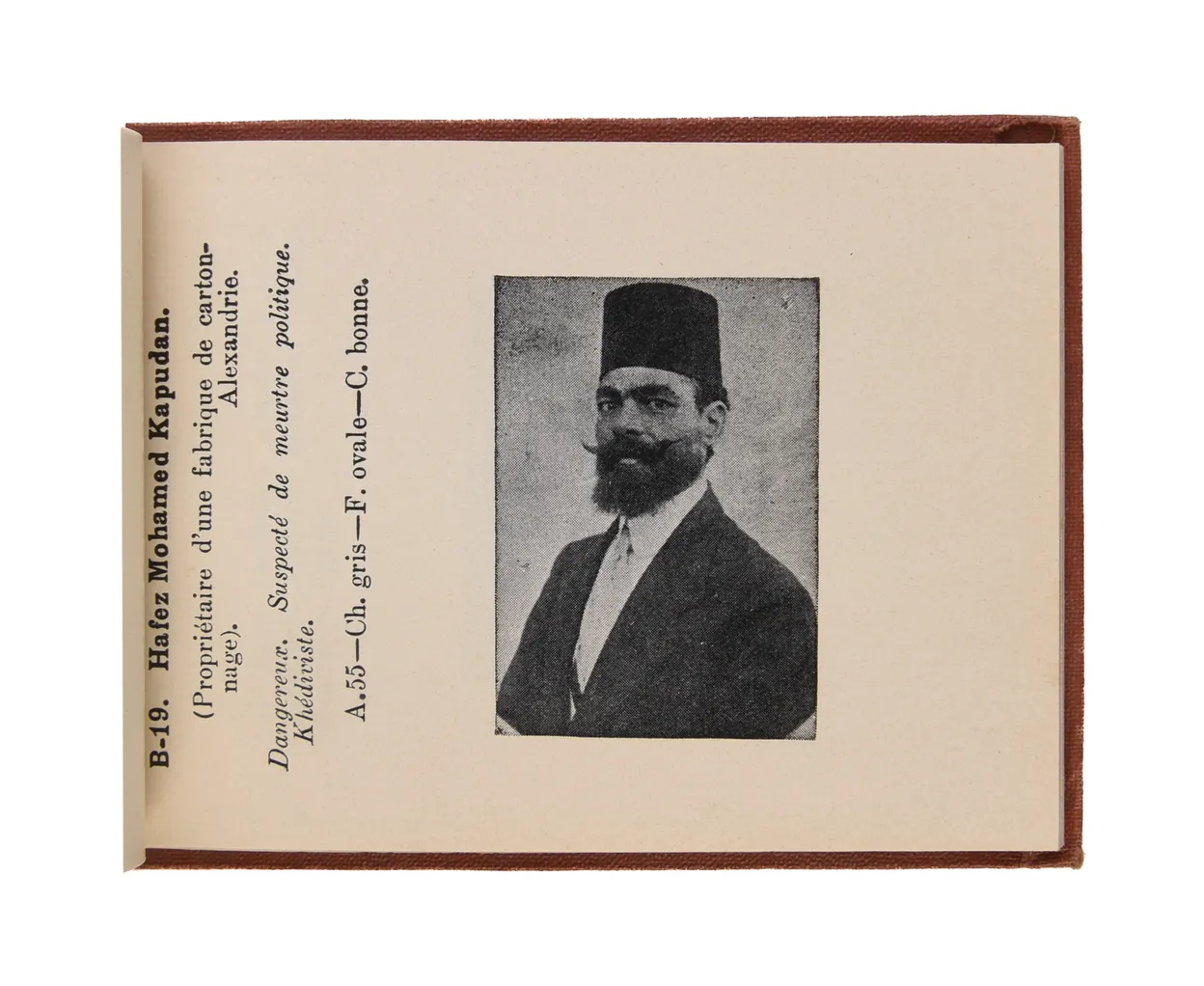
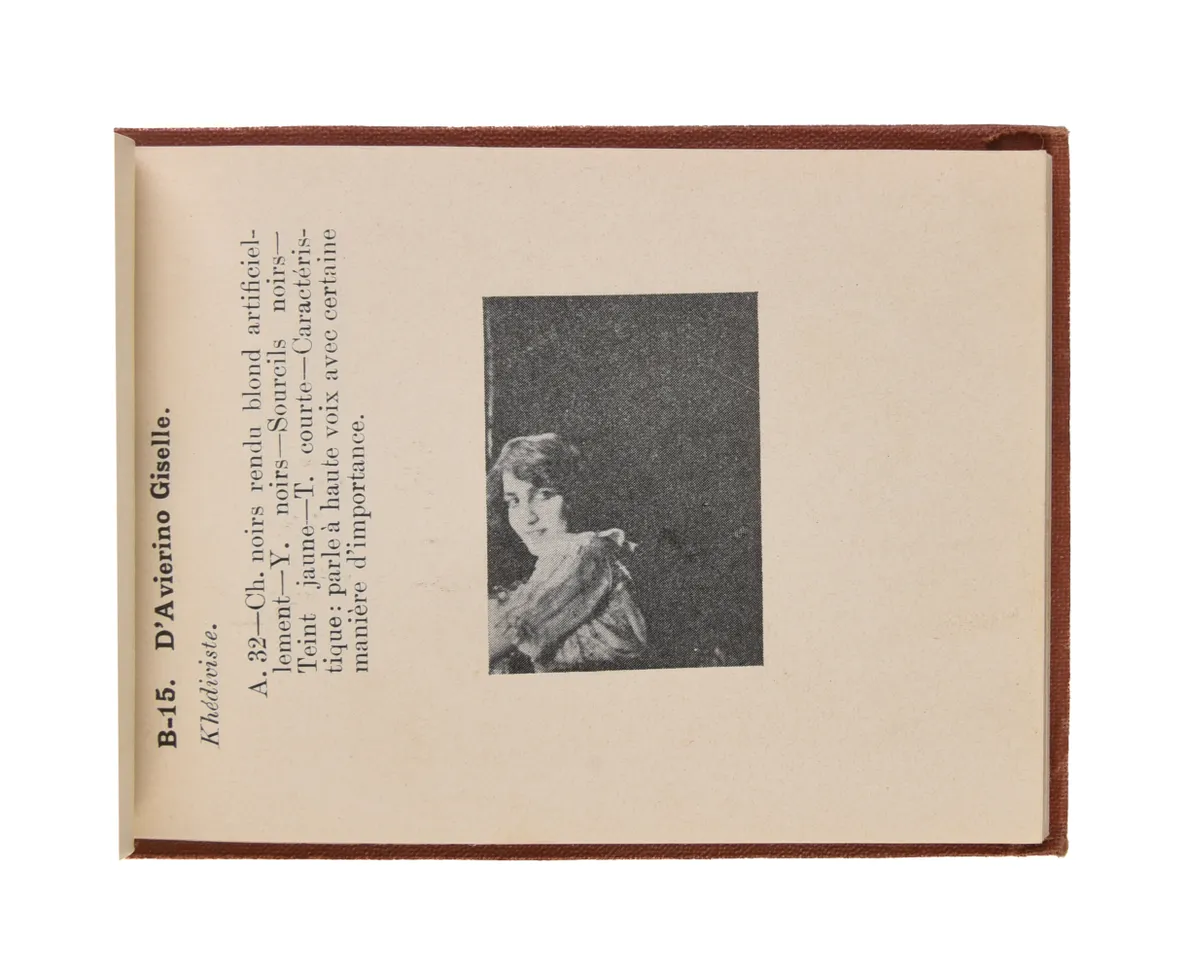
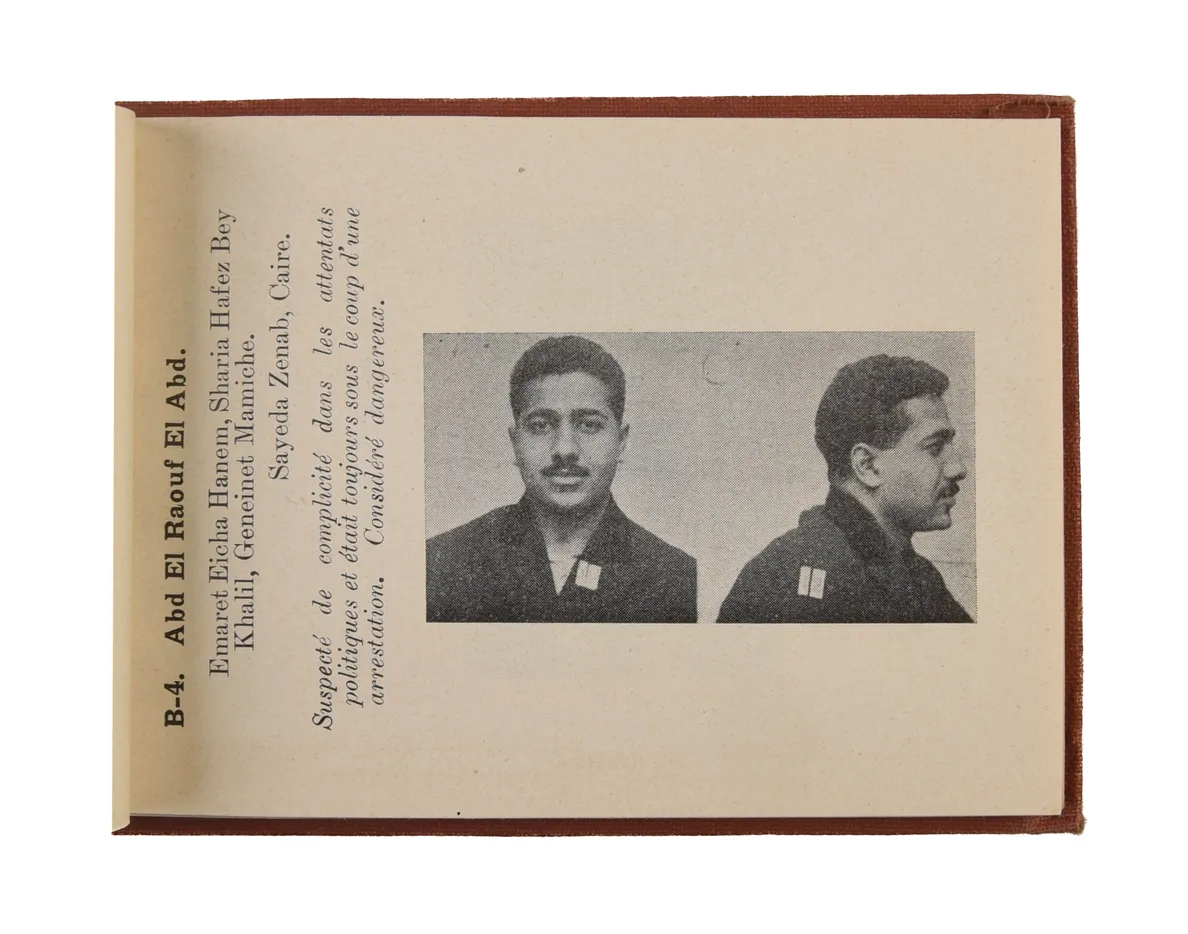
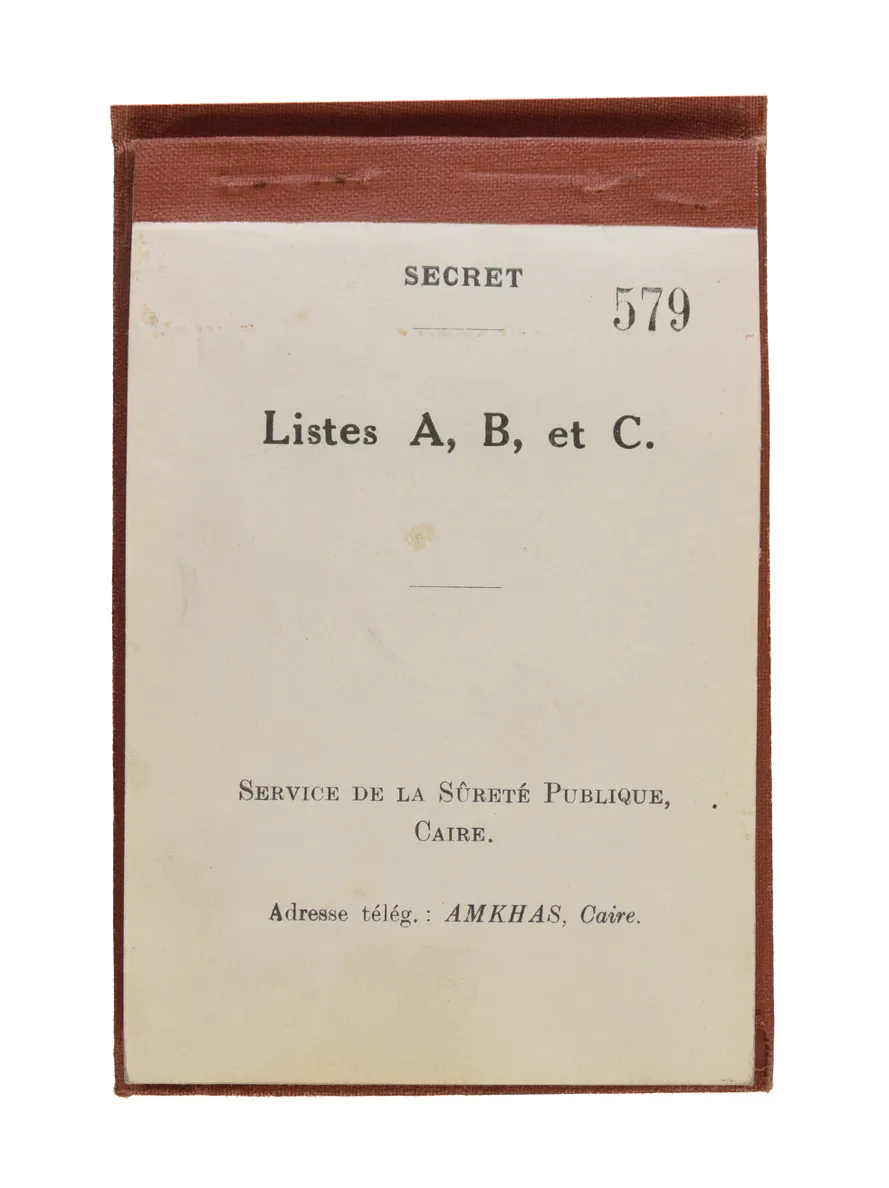
An extremely rare and unlikely survival: a guide to those deemed Egyptian political enemies and agitators for the use of the 'Service of Public Security', offering a rare insight into British administration of Egypt as a protectorate. The guide was printed only a few years after the 1919 Revolution, when there was widespread sentiment for an independent Egypt; indeed, the 1919 Revolution led to an end of Egypt's formal British protectorate status. Though Egypt was nominally an independent country from 1922 onwards, the British maintained a strong influence in the country and occupied Egypt until 1956. The present guide speaks to Britain's dominant role in Egyptian politics; many of the perceived enemies are those with links to the 1919 Revolution or the cause of Egyptian independence.
List A comprises names of various people with short descriptions of their perceived infractions; some suspects are also described physically: "A-13. Abd El Khalek Korrah. (Employé aux postes d'Alexandrie). Agitateur. A.30-Ch. [cheveux] châtains-F. [face] ovale-C. [constitution] bonne."; "A-74. Mahmud El Mishad. Hôpital Guys, à Londres. A un frère bolchévique."; "A-120. Yacout Abd El Nabi. (Etudiant). Alexandrie. Dangereux. Condamné dans l'affaire Abdel Rahman Bey Fahmy, président du Comité des étudiants indigènes. A.25-Ch. noirs-F. ovale-C. moy [moyen?]." List B is much the same as the preceding, with the addition of black and white photographs of each suspect. List C conforms to the same style as List A, though the description of each suspect's political infractions is generally longer: "C-28. Abd El Moneim Abdallah. Il fut établi qu'il est un révolutionnaire des plus violents. Réputé d'avoir provoqué des manifestations lors des troubles de 1919 et complice actif dans les meurtres des soldats Britanniques. Les présomptions sont assez forts, mais il n'y a pas suffisement de preuves pour la conviction." ("It was established that he is one of the most violent revolutionaries. Reputed to have provoked protests during the 1919 troubles and an active accomplice in the murder of British soldiers. The indications are rather strong, but there is not enough evidence for a conviction.") Among the most common illegal activities listed are "agitateur", "Khédiviste", "bolchévique", "extrémiste" and "suspecté des meurtres politiques." There are a few manuscript corrections to the text and a single-sheet printed supplement, listing additional personalities, all of whom were based in Germany.
It is notable that the present publication is in French, a choice which is rather curious as it was printed at a time when the language was becoming less prominently used, in favour of English as the foreign language of choice. The use of French in Egypt dates back to Napoleon's Egyptian campaign, and it reached its height in the late nineteenth century. French was a marker of upper class Egyptians and used widely in law, commerce, diplomacy as well as education. This police guide therefore speaks to the enduring legacy of the French language in Egypt despite the more substantial presence of the English.
Seemingly unrecorded, with no copies traced in LibraryHub or OCLC. Its 'SECRET' status and what appears to be the copy number '579' indicates a print run of less than a thousand.