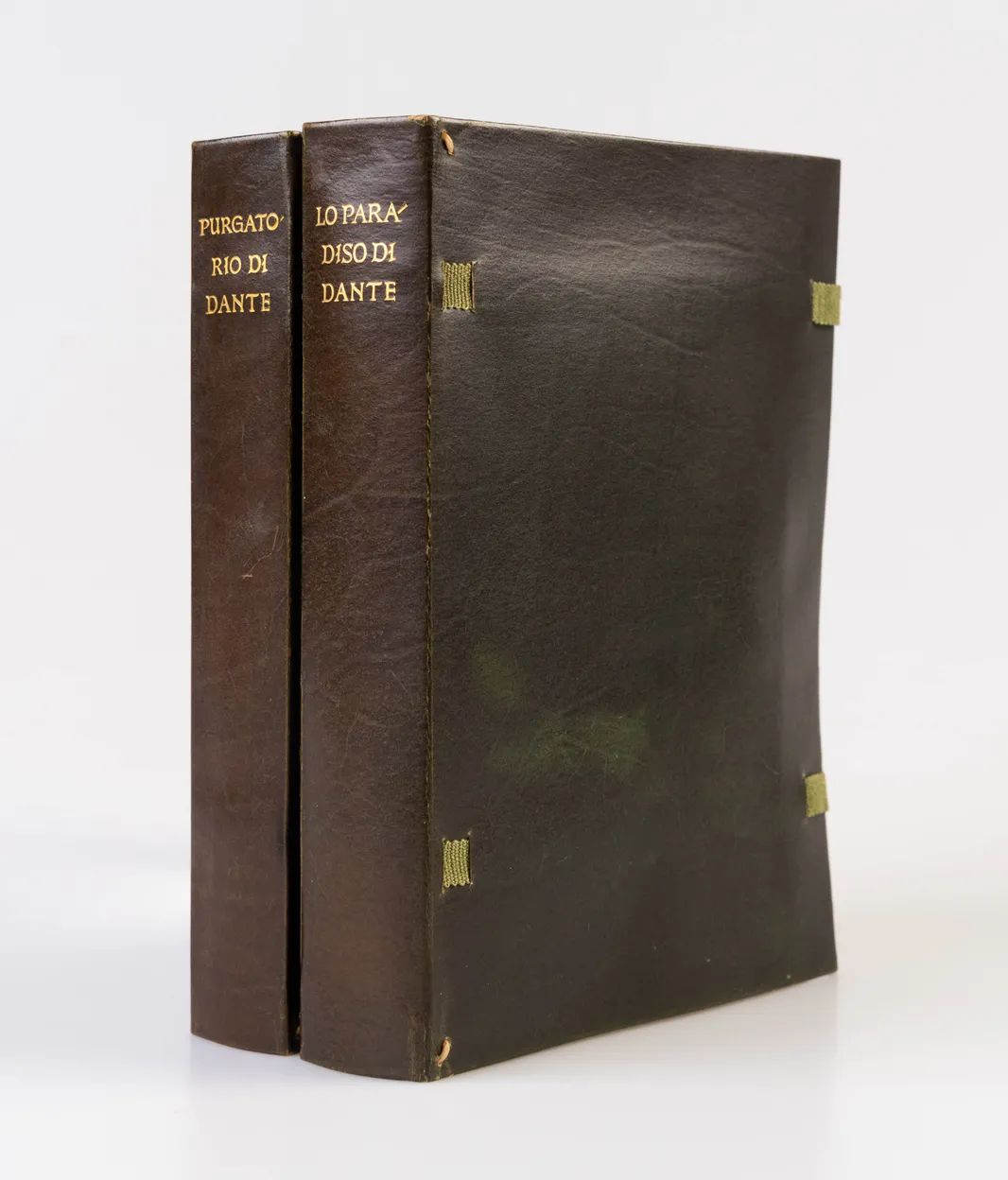
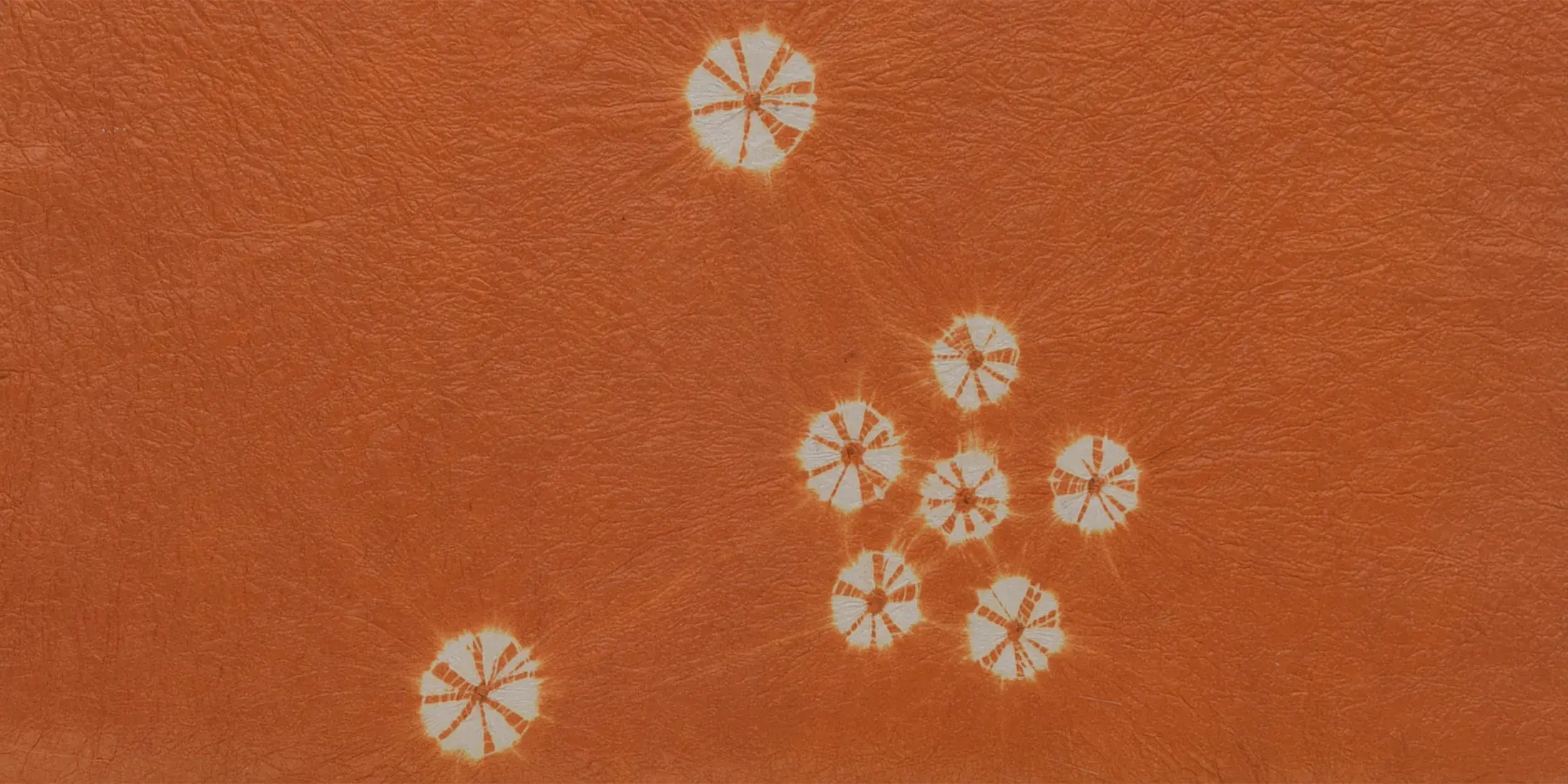
Near fine, slight discolouration to vellum of Paradiso, potentially a natural variation in the vellum.
Two volumes of the Ashendene Dante printed on vellum, a masterpiece of the press in its finest form. The first book in the Divine Comedy, Lo Inferno, was printed by the Ashendene Press in 1903 with only 14 copies on vellum, while Purgatorio and Paradiso were printed in an edition of 20 on vellum. Thus, there are 6 sets of Paradiso and Purgatorio on vellum without Inferno, of which the present books are one. Of the 14 copies of Lo Inferno on vellum, ten are in institutional libraries, with a further three in well established private collections, and only one copy unaccounted for. Of the two volume set on vellum, three are in institutional libraries, with two sets unaccounted for. The present example is therefore an exceptionally rare opportunity to own one of the masterpieces of the press.
Lo Inferno marked the first appearance of the Subiaco type, a combined effort between Emery Walker's professional expertise and Sydney Cockerell's scholarship, which is 'at its best as here in the uneven line-lengths of a poem' (Colin Franklin). Inferno was also the last Ashendene book to be set and printed without professional assistance, mostly being the work of St. John himself; he recalled in the Ashendene Bibliography that 'the setting-up and printing of 149 copies of the first volume of 'La Commedia di Dante' made so heavy a call on my spare time that I decided that either the idea of printing important books must be abandoned or a regular Pressman must be engaged'.
In the appearance of Graily Hewitt's elegant initials, the Dante also marked a new direction which would define almost all future Ashendene publications to come, with his work appearing in all but one of the following books. Hewitt's 'drawn initials in this book are as fine as any he would contribute in future. Gold, red, blue and green were used; a red opening was tried on Japanese vellum, but for Graily Hewitt's gold we may always be thankful.' (Franklin)
Emily Daniel wrote to Hornby on receiving her copy of Lo Inferno, 'no words of mine could tell you what I think of it. I think it is the most beautiful modern book I have ever seen, nothing issued from the Kelmscott Press can come anywhere near it'. It must have come as something of a relief that Sydney Cockerell, having been so intimately involved in the creation of the Subiaco Type, was similarly effusive, 'the Dante has come. It looks splendid, and I congratulate you heartily. I was wrong in thinking that the pictures should all have been at the top of the page. They are just as they should be.'