An intriguing and apparently original manuscript miscellany dedicated to the art of engraving, composed of catalogues listing and describing hundreds of engravings by 16th and 17th century masters including Raphael, Durer, Rubens, Robert Nanteuil, Charles Le Brun, Anthony van Dyck, the Carracci, the Sadelers and Simone da Pesaro (Cantarini), among others.
Written in Italian, mostly in one hand - by the unidentified “G.B.G.C.F.” indicated on the title page, while residing in Madrid – and over a few years, judging from the changes in ink colour, this manuscript is distinctly instructive in tone. It is principally arranged by artist, with each section following the same structure: following a brief introduction to the work of a particular artist – Raphael, Durer, and so on - there is a list of engravers who produced prints after the painter’s work, followed by a list of those prints, arranged by subject. A portion of the work is dedicated to the ciphers and marks of various masters, artisans and engravers from all over Europe; at the end the writer gives a list of prints and their prices available at the print shop of Giacomo Frey (1681-1752) in Rome, as well as (on f. 144r&v) a list of various volumes of engravings of antiquities sold by the de Rossi firm. ‘Osservazioni’, on f.141v, offers advice on good general reference works – ‘I libri di pittura and vite de pittori will be useful for learning the rules of painting’ – as well as a more in-depth account of the skills and style to be learned from individual artists and engravers (‘movement’ and ‘soul’ from Carracci and Titian, for example). Combined, these elements give the impression of this being written and intended to be a handbook or instruction manual, of sorts, for an art student or budding print connoisseur.
Along with the sheer volume of art and artists covered here, particularly notable are references to contemporary and near-contemporary sources. At the foot of the first page mention is made of the ‘Catalogo de i Marolli’, i.e. Michel de Marolles’ Catalogue de livres d’estampes et de figures en taille douce (Paris, F. Leonard, 1666), a work of huge importance and the first publication on print collecting. Marolles’ (1600-81) vast collection of some 120,000 prints was sold en bloc to Louis XIV in 1667. His small format volume packs into its 167 pages of text an enormous amount of information about the over 500 volumes of plates, and clearly served as inspiration to the compiler of this manuscript. On f.28r, the anonymous compiler draws heavily on court painter and curator David Teniers’ Theatrum Pictorium (1660), the first illustrated catalogue of an art collection ever published, in which some of the most accomplished northern European engravers were commissioned by Teniers to reproduce the paintings in the exceptional collection of his employer Prince Leopold Wilhelm, the Governor General of the Netherlands under the Habsburgs. The final ten leaves contain an historical survey of engraving, taken verbatim from Vasari’s Vita di Marcantonio Bolognese et d’ altri intagliatori di stampe, with a precise reference given to the edition.
The writer also makes reference to the development of ‘new methods’; a later note is added on f.22r about a method ‘newly discovered’ in France, of imitating drawings in red chalk, ‘lapis rosso’ in print. On f.74r they write of ‘una maniera nera’ that is, mezzotint, invented in ‘Augusta Vindelicorum’ – Augsburg – to ‘the modern taste’, ‘sul gusto moderno’ and used to make popular prints bought to decorate the interiors of people’s homes. The manuscript also provides an insight into the compilation and organisation of print collections as a serious pastime in this period, with the manuscript’s author dedicating nearly ten leaves (ff.101-108) to explaining how one might go about organising an extensive print collection. They describe 87 volumes arranged by subject, and chronologically, and a further 50 volumes arranged by geography, and by engraver. Finally they describe compiling volumes of mixed subjects (‘soggetti mescolati e confuse’); one of devotional emblems, for example; another of emblems, fables and enigmas; women of the Old and New Testaments; Pagan Gods; ‘Femmine difettose e furiose e libertine’, ancient and modern; and fish.
Interestingly, the writing of this manuscript coincides with the founding in Madrid of the educational Academia di S Fernando (Real Academia de Bellas Artes) in 1744, its inspiration going back some two decades when the idea was initially proposed by the painter Antonio Meléndez (though it only received its royal charter later, on 12 April 1752). While there is no explicit mention of the Academia in the manuscript, its date of composition, and tone, may indicate that there was a connection with the foundation in its early days. The presence on the title-leaf of the word ‘calcografica’ (written in the same hand as the title) may indicate that it was intended for the Academia’s engraving section.
The paucity in Spain of libraries and collections of engravings or ‘estampas’, together with a strong patriotic feeling as to what was being produced in Spain, was remarked upon by the contemporary – to this manuscript and its creator - courtier and academician Tiburcio de Aguirre Salcedo (1707-67). He wrote of the large sums spent on purchasing foreign prints supplied from abroad, and the neglect of home-grown pictorial documentation of Spanish discoveries in various fields which resulted in the unjust labelling of the country as without culture. Was this very detailed (but not all-embracing) account of European prints intended to act as a catalyst for a collection to be assembled for Spain, or one that was already there?
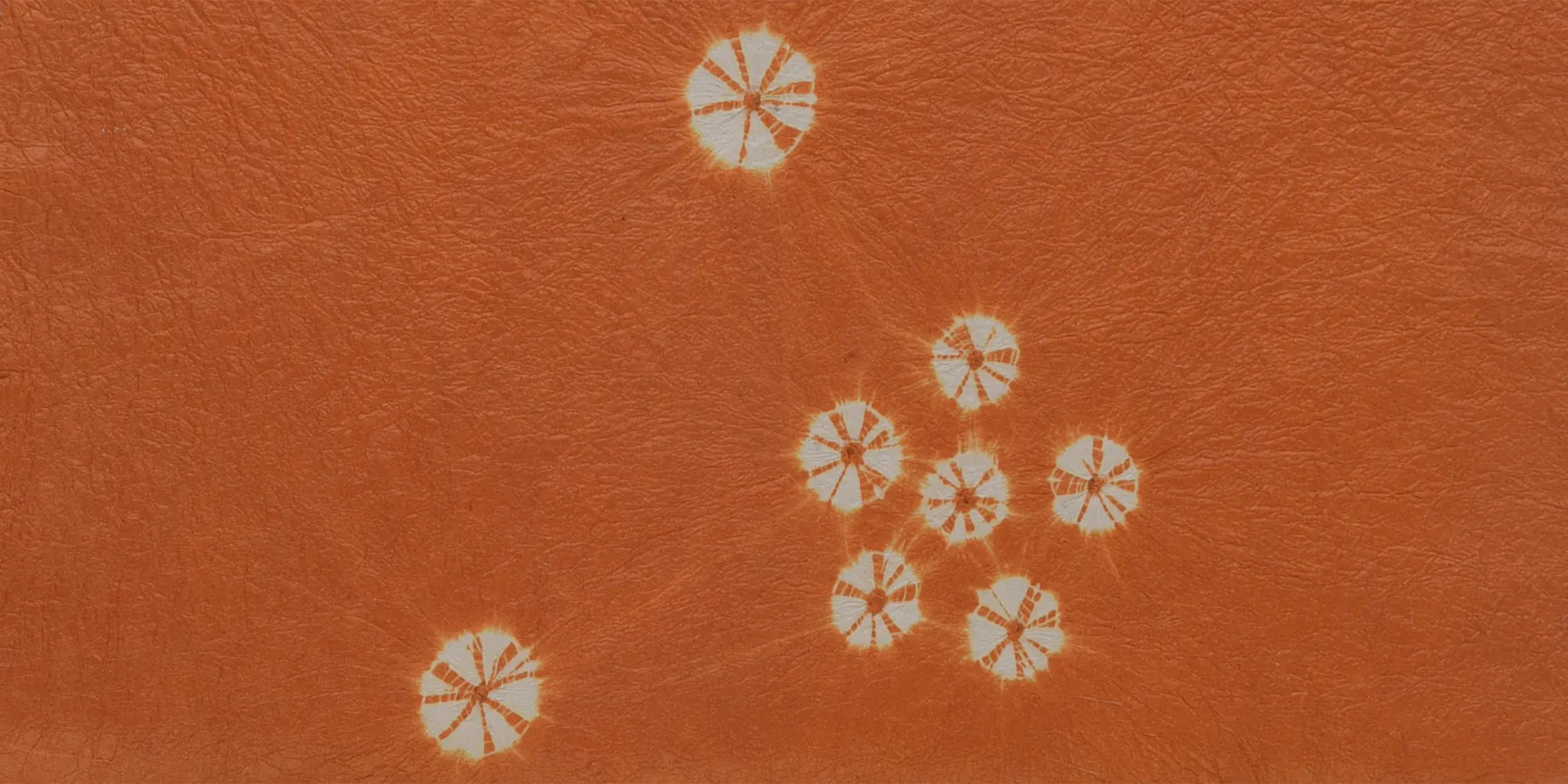
The wrappers come from the third volume of a widely circulated subscription publication, Galerie théatrale ou Collection gravée et imprimée en colours des portraits en pied des principaux acteurs… (Paris, 1812). The poor state of the end of the manuscript may suggest, along with these ad hoc wrappers, that it may have been war booty brought back by French troops after the Peninsular War.
![[Manuscript on paper] Trattato della noblissima arte (calcografica) incisoria](https://api.maggs.com/image/40434391-d954-4036-8420-3a30b13af280/1248x1248.webp)
![[Manuscript on paper] Trattato della noblissima arte (calcografica) incisoria](https://api.maggs.com/image/16cb7f58-6884-4348-b077-932656106db9/1188x1188.webp)
![[Manuscript on paper] Trattato della noblissima arte (calcografica) incisoria](https://api.maggs.com/image/a736850a-0b6a-4946-822a-c9a9f0074b37/1188x1188.webp)
![[Manuscript on paper] Trattato della noblissima arte (calcografica) incisoria](https://api.maggs.com/image/97f2771f-e6bd-4ed6-b90b-7a4da37e05fc/1188x1188.webp)
![[Manuscript on paper] Trattato della noblissima arte (calcografica) incisoria](https://api.maggs.com/image/f04b5380-632c-4969-ae39-8acb9f90cdeb/1188x1188.webp)
![[Manuscript on paper] Trattato della noblissima arte (calcografica) incisoria](https://api.maggs.com/image/e30c578f-021e-4c72-a291-155a9361e4b3/1188x1188.webp)
![[Manuscript on paper] Trattato della noblissima arte (calcografica) incisoria](https://api.maggs.com/image/d79333c8-fc5e-4aee-8b7c-8bade57ad48a/1188x1188.webp)
![[Manuscript on paper] Trattato della noblissima arte (calcografica) incisoria](https://api.maggs.com/image/3a4fc497-3c6e-45bd-a56c-84095a769458/1188x1188.webp)
![[Manuscript on paper] Trattato della noblissima arte (calcografica) incisoria](https://api.maggs.com/image/b0d6ab85-c099-42c8-909a-f5cd83424e9a/1188x1188.webp)