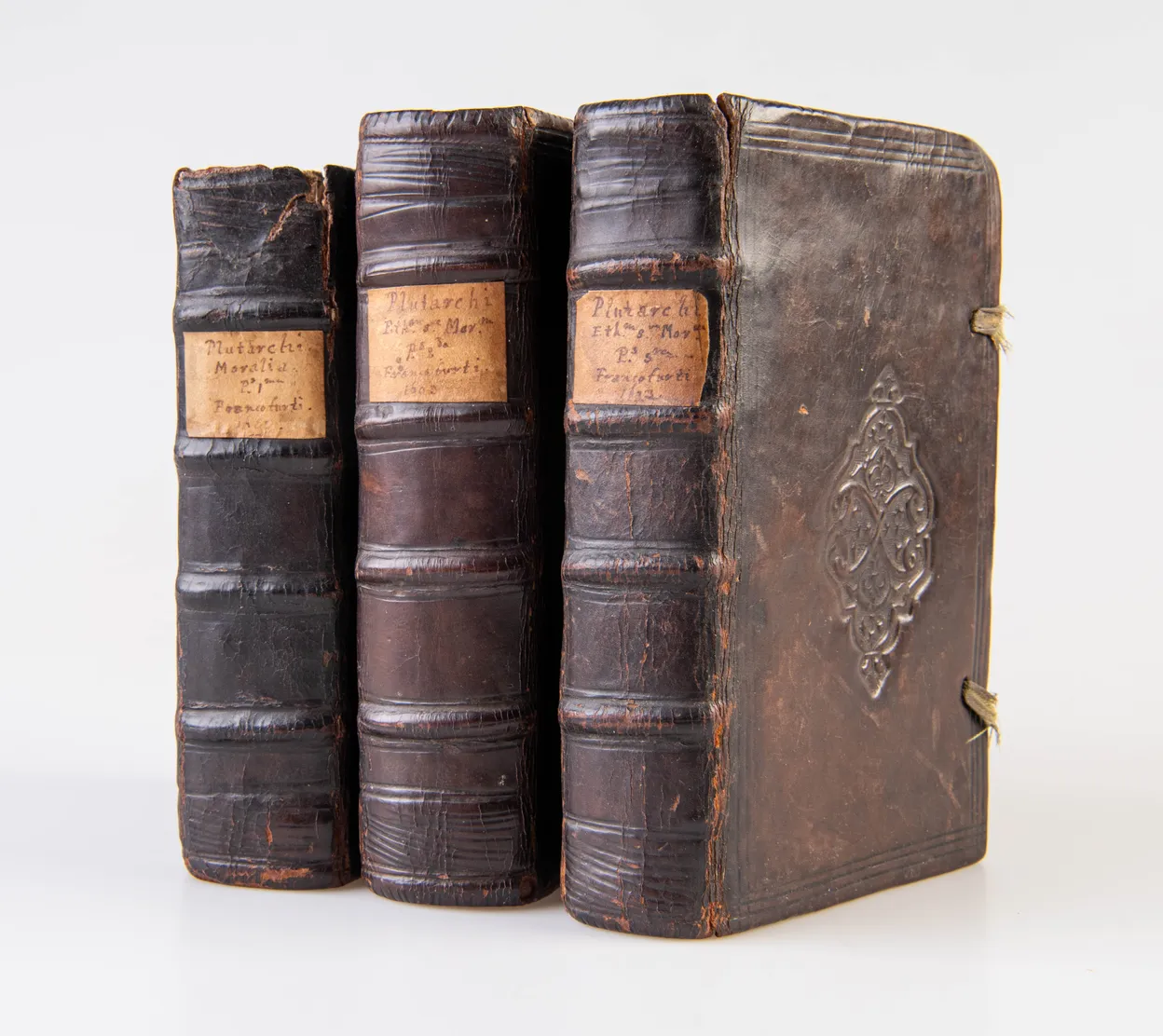
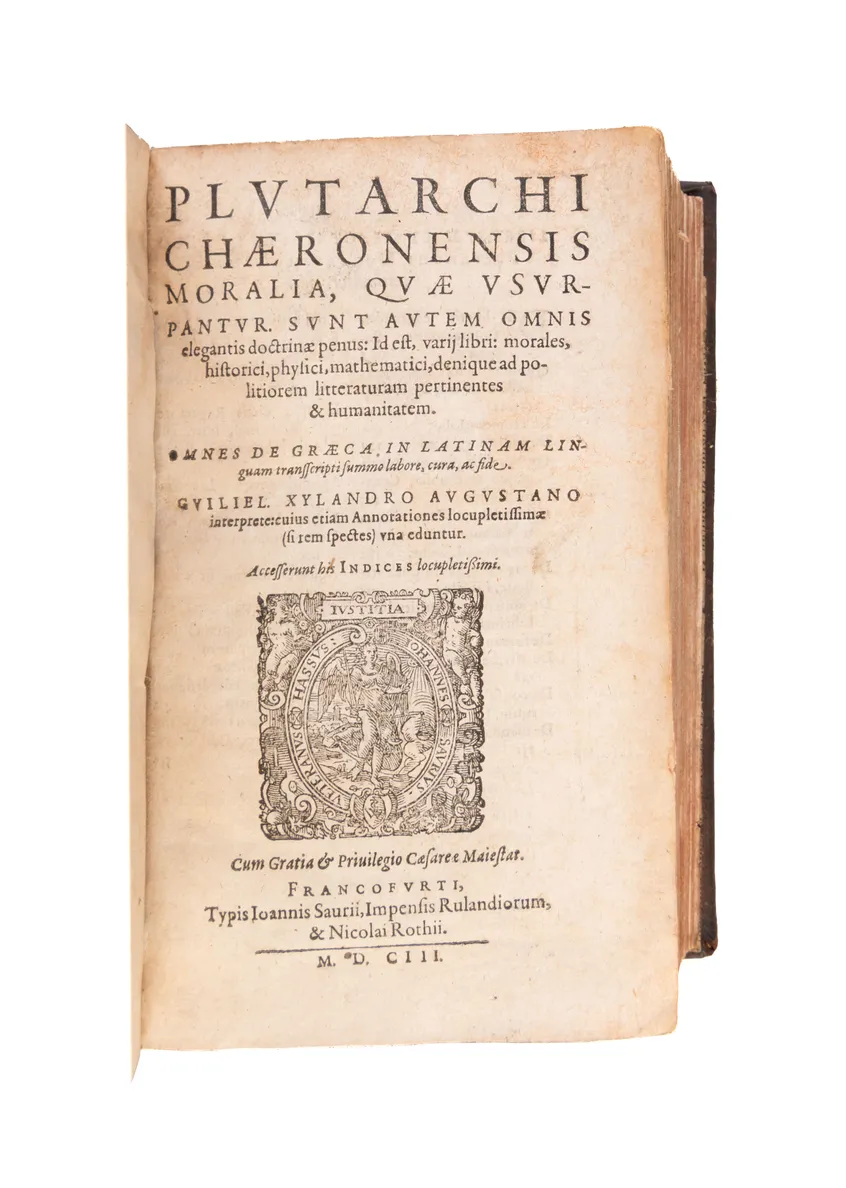
An attractive copy of this uncommon, early seventeenth-century edition of Plutarch’s Moralia in a handsome Oxford binding, complete with pastedowns of printer’s waste and rare, contemporary instructions for the binder - apparently ignored - written in an early English hand to the verso of the rear endpaper of volume 2: ‘Binde these 3 p[arts] in on[e] volume in 4o in murrey lether rolles red edges’.
‘Murrey’ was a mulberry shade of purplish-brown, and the leather of the second volume fits that description - but we have been unable to find a reference to ‘murrey’ to describe English or continental book binding or binding leather. The central ornament is Pearson’s vi(b), which he identifies being used in Ker’s no.1533, a 3-volume set of Gregorius de Valentia, (Lyon, 1603), now at Brasenose.
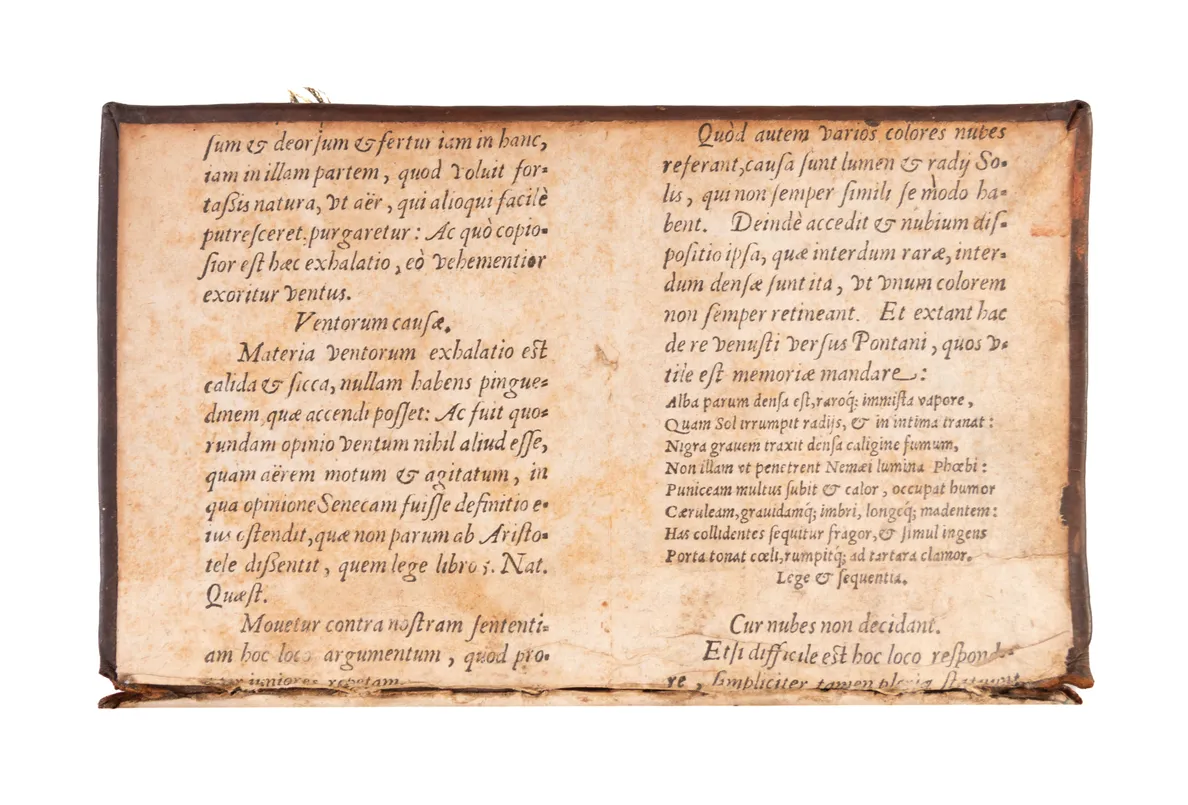
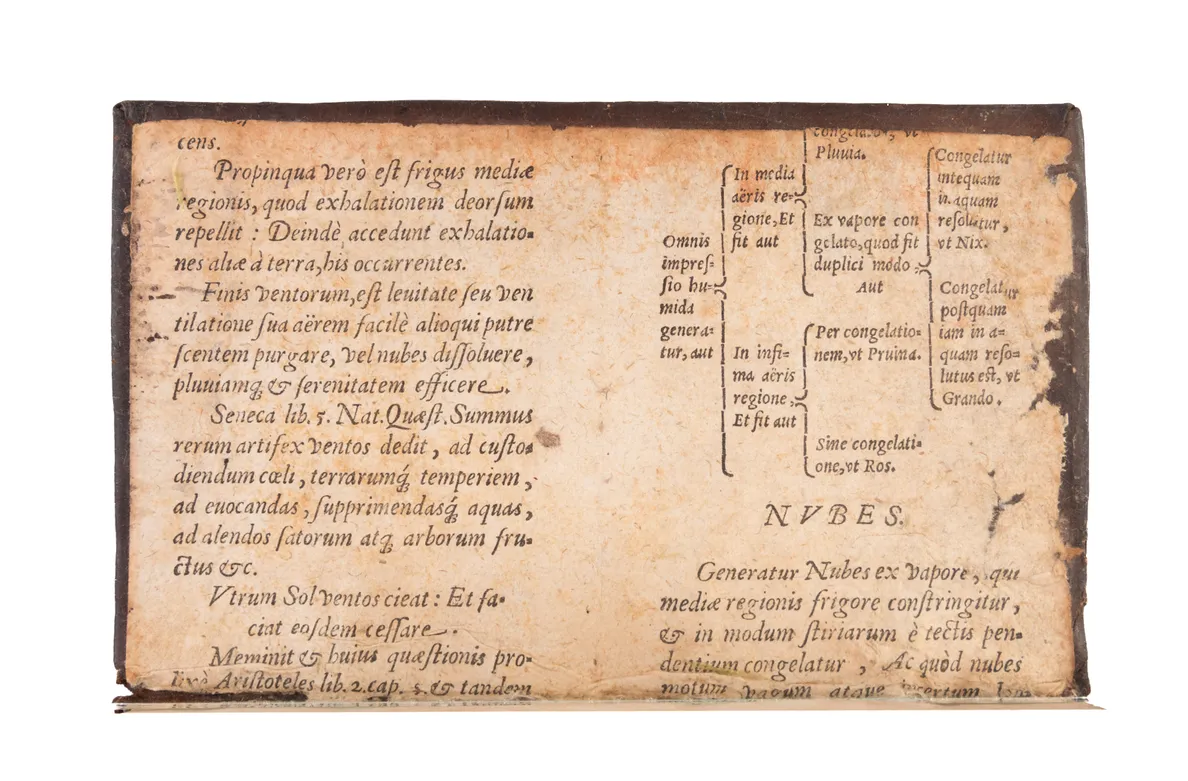
The printed waste used as pastedowns in these three volumes are fragments of sheets from three different works. Those in the first and third volume are from the same work on weather, with references to Aristotle and Seneca, and on the rear pastedown of volume three, intense thunder in Wittenberg and surrounds in 1556, over the feast of Circumcision.
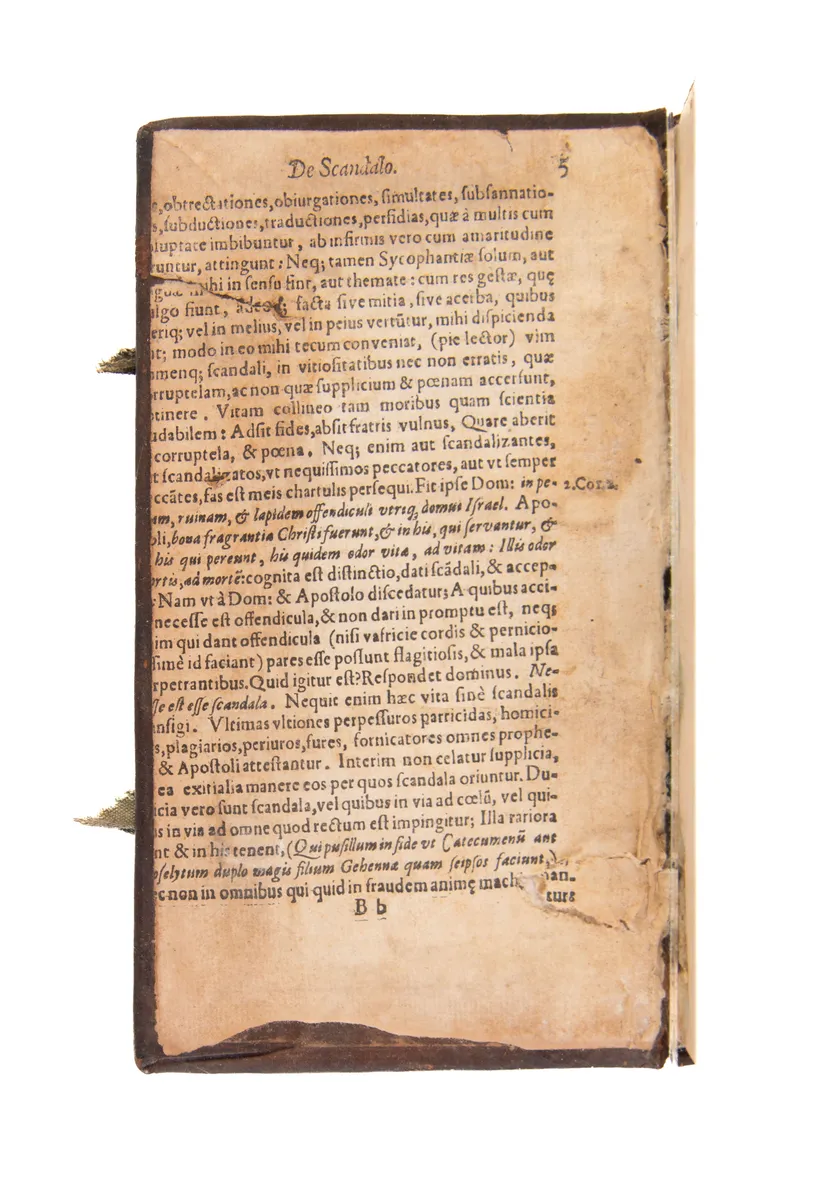
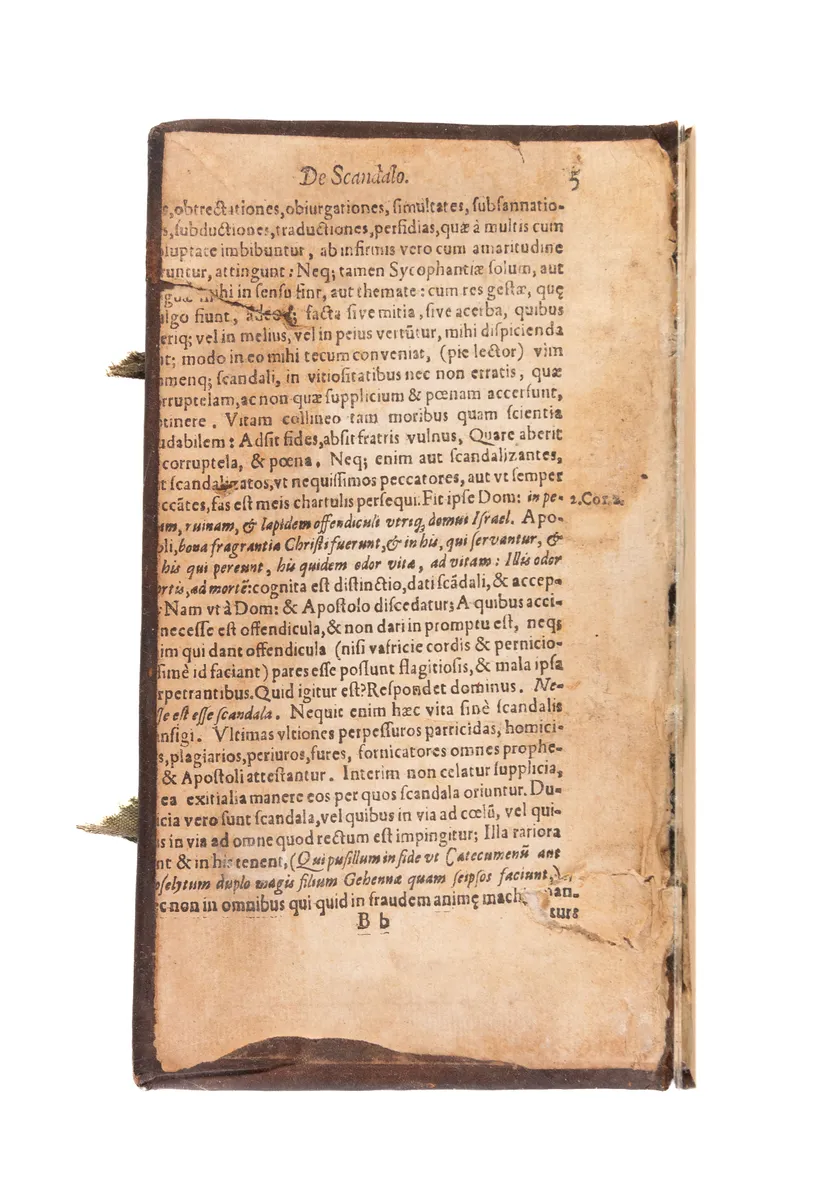
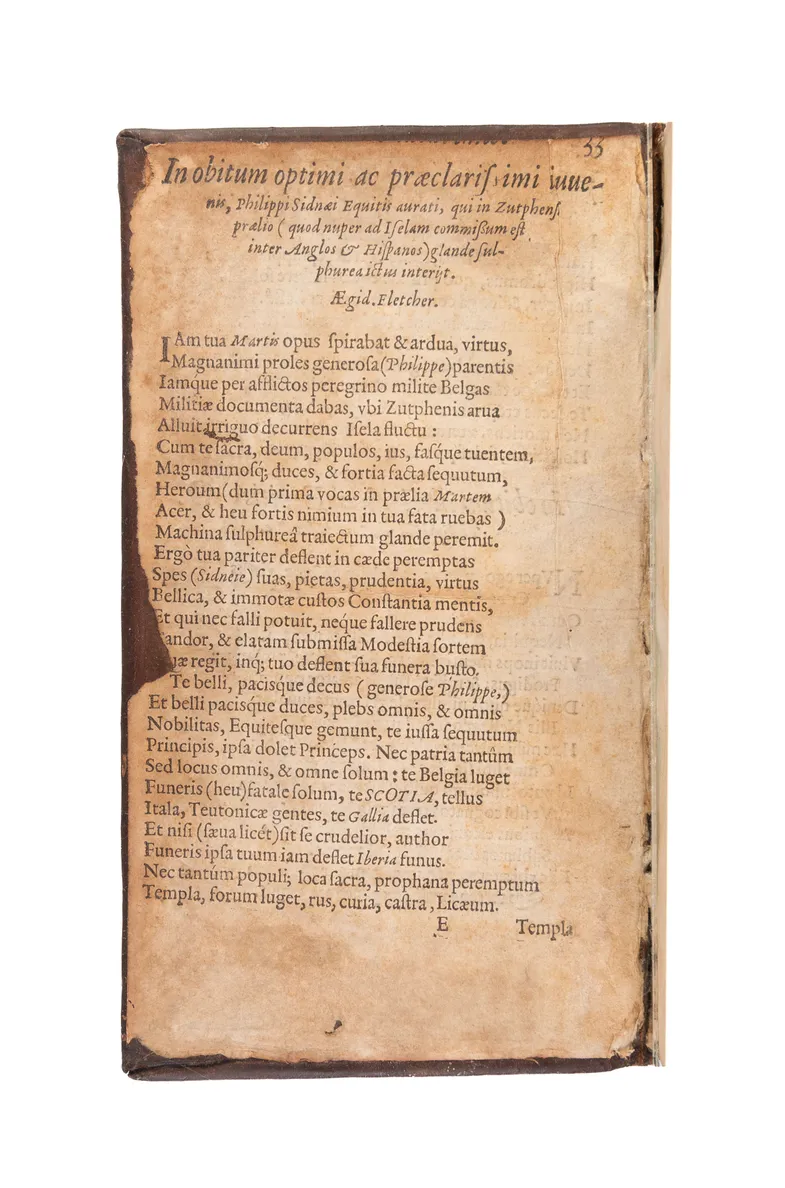
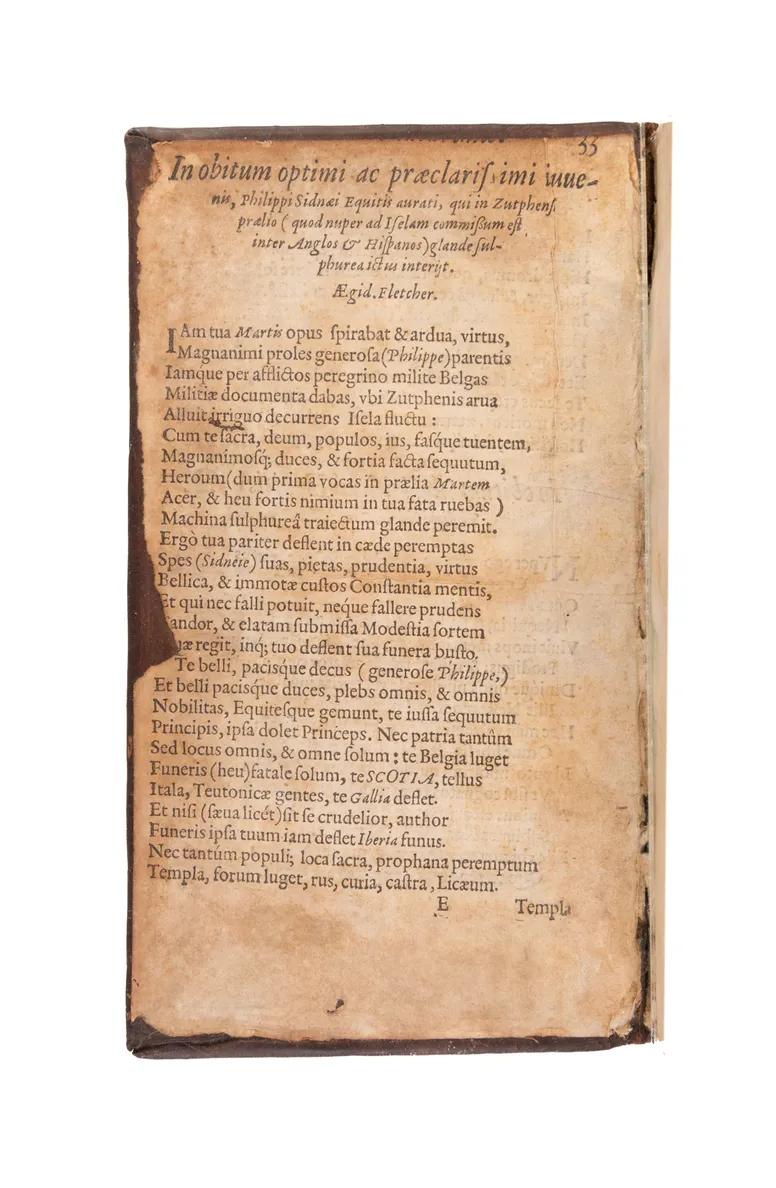
In volume 2, the front pastedown contains the beginning of a Neo-Latin elegy for Philip Sydney by Scottish poet Giles Fletcher the Elder, printed in a Cambridge memorial volume of 1587 to mourn the death of the poet (Academiae Cantabrigiensis Lachrymae Tumulo Nobilissimi Equitis, D. Philippi Sidneij Sacratae per Alexandrum Nevillum (London: John Windet for Thomas Chard, 1587)). The rear pastedown of the same volume is p.5 of Thomas Kingsmill’s ‘De scandalo’, the second part of his censorious Classicum poenitentiale (Oxford: Joseph Barnes, 1605) on the moral state of England.
Titles and early leaves occasionally browned, occasional bleed-through from coloured edges, but a handsome set in very good condition.
VD17 23:325250L. Pearson, Oxford Bookbinding 1500-1640, p.110 stamp vi(b); this stamp used in Ker, Pastedowns in Oxford Bindings, no.1533 (not Ker’s centrepiece i).
OCLC: BL, Exeter, NLS (incomplete), Aberdeen, Newcastle. VD17 lists only four copies in German libraries.