PASCAL (Blaise).

Oeuvres.

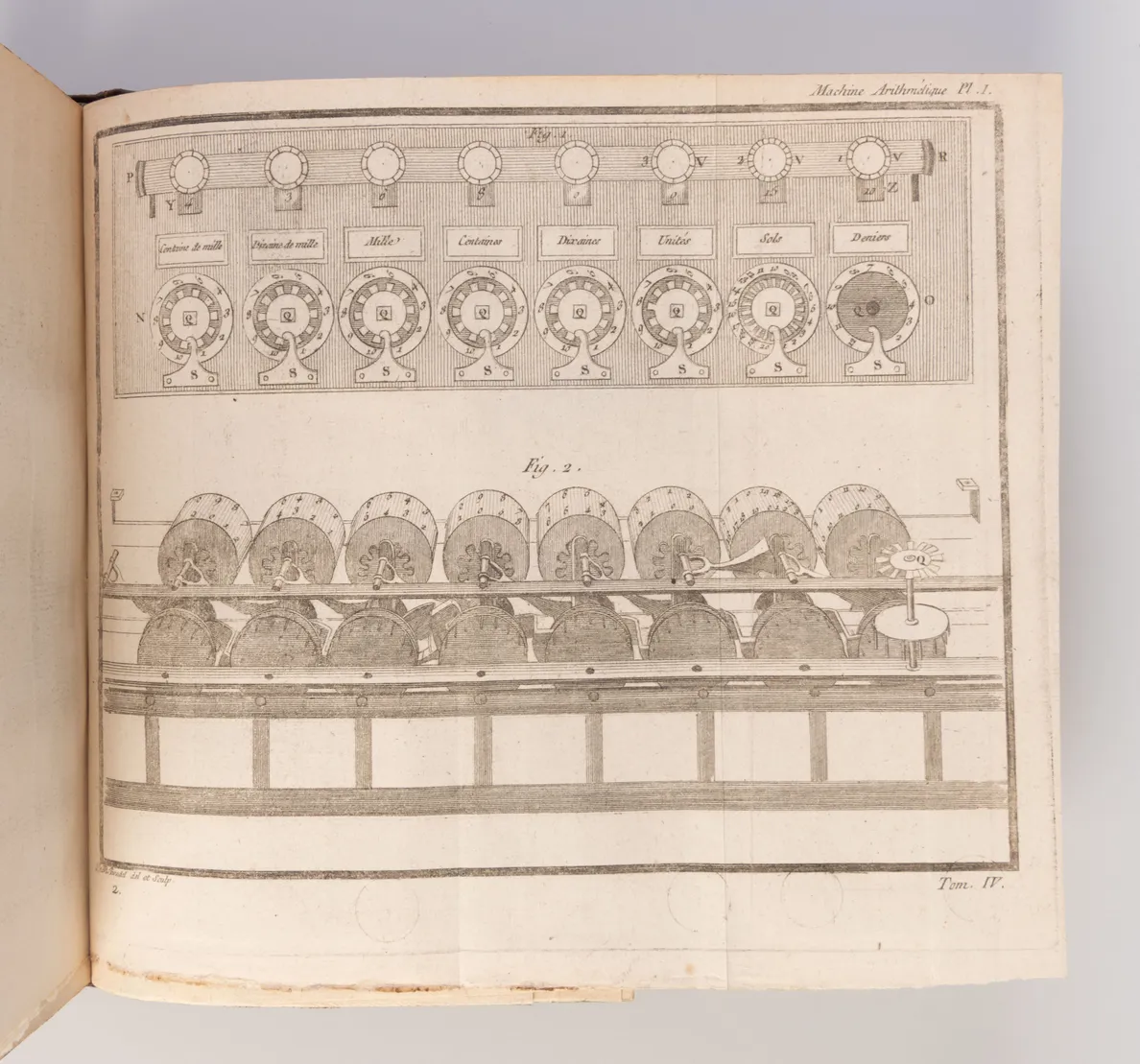
INCLUDING ILLUSTRATIONS OF PASCAL'S CALCULATORS

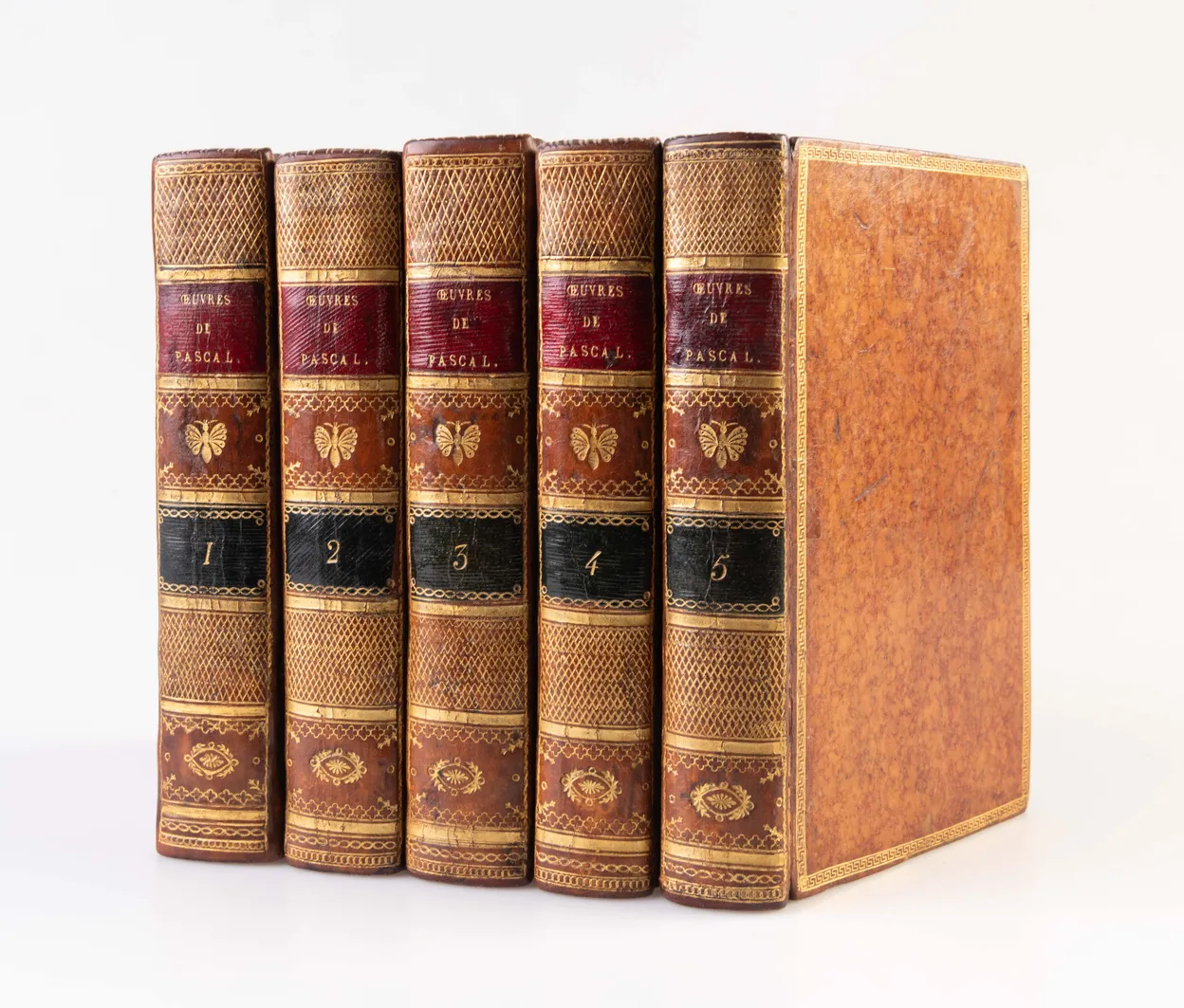
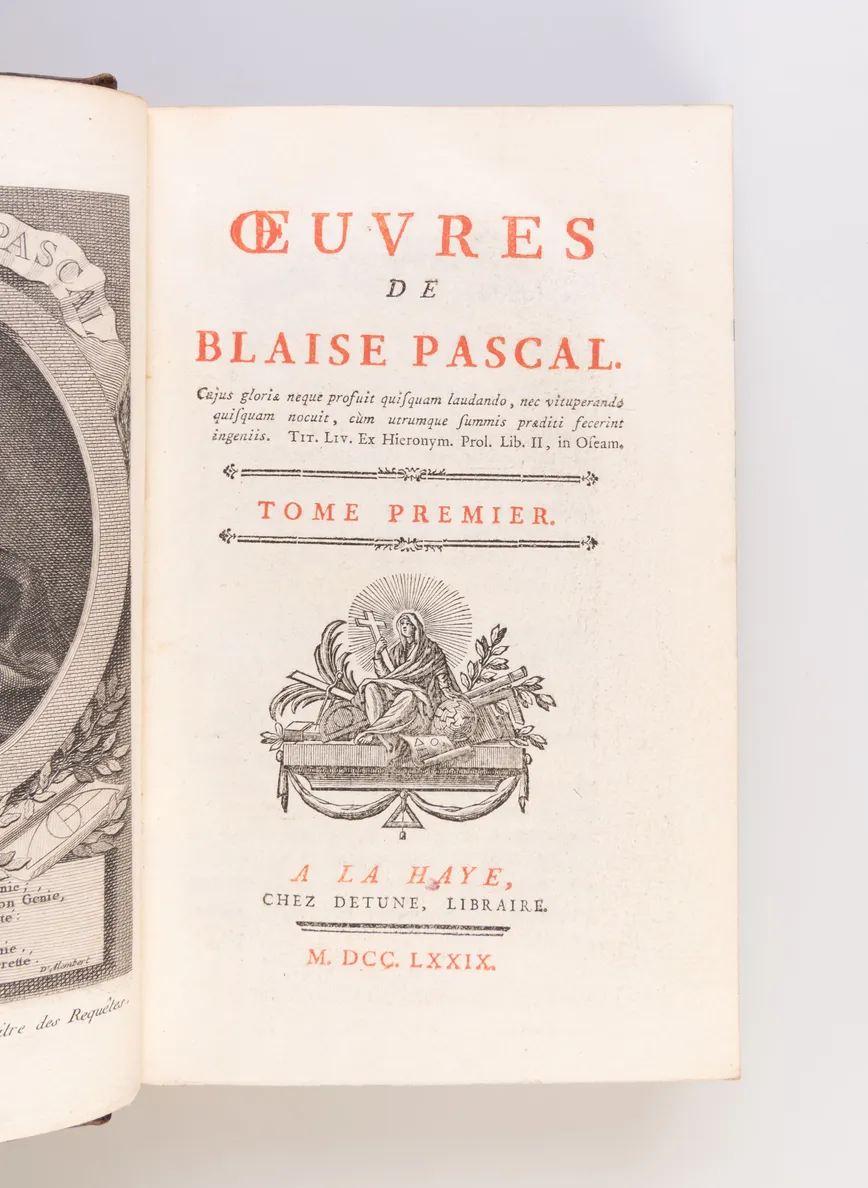
First collected edition. Five volumes. 8vo. 132, 425, [1]; xii, 549, [1]; 526; viii, 456; viii, 462, [4] pp., engraved frontispiece portrait of Pascal after L.N. Quesnel and 14 engraved folding tables. Title pages printed in red and black with woodcut publisher's devices, woodcut head- and tail-pieces throughout. Contemporary mottled calf, smooth spines panelled with thick gilt rules, second and fourth panels lettered in gilt on red and black morocco labels, the rest with alternating gilt devices and elaborate gilt lattice work, covers with gilt Greek-key roll borders, marbled endpapers, marbled edges (contents generally clean and fresh; some light shelf wear to extremities, a fine copy). A la Haye [Paris], Detune [Nyon], 1779.
£3,000
On Hold
Enquire
PASCAL (Blaise).
Oeuvres.

A handsome set of the first collected edition of the works of the great French polymath Blaise Pascal (1623-1662), including much significant material published here for the first time.

The first three volumes are devoted to Pascal's literary and philosophical writings, with the second volume containing Pascal's Pensées or 'Thoughts' which introduced the concept of 'Pascal's Wager', possibly the most famous of all theological arguments for faith.

The remaining two volumes contain Pascal's scientific and mathematical works. Pascal was the towering figure among the European mathematicians of the seventeenth century. His achievements range from his celebrated calculating machine - the first to be produced commercially - to projective geometry, the calculus of probabilities and indivisibles and to the study of infinitesimal problems. Among the scientific works appearing here for the first time are the famous Pascal-Noël correspondence on the vacuum, the letter to Le Pailleur refuting Noël, the preface to the treatise on the vacuum (the only surviving fragment of his intended major treatise on the vacuum), and his correspondence with Fermat and de Ribeyre. Also included are all of the Pascal texts relating to his invention of the calculating machine, with two finely engraved plates depicting the mechanism.

The collection was edited by Charles Bossut (1730-1814), an important French disseminator of science and major contributor to scientific education, who also contributed a biographical piece on Pascal titled 'Discours sur la vie & les ouvrages de Pascal' which appears at the beginning of Vol. 1.

Stock No.
262096
Mailing List

Mailing List

Be the first to receive catalogues, short lists and news from our booksellers
Subscribe