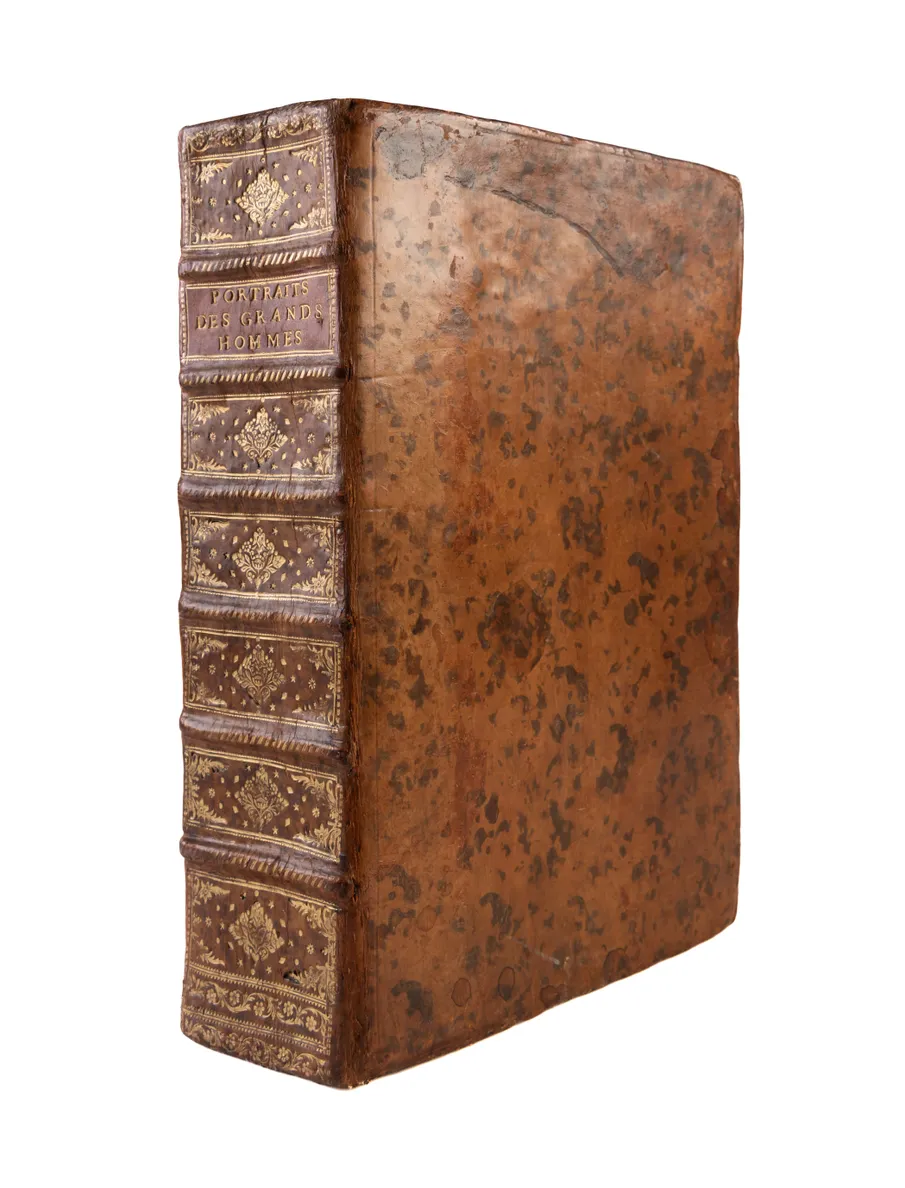
A remarkable survival of a collection of 16th, 17th and 18th century woodcut and engraved portraits compiled by two generations of the de Couvrot family, handsomely bound and with a stencilled title-page dated 1785.
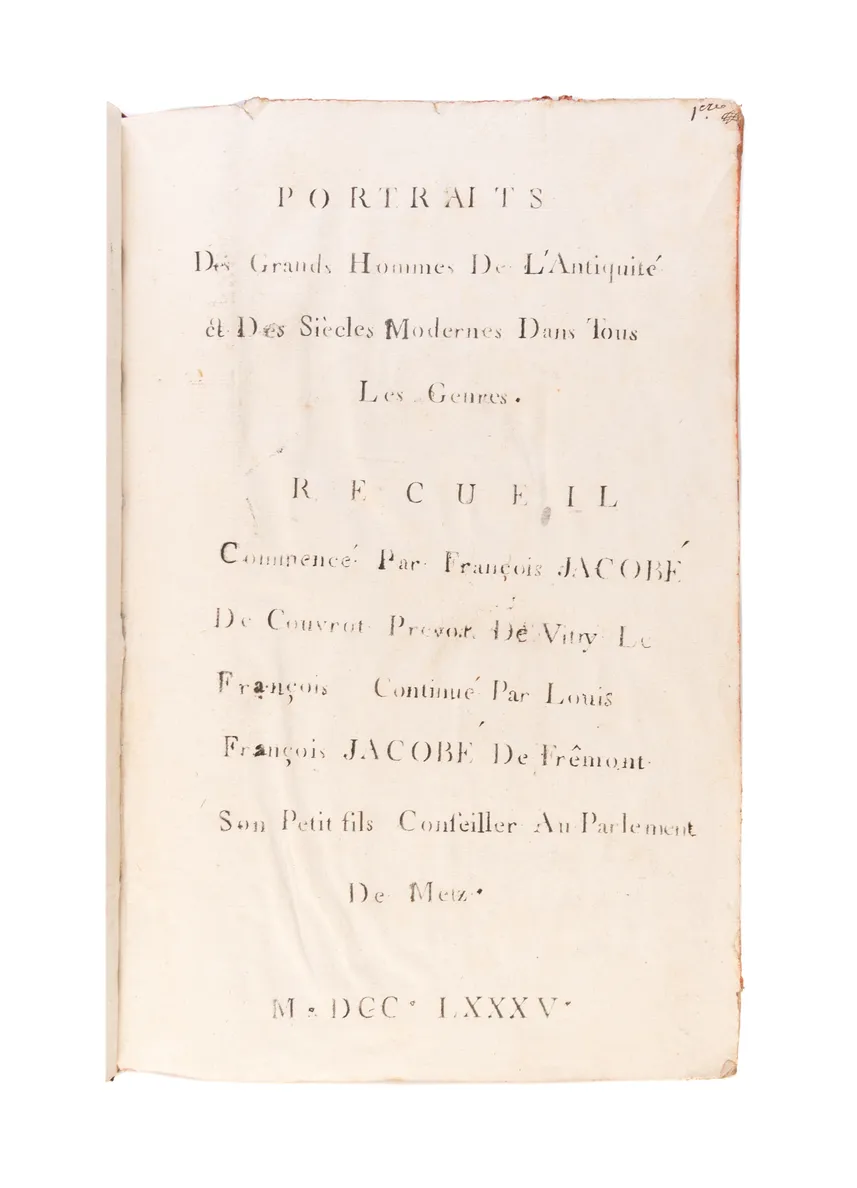
This album was begun by François Jacobé de Couvrot (1689-1757), provost of Vitry-le-François, a commune in the Marne region of northeastern France, the post of provost being responsible for administering justice and maintaining public order in the area. It was continued by his grandson, Louis-François Jacobé de Frêmont (1756-1825) who was a councillor at the Court of Aids in Paris, which dealt with tax disputes, and was also a "councillor at the Parliament of Metz" as stated on the title page.
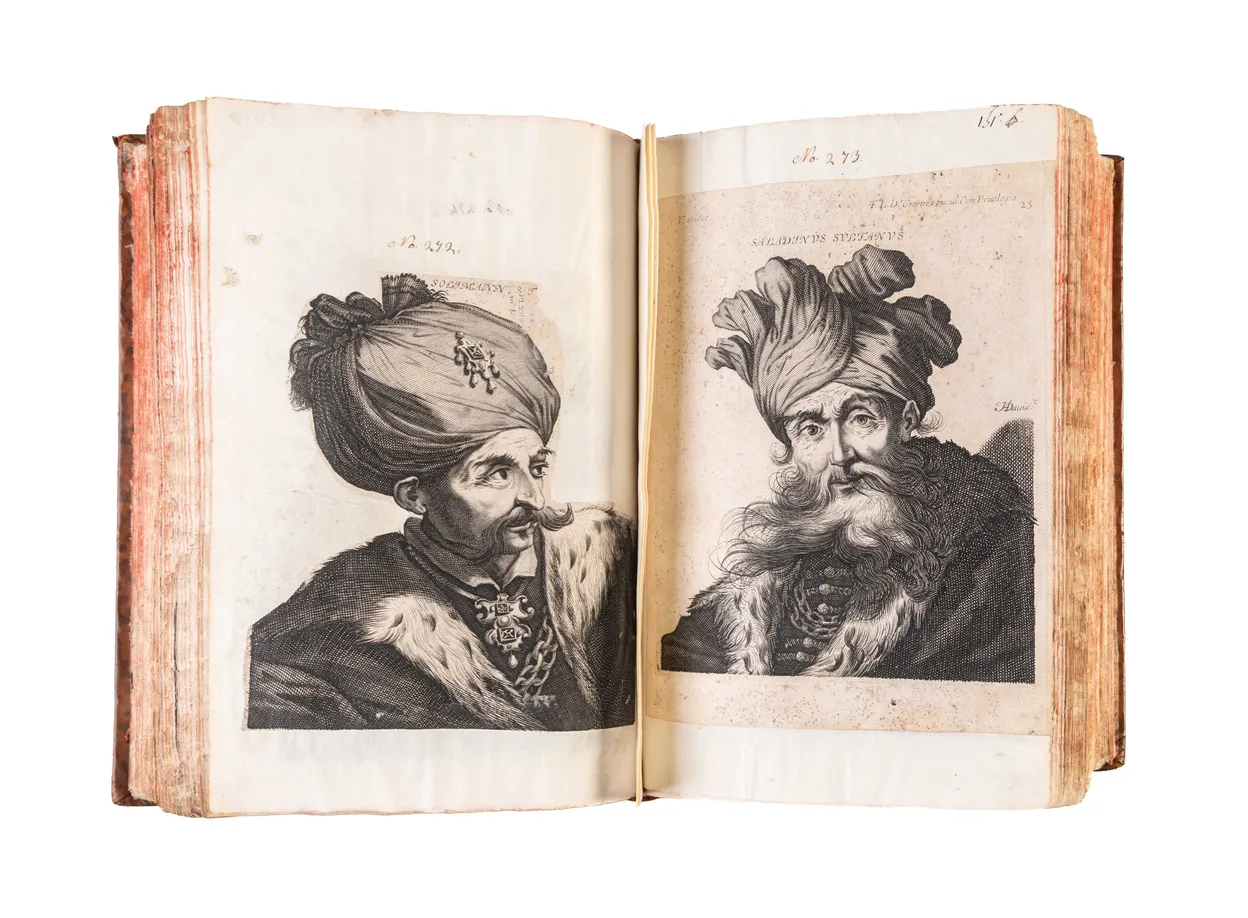
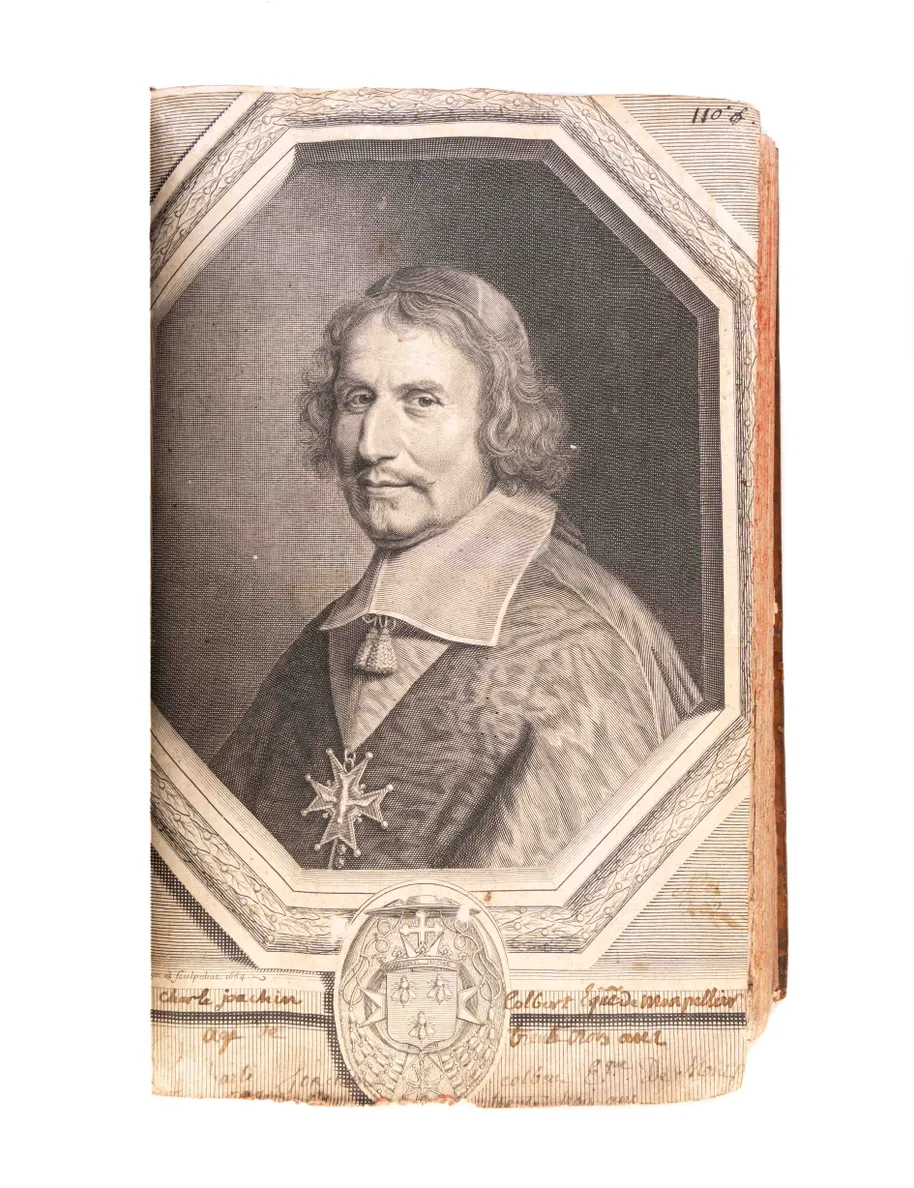
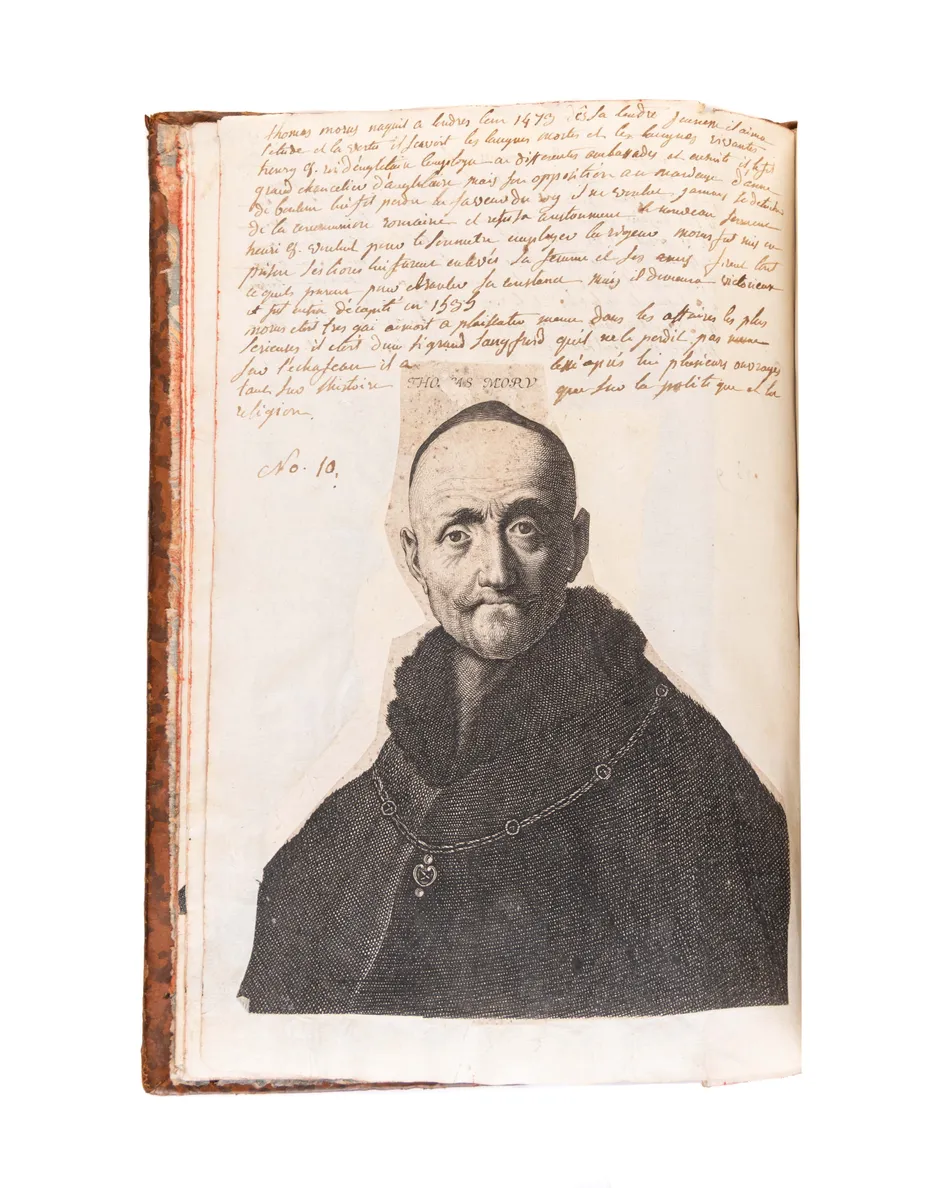
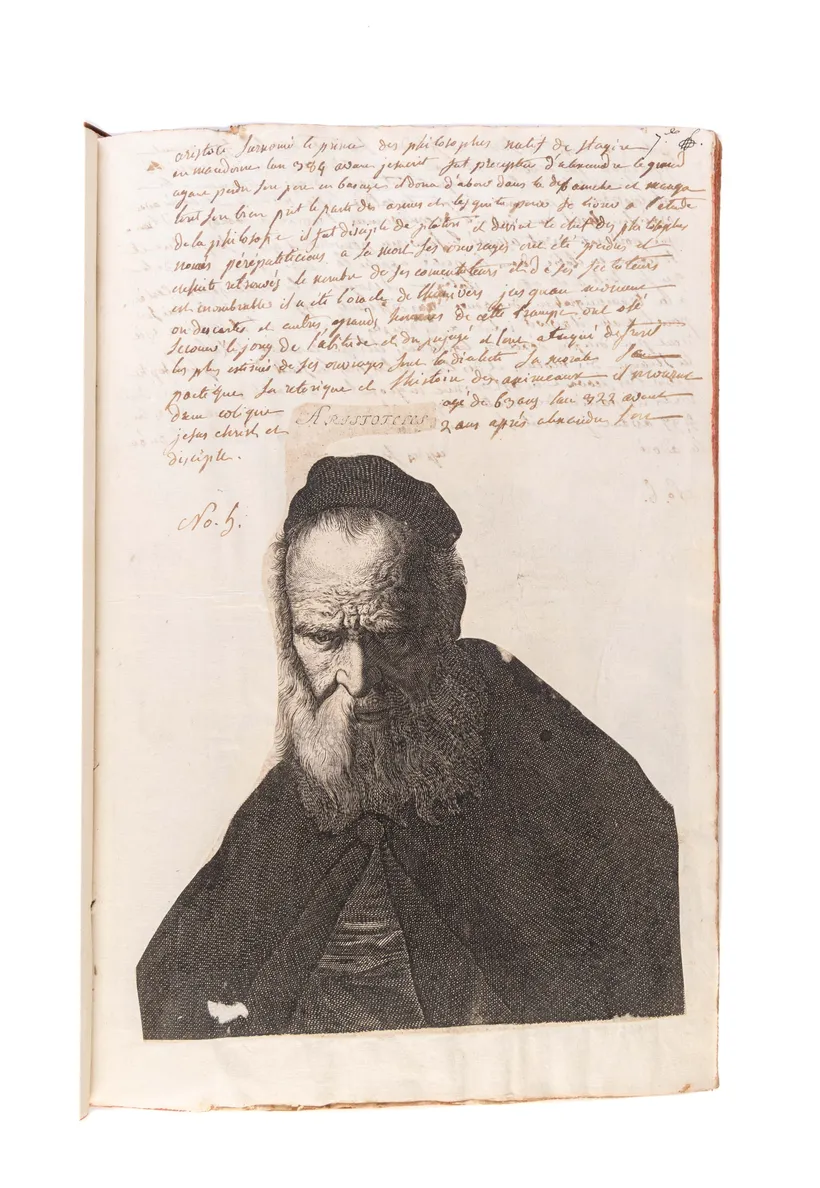
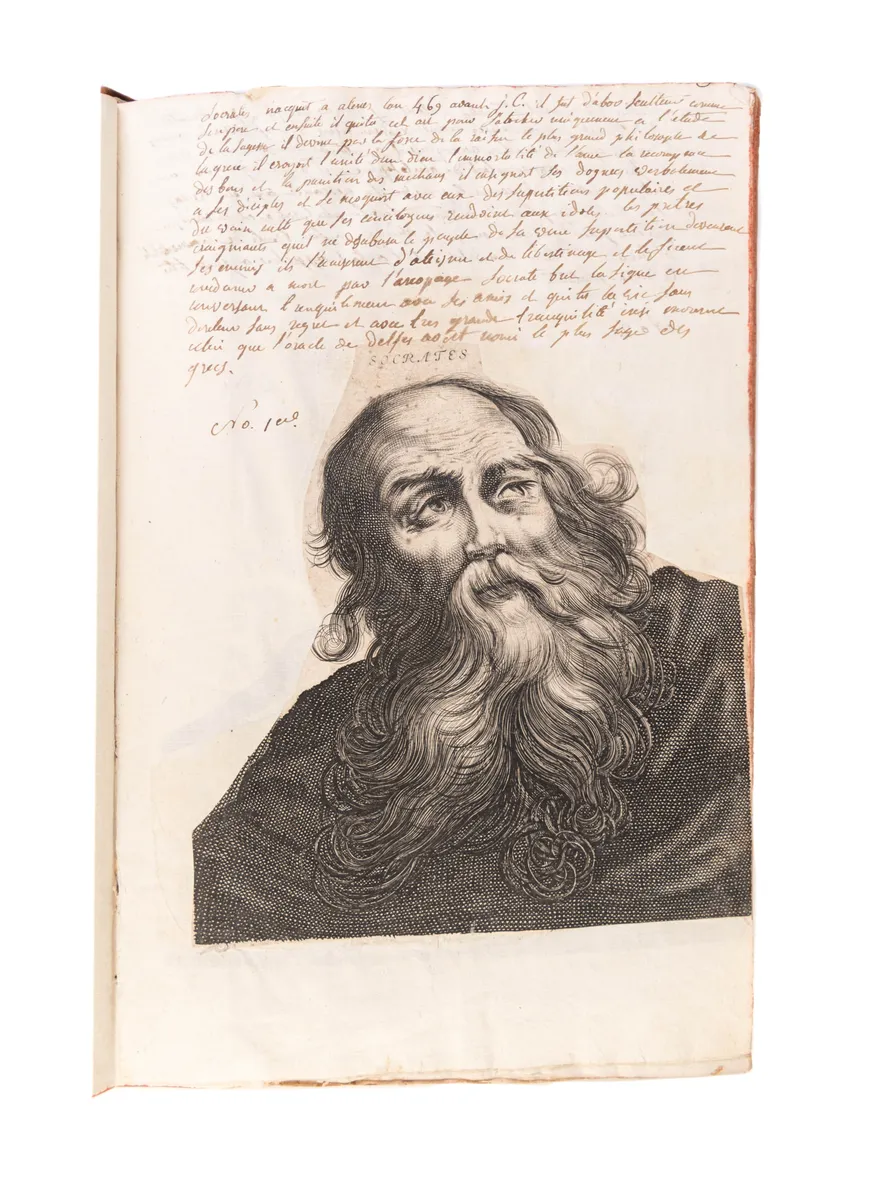
It would be fair to say that the Couvrots were not print connoisseurs but rather sought out distinguished historical figures for their collection as was the fashion in France and England in the 18th century. The quality of the subject, rather than the name of the draftsman or engraver, was the focus of interest here and the titles and names of the artists have sometimes been lost in the cutting process. For example, the first ten are cut out with the name of the original artist, some after Rembrandt, the engraver Jerôme David and publisher François l'Anglois (called 'Ciartres'), lost in all but two examples. The subjects here begin with the Greek philosophers Socrates and Plato but also include 'Doctor Faustus' and a striking representation of Thomas More, these first ten also have copious biographical notes presumably in the hand of the elder de Couvrot (a few pages of notes referring to portraits are also found towards the beginning of the volume) - further subjects from the series (rulers from the East) are described below.
The collection then proceeds with portraits of ancient and contemporary authors, philosophers, statesmen, academics, churchmen, scientists etc arranged in groups.
Among the hundreds of engravings we have:
The great reformers, Luther (31), Calvin (32), Hus (33), Zwingli (34), Bucer (35) Melanchthon (36) after René Boyvin, with his monogram - part of his series produced 1565-70.
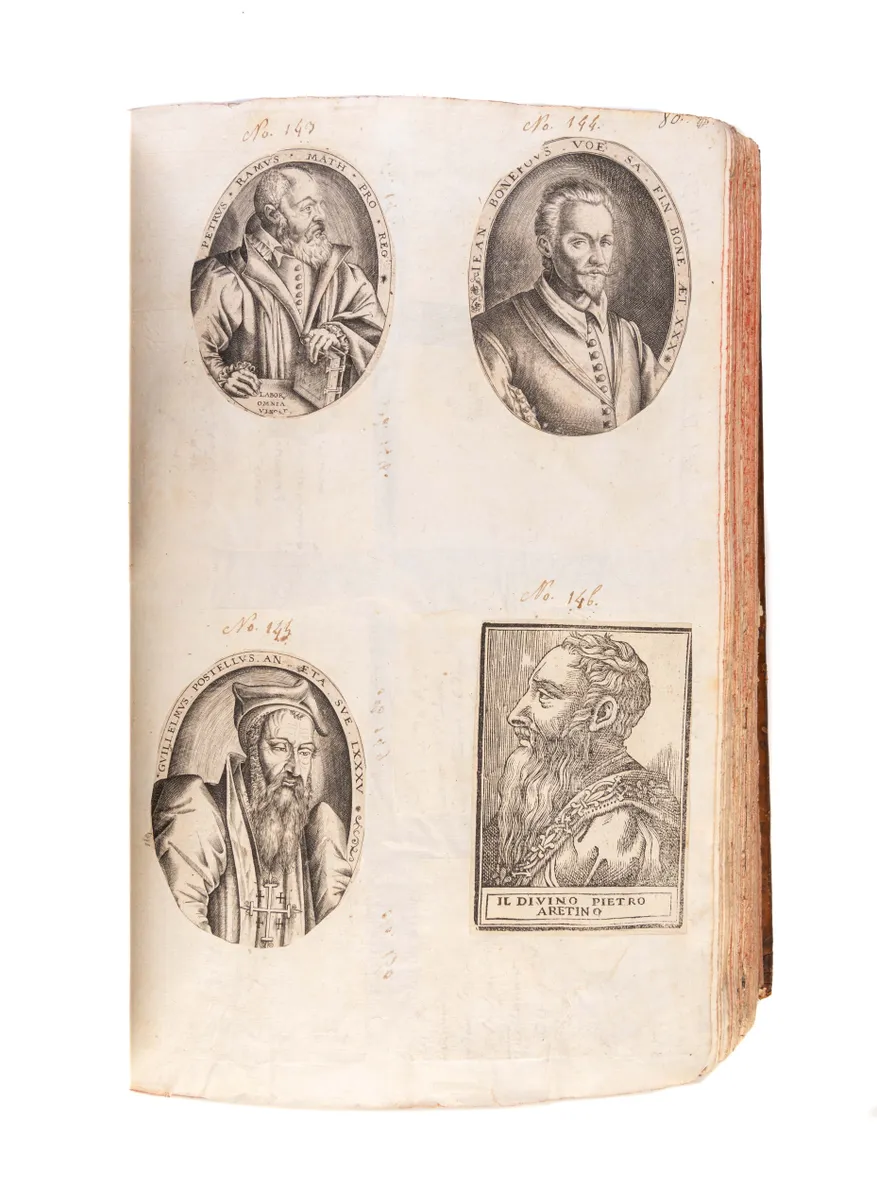
Renaissance figures and humanists, many by Philippe Galle from his Virorum doctorum de disciplinis benemerentium effigies XLIIII of 1572 such as Petrarch (100) Dante (101) Boccaccio (107) Sambucus (51) Vives (66) Bude (74) Bembo (79) Alciati (85).
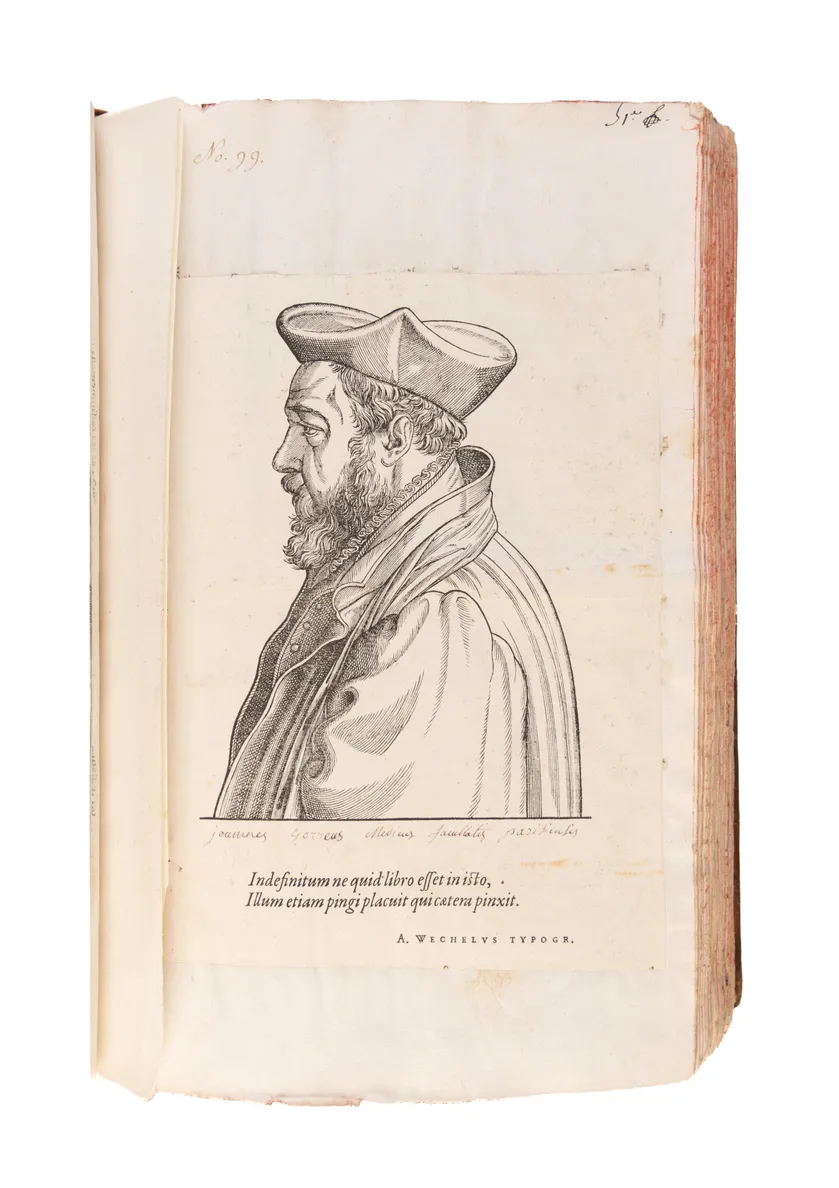
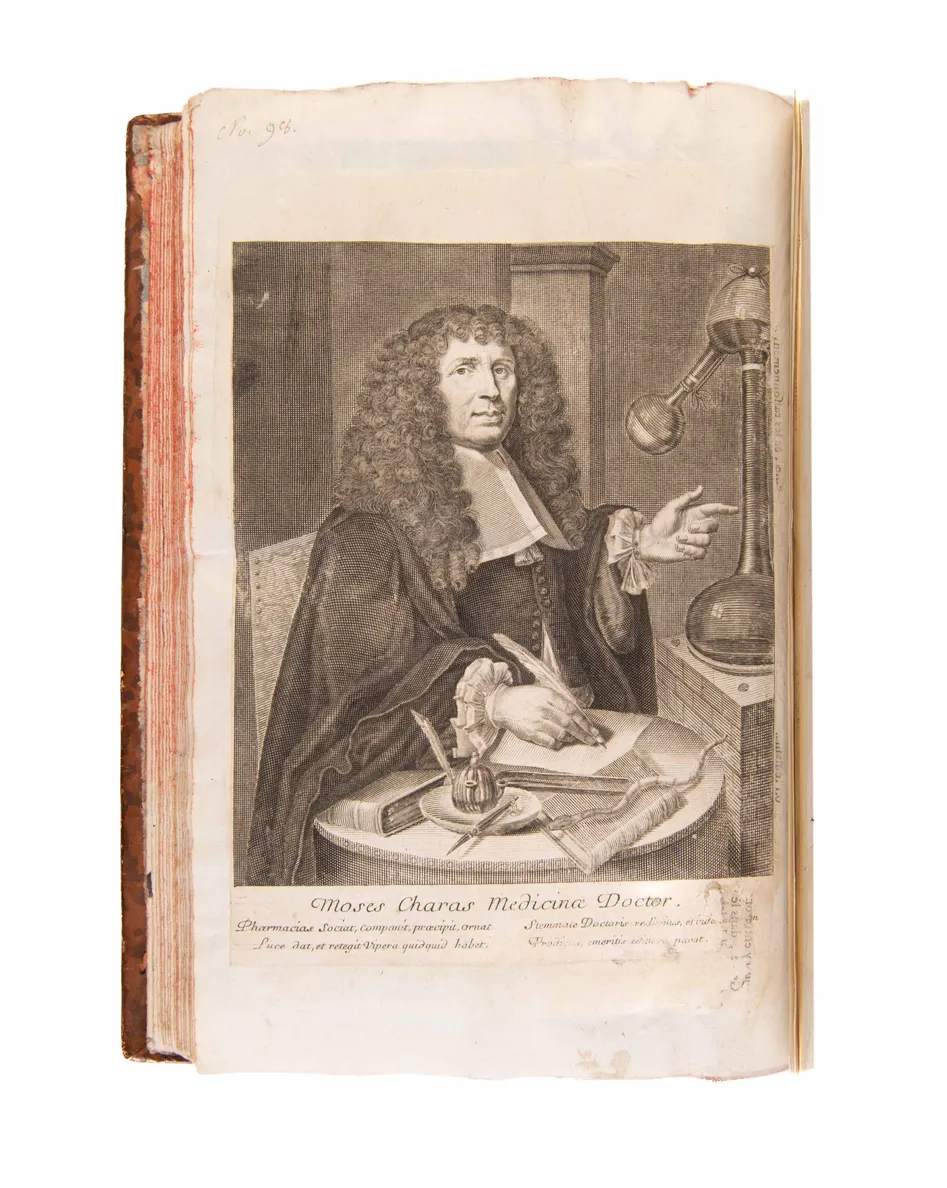
Scientific figures such as Moses Charas (98) apothecary, Jean de Gorris, doctor (99) a woodcut by Wechel, the mathematician Francois Jaquier (180), Descartes (182), Postel (145) and Vesalius (57).
The explorers Thomas Cavendish with 2 globes (133) and Francis Drake (511) by Paul de la Houve; and also Esek Hopkins 'Commandant en chef la flotte Américaine (511), commander-in-chief of the Continental Navy during the American Revolution by Dupin.
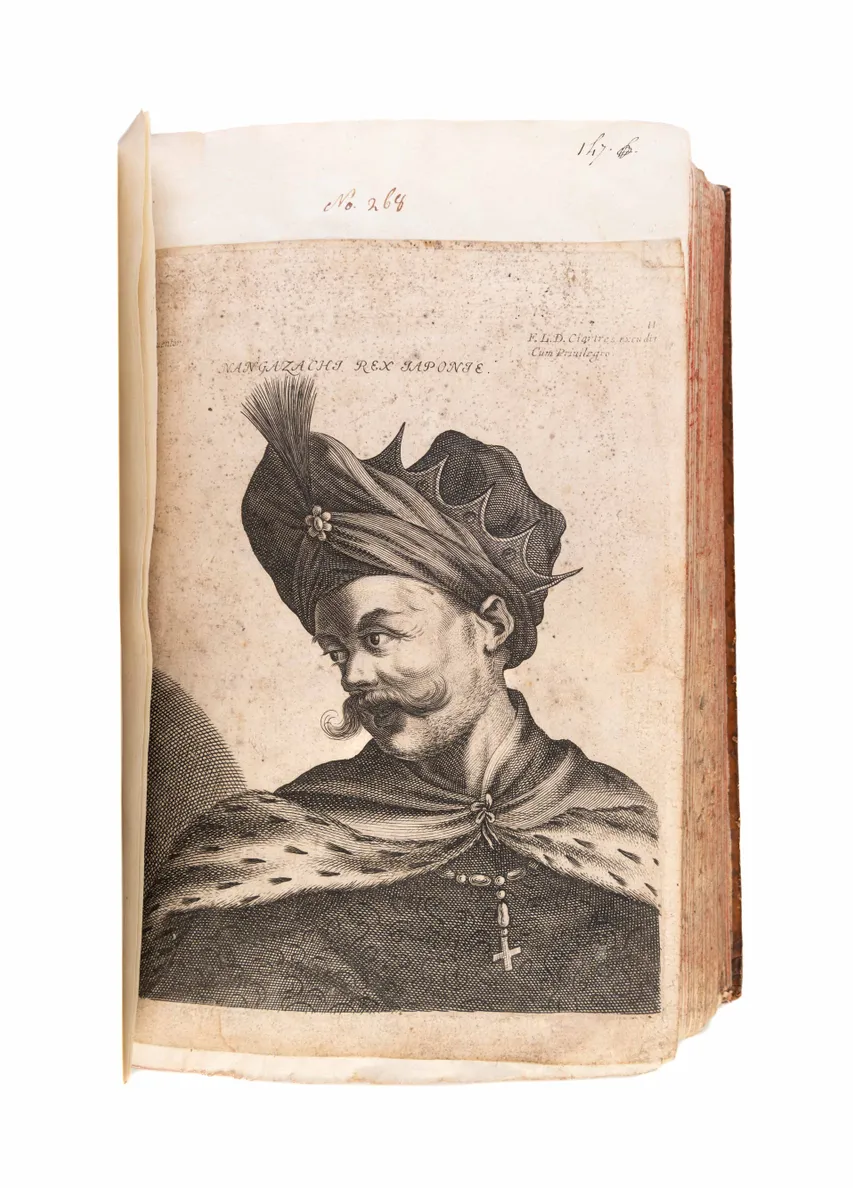
Emperors of the East (nos. 268 to 280) including the Emperor of Japan (‘Nangazachi rex Japonie’), from a series of 36 representing various philosophers and kings (see first 10 above), engraved by Jérôme David after Vignon, Rembrandt and Padovanino, published by François l'Anglois (called 'Ciartres').
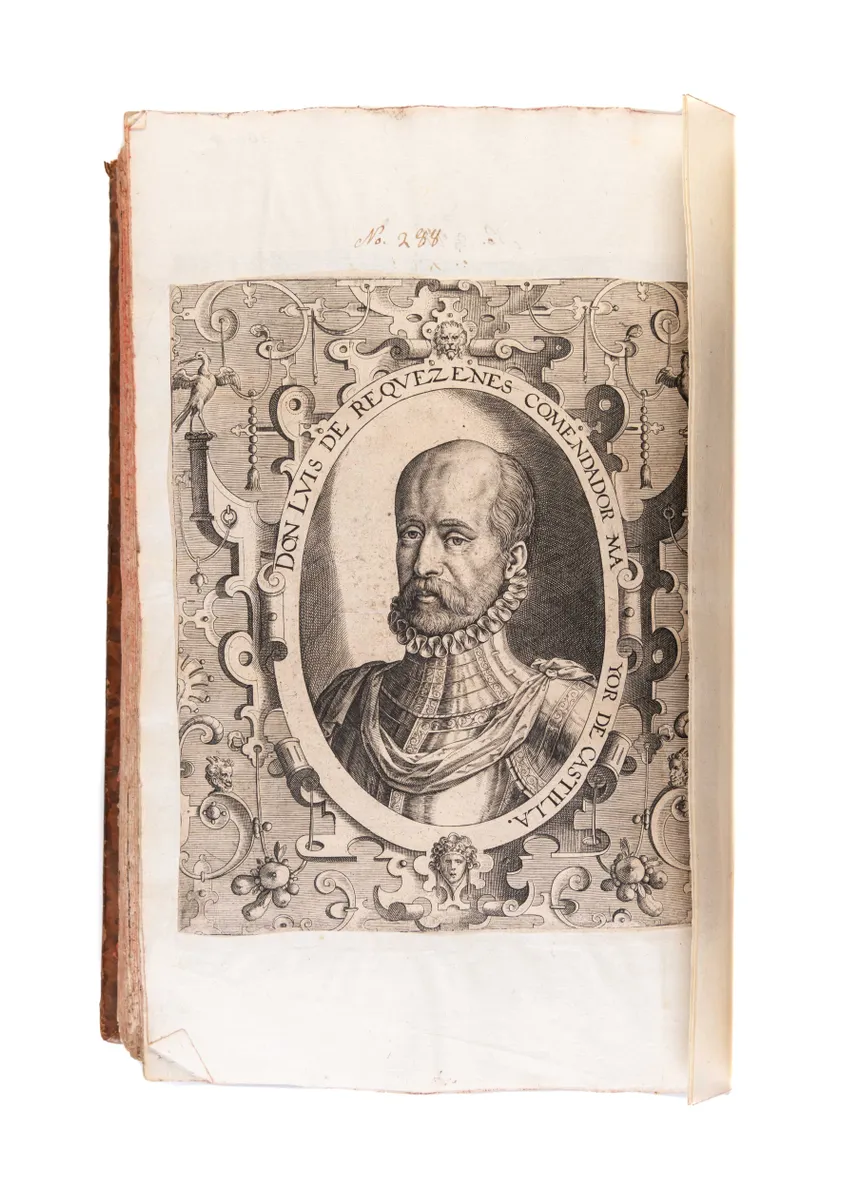
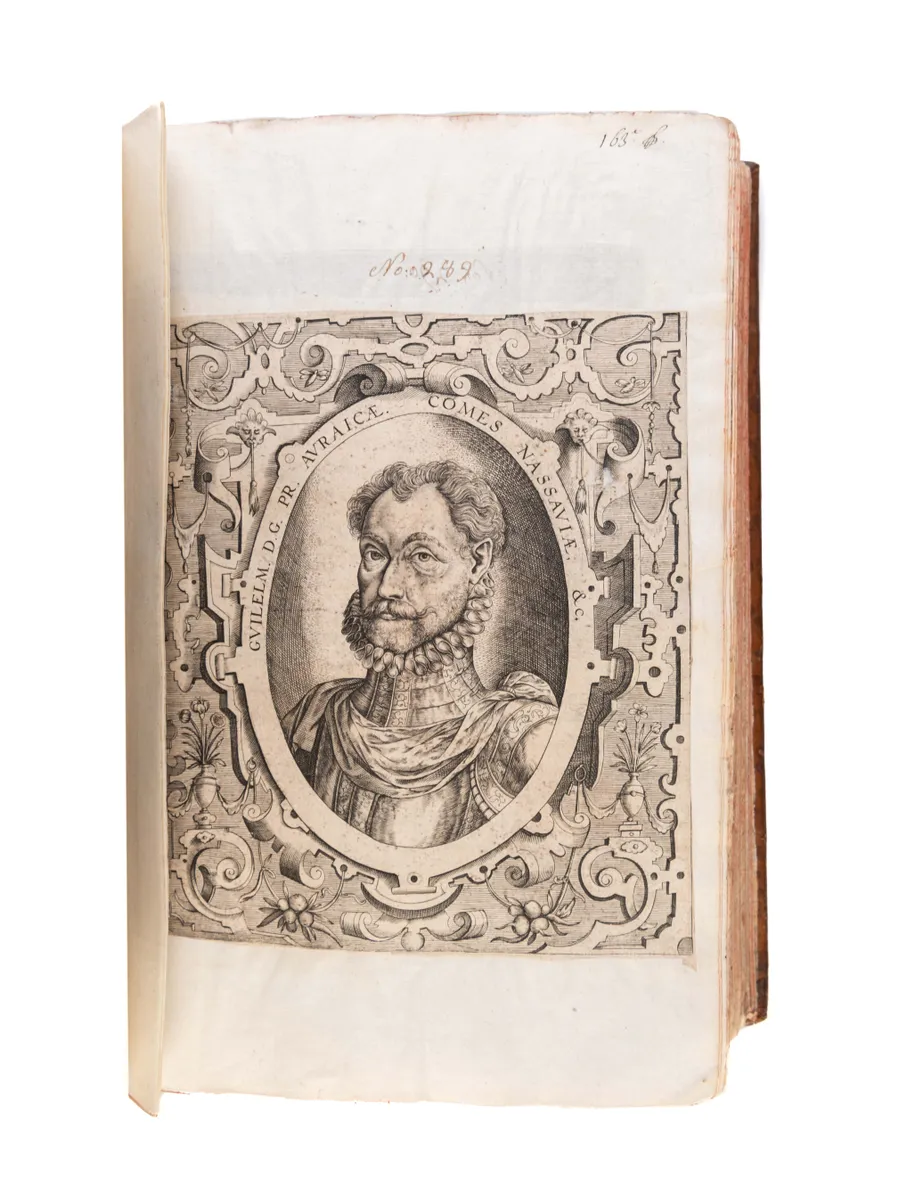
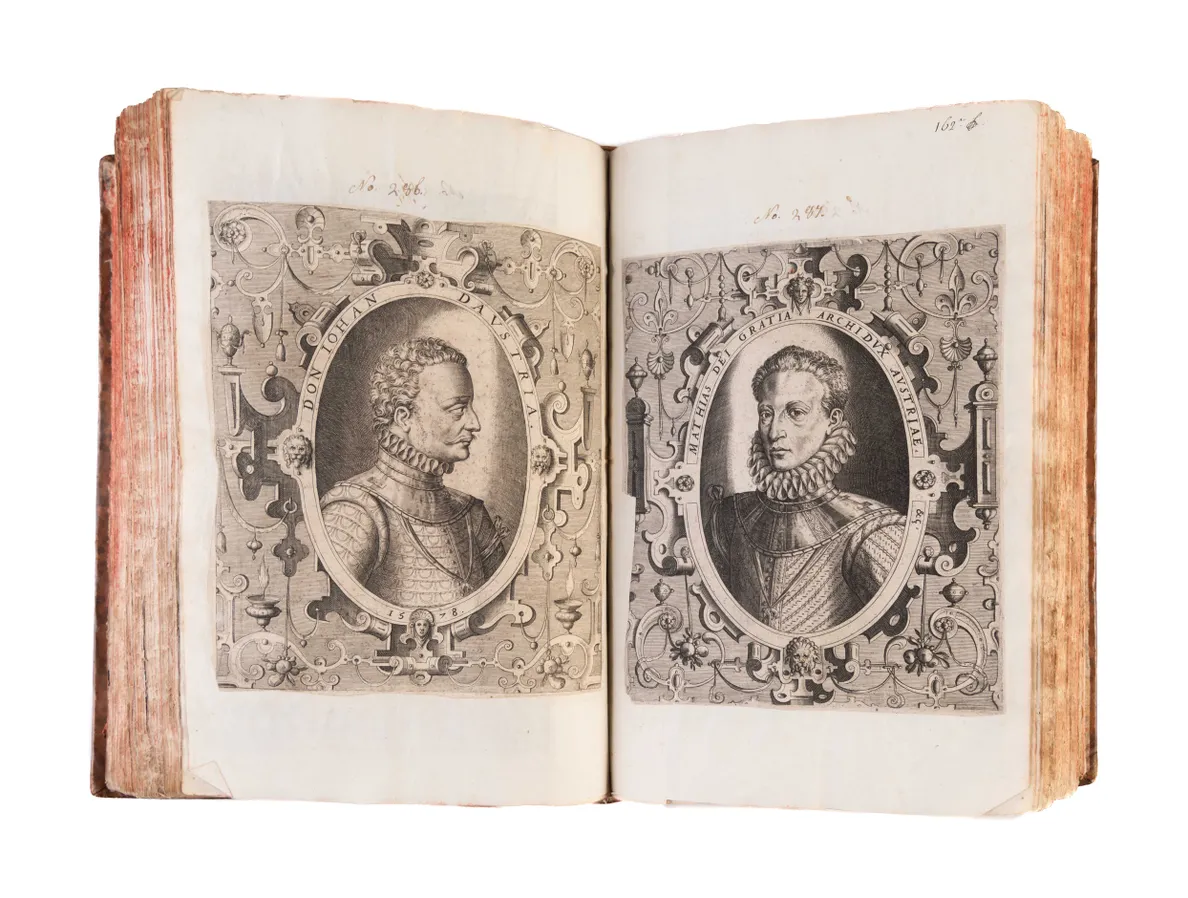
Portraits of Don John of Austria (286) dated 1578, Matthias of Austria (287), Don Luis de Requesens y Zúñiga (288) and William I of Orange (289) within superb mannerist borders, by Niccolò Nelli.
The writers Racine (156), Corneille (163), Rousseau (155 & 174), Moliere (157), Boileau (158) Antoine de Mesme (Nanteuil 1668), Blegny, Montaigne (no. 183), Diderot (184), Gessner (185).
Among the royal portraits is a fine engraving of Henri IV dated 1595 (367; another by Thomas de Leu 488), a large folding plate of Maurice of Orange on horseback by Crispin van de Passe (445) followed by a good copy in pen and ink with notes on verso (446).
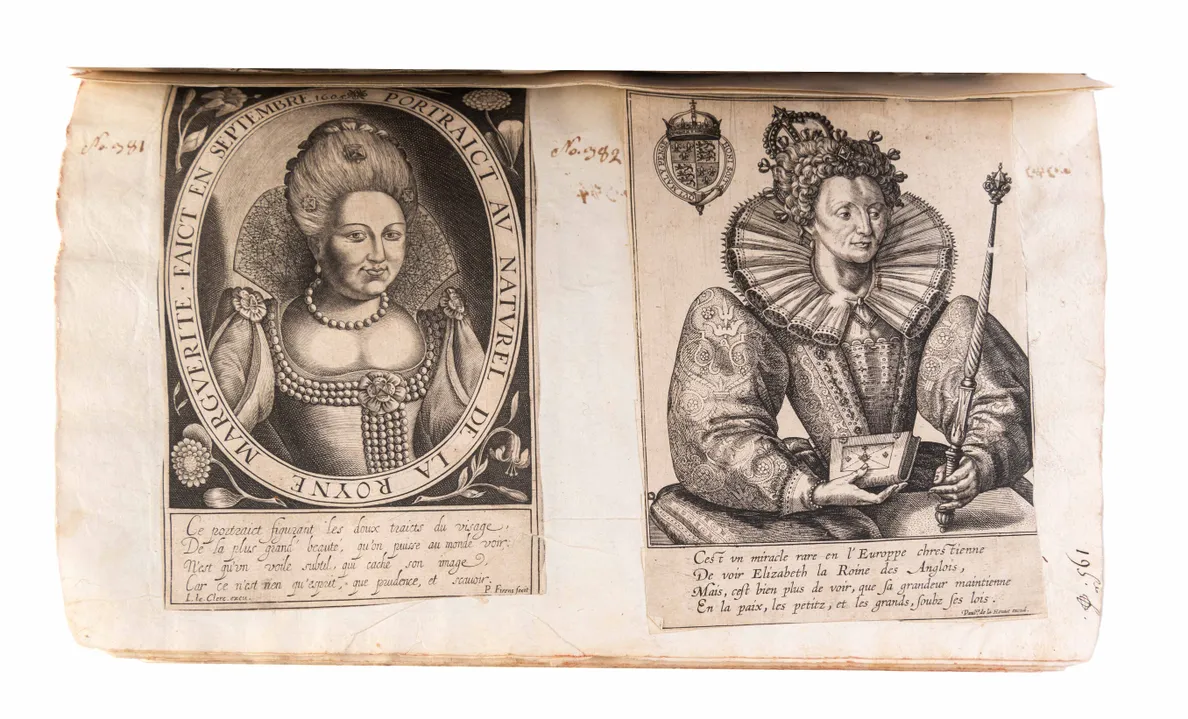
And some female portraits such as Queen Elizabeth I (382; also 397 & 414) by Paul de la Houve, Mary Queen of Scots (426), Marguerite of Valois, Queen of Navarre (381), Queen Christina of Sweden, the French royal mistresses Gabrielle d’Estrées and Henriette de Balsac (among numbers approximately 383 to 426), the writer Antoinette Deshoulières (166) and Hortence Mancini, duchess de Mazarin, cross-dressing mistress of Charles II (170).
Towards the end we have 18th century French royalty and nobility, such as Louis XIV (490), the Comtesse de Barry (493), Louis XVI (504) and Marie Antoinette (503) after Marillier.